Back
11 Best AI SEO Tools in 2026: We Tested & Compared
Compare the top AI SEO tools in 2026 and learn how to improve your visibility across AI-driven search platforms.
Jul 22, 2026

Search is going through one of its biggest transformations in the last decade. For years, SEO has been built around rankings. You optimize pages, track keywords, and compete for positions in search engine results. But that model is no longer the only way users discover information.
Today, people increasingly rely on AI systems like ChatGPT, Gemini, and Claude to ask questions, compare products, and make decisions. Instead of clicking through multiple links, they receive a single synthesized answer.
This shift introduces a new layer of competition. It is no longer enough to rank. You also need to be included, cited, or recommended inside AI-generated answers.
That is where AI SEO software comes in. Some tools are evolving from traditional SEO platforms by adding AI-related insights. Others are built specifically for tracking and improving AI visibility across large language models.
Understanding the difference between these categories is critical if you want to build a sustainable search strategy in 2026 and beyond.
AI SEO Tools Comparison Chart: Features & Pricing
The table below compares every AI SEO software tool covered in this article, including Visby AI, by type, key strength, ideal use case, and starting price.
Tool | Type | Key Strength | Best For | Price |
|---|---|---|---|---|
Visby AI | AI Visibility Platform | Prompt-level analysis, generates site-specific SEO/GEO tasks, funnel-based tracking (awareness/consideration/conversion) | Teams that want to actively improve AI visibility and connect it with real business outcomes | From $79/mo |
Semrush | Comprehensive SEO Platform | Keyword research, competitor analysis, content optimization; AI features still developing | Teams looking for an all-in-one SEO platform with evolving AI capabilities | From $139.95/mo |
Ahrefs | Traditional SEO / Backlink Analysis | Strong backlink database, competitor analysis; Brand Radar as an early step into AI visibility | Teams that rely on backlink data and competitor insights to drive SEO strategy | From $29/mo |
Surfer SEO | Content Optimization | Real-time SERP data drives content structure recommendations | Content teams focused on on-page optimization and scalable content performance | From $49/mo (annual) |
Clearscope | Content Quality / Semantic Relevance | Clear guidance on topics, terms, and structure | Teams producing high-quality, intent-driven content with a focus on clarity and depth | From $129/mo |
Frase | Content Research & Production | Combines research, writing, and optimization into one workflow; speed-focused | Teams that need fast, AI-assisted content production without complex workflows | From $39/mo (annual) |
MarketMuse | Content Strategy / Topical Authority | Identifies content gaps and builds topic clusters for site-wide depth | Teams building long-term content authority and structured content strategies | Free tier; paid from ~$99/mo |
SE Ranking | General SEO Toolset | Rank tracking, site audits, keyword research; easy-to-use interface | Small to mid-sized teams looking for a practical, easy-to-use SEO solution | From $103.20/mo (annual) |
BrightEdge | Enterprise SEO Platform | Large-scale analytics, reporting, and data integrations | Enterprises managing complex SEO strategies and large-scale content operations | Custom (from ~$1,000/mo) |
Conductor | SEO + Marketing Analytics | Connects SEO performance with broader marketing insights | Marketing teams aligning SEO efforts with broader growth and content strategies | Custom (from ~$26,800/yr) |
WriterZen | Keyword Research & Planning | Combines keyword discovery, topic clustering, and content brief creation | Content marketers focused on keyword research, planning, and scalable content production | From $39/mo |
What is AI SEO Tools?
AI SEO software refers to tools that help you analyze and improve your performance across both traditional search engines and AI-driven platforms.
Unlike classic SEO tools that focus on rankings, clicks, and backlinks, AI SEO tools expand the scope by analyzing how your content is interpreted and surfaced inside AI-generated answers.
These platforms typically include capabilities such as:
Tracking brand visibility across AI prompts
Identifying which queries trigger your content
Analyzing how competitors appear in AI responses
Improving content structure for answer selection
Generating SEO and GEO tasks based on real data
The goal is not just visibility in search results, but inclusion inside the answer layer itself.
Why Traditional SEO Tools Are Not Enough Anymore?
Traditional SEO tools are still essential. They help you understand rankings, keywords, backlinks, and technical performance.
However, they were not designed for how AI systems work.
AI models:
Aggregate information instead of listing links
Select and summarize content from multiple sources
Prioritize clarity, structure, and authority
Often rely on top-ranking and well-structured pages
This means your visibility depends on more than rankings.It depends on how well your content aligns with what AI systems consider a strong answer.
This is why a new layer of tooling is emerging, one that focuses on interpretation, selection, and representation rather than just ranking.
1. Visby AI
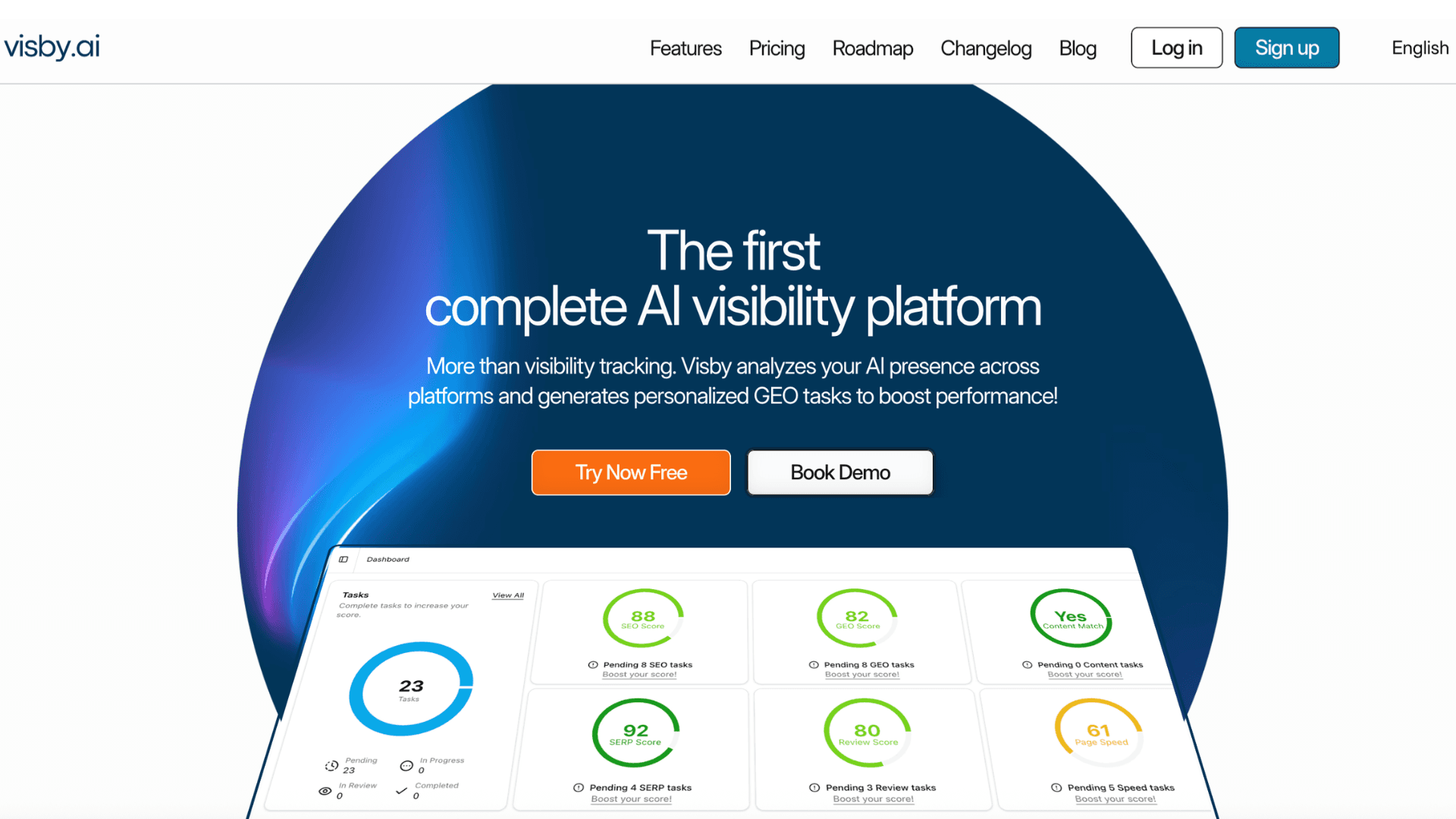
Visby AI is built specifically for this new layer of search.
While many tools in the market focus on tracking data, Visby is designed to turn AI visibility into actionable improvements. It does not stop at showing where your brand appears. It focuses on why you are not appearing and what you should do about it.
The platform operates at the prompt level. It analyzes real queries across AI systems such as ChatGPT, Claude, and Gemini, and maps where your brand is present, missing, or being outperformed by competitors.
What makes Visby different is its ability to convert these insights into site-specific SEO and GEO tasks.
Instead of generic suggestions, the platform generates actions tailored to your website. These can include:
Content expansion based on missing query coverage
Internal linking improvements aligned with AI citation patterns
FAQ and structured content recommendations
Technical optimizations affecting AI selection
Review and reputation signals that influence AI responses
Another key differentiator is its funnel-based tracking model.
Rather than organizing visibility only around topics, Visby maps prompts across the customer journey:
Awareness (discovery stage)
Consideration (comparison stage)
Conversion (decision stage)
This allows teams to identify exactly where they lose visibility and where competitors take over.
Visby also connects AI visibility with traditional SEO metrics. It evaluates factors like content relevance, technical performance, and external signals together, helping teams understand how improvements in SEO impact AI-generated answers.
Best for:
Teams that want to actively improve AI visibility and connect it with real business outcomes, rather than only monitor performance
2. Semrush
Semrush is one of the most comprehensive SEO platforms available, and it is gradually expanding into AI-driven insights.
Its main strength lies in its ecosystem. Teams can manage keyword research, competitor analysis, content optimization, and performance tracking in one place.
As AI becomes more integrated into search, Semrush is adding features that help users understand emerging visibility patterns.
However, its AI capabilities are still developing compared to tools that are fully focused on AI visibility.
Best for:
Teams looking for an all-in-one SEO platform with evolving AI capabilities
3. Ahrefs
Ahrefs is widely recognized for its strong backlink database and keyword research capabilities. It helps teams understand how competitors perform across search and identify opportunities based on real data.
One of its main strengths is competitor analysis. You can see which pages drive traffic, which keywords competitors rank for, and how authority is built over time. This makes it useful for planning scalable SEO strategies.
Ahrefs has also started to expand into AI-related visibility with features like Brand Radar. However, this area is still evolving, and the platform remains more focused on traditional SEO analysis.
Best for:
Teams that rely on backlink data and competitor insights to drive SEO strategy
4. Surfer SEO
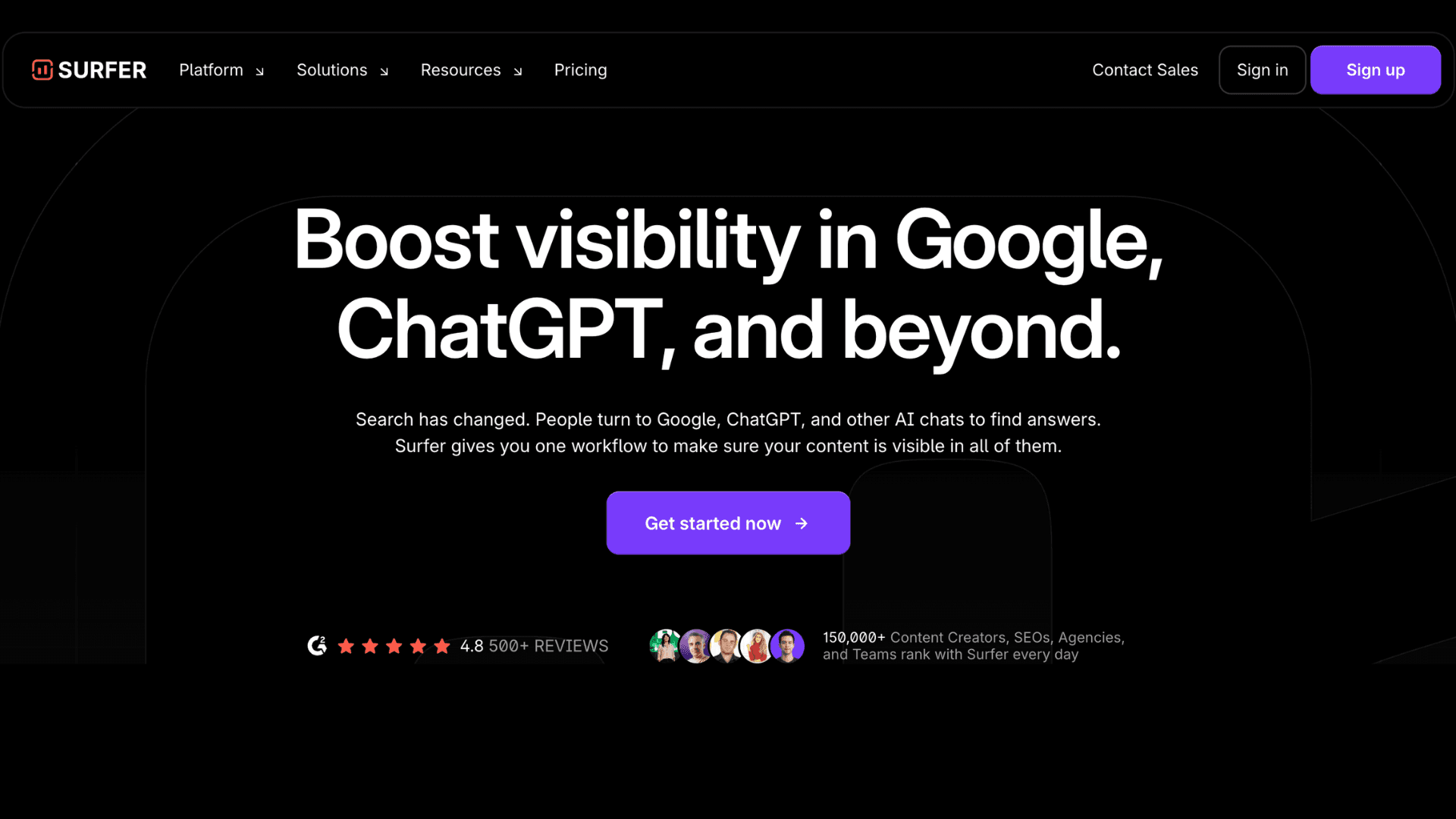
Surfer SEO focuses on optimizing content based on real-time SERP data. It helps teams structure their content in a way that aligns with search intent and improves the likelihood of ranking.
One of its main strengths is providing data-driven recommendations for on-page SEO, including keyword usage, content length, and structure. This makes it especially useful for teams producing high volumes of content.
While its AI-related features are still limited, its strong focus on content structure and relevance makes it indirectly valuable for AI visibility, since well-structured content is more likely to be selected and cited by AI systems.
Best for:
Content teams focused on on-page optimization and scalable content performance
5. Clearscope
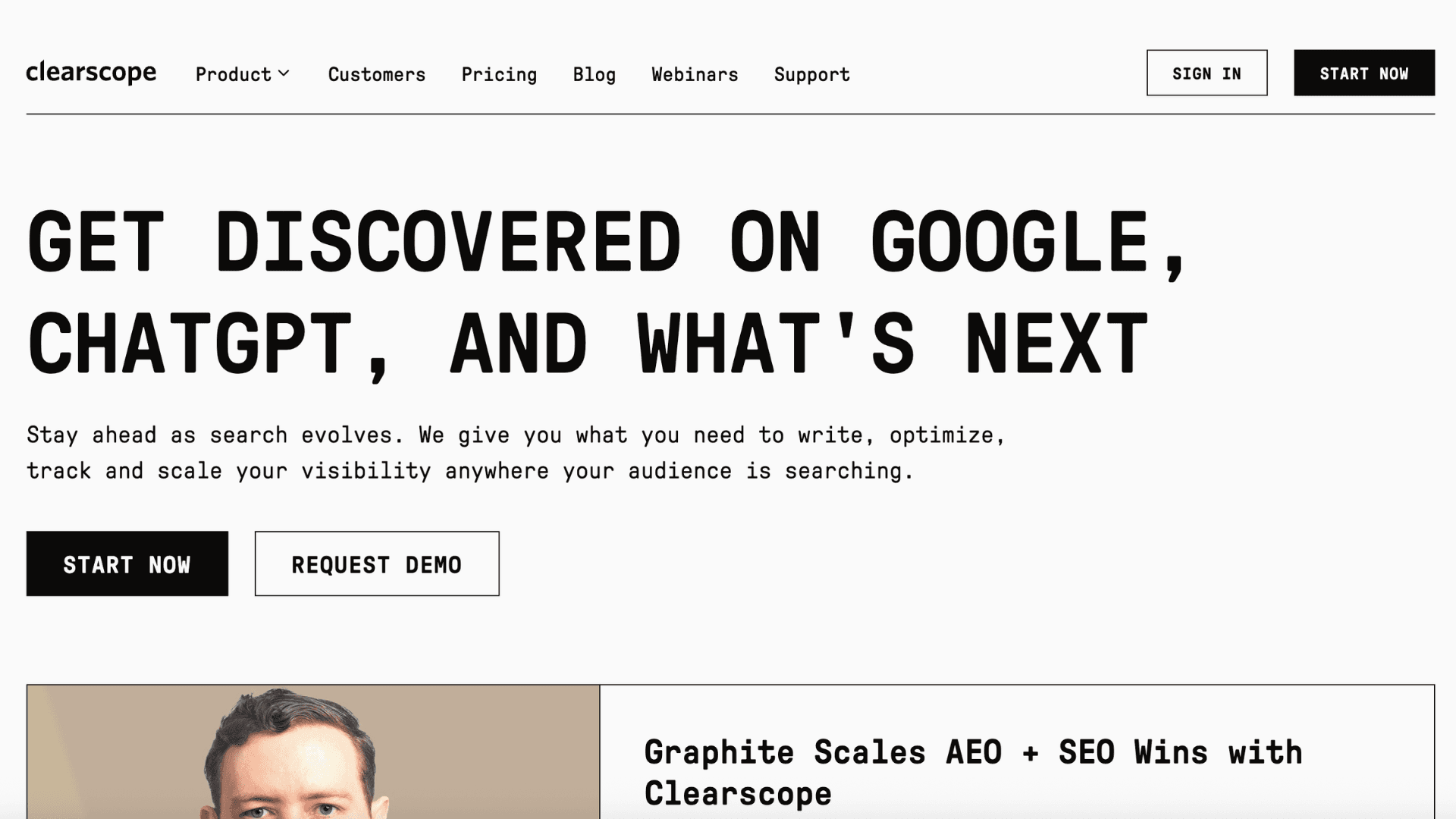
Clearscope is known for its strong focus on content quality and semantic relevance. It helps teams create content that closely aligns with user intent by providing clear recommendations on topics, terms, and structure.
One of its key strengths is simplifying content optimization. Instead of overwhelming users with data, it offers straightforward guidance that makes it easier to produce well-structured and comprehensive content.
This focus on clarity and relevance also makes it valuable for AI-driven search, as AI systems tend to favor content that clearly answers questions and covers topics in depth.
Best for:
Teams producing high-quality, intent-driven content with a focus on clarity and depth
6. Frase
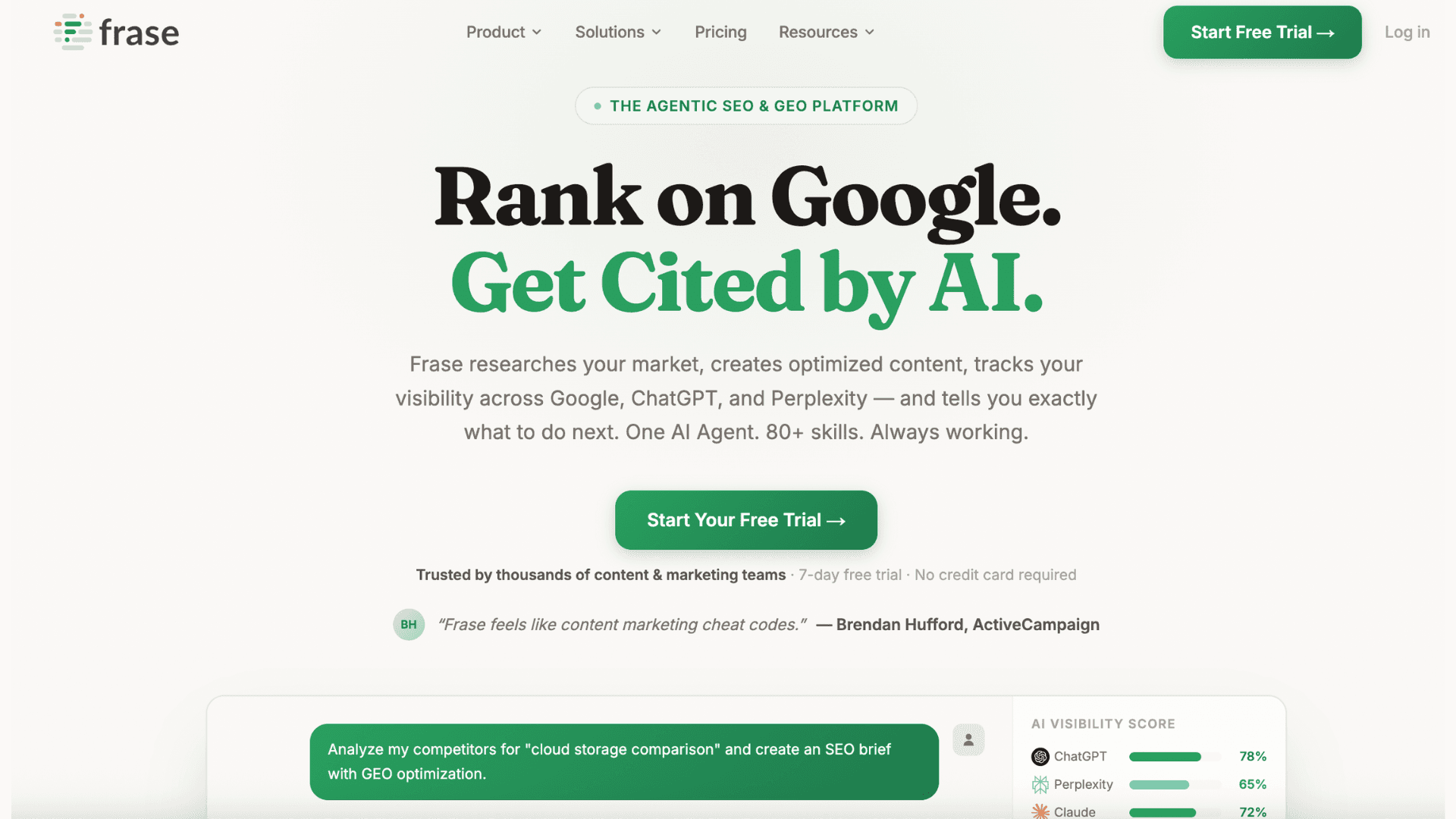
Frase combines content research, writing, and optimization into a single workflow. It helps teams quickly analyze search results, generate content briefs, and create articles aligned with user intent.
One of its main strengths is speed. Teams can move from research to publish-ready content in a much shorter time compared to traditional workflows, making it especially useful for scaling content production.
While it leans more toward content creation than deep SEO analysis, its ability to structure content around real queries makes it relevant for both search engines and AI-generated answers.
Best for:
Teams that need fast, AI-assisted content production without complex workflows
7. MarketMuse
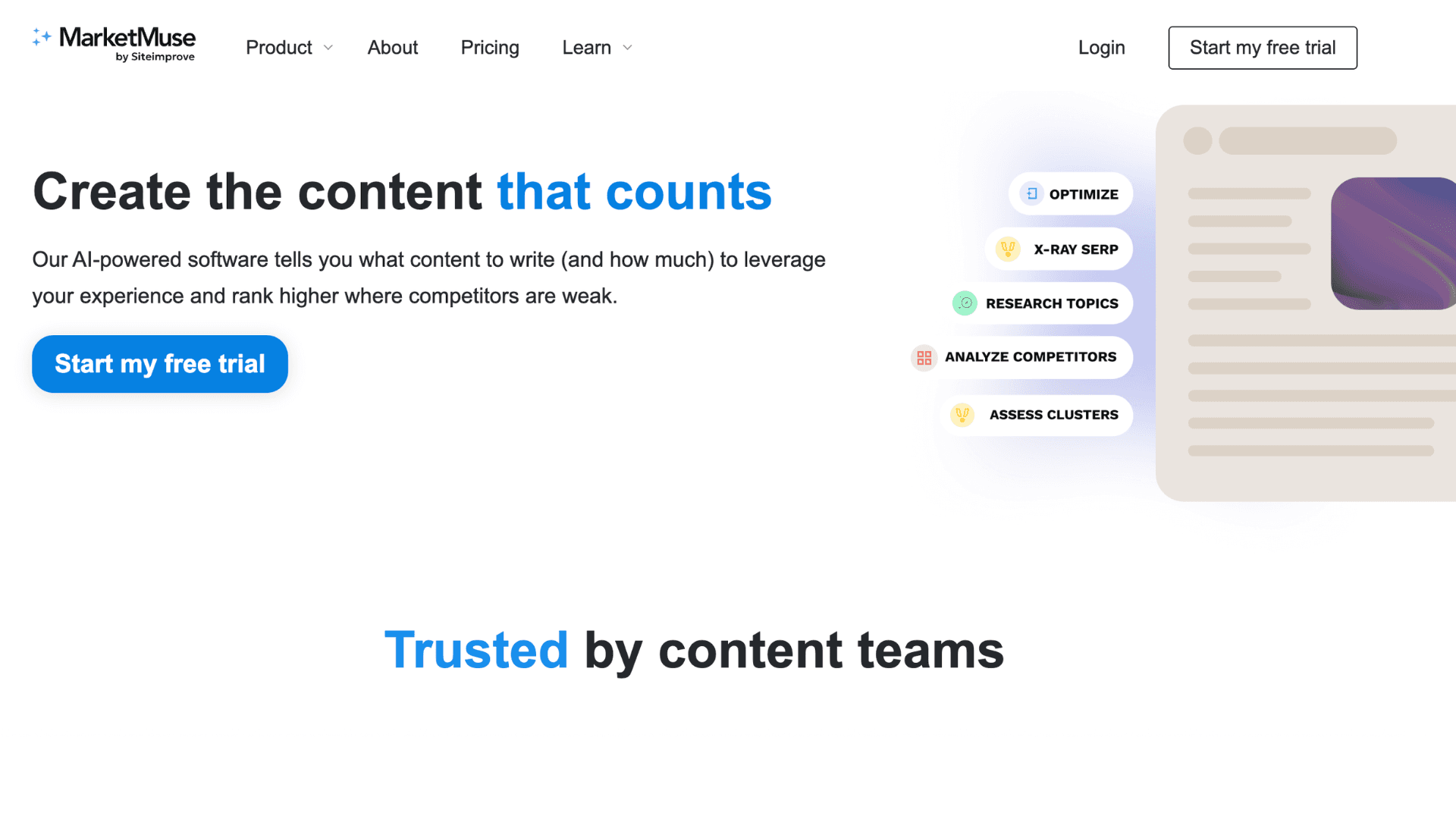
MarketMuse focuses on long-term content strategy and building topical authority. It helps teams identify content gaps, prioritize opportunities, and develop structured content clusters that improve overall site coverage.
One of its main strengths is strategic planning. Instead of optimizing single pages, it looks at how entire topics are covered across your site and where you need to expand to stay competitive.
This approach is also valuable for AI-driven search, since AI systems tend to favor sites that demonstrate depth and authority across a topic, not just isolated pieces of content.
Best for:
Teams building long-term content authority and structured content strategies
8. SE Ranking
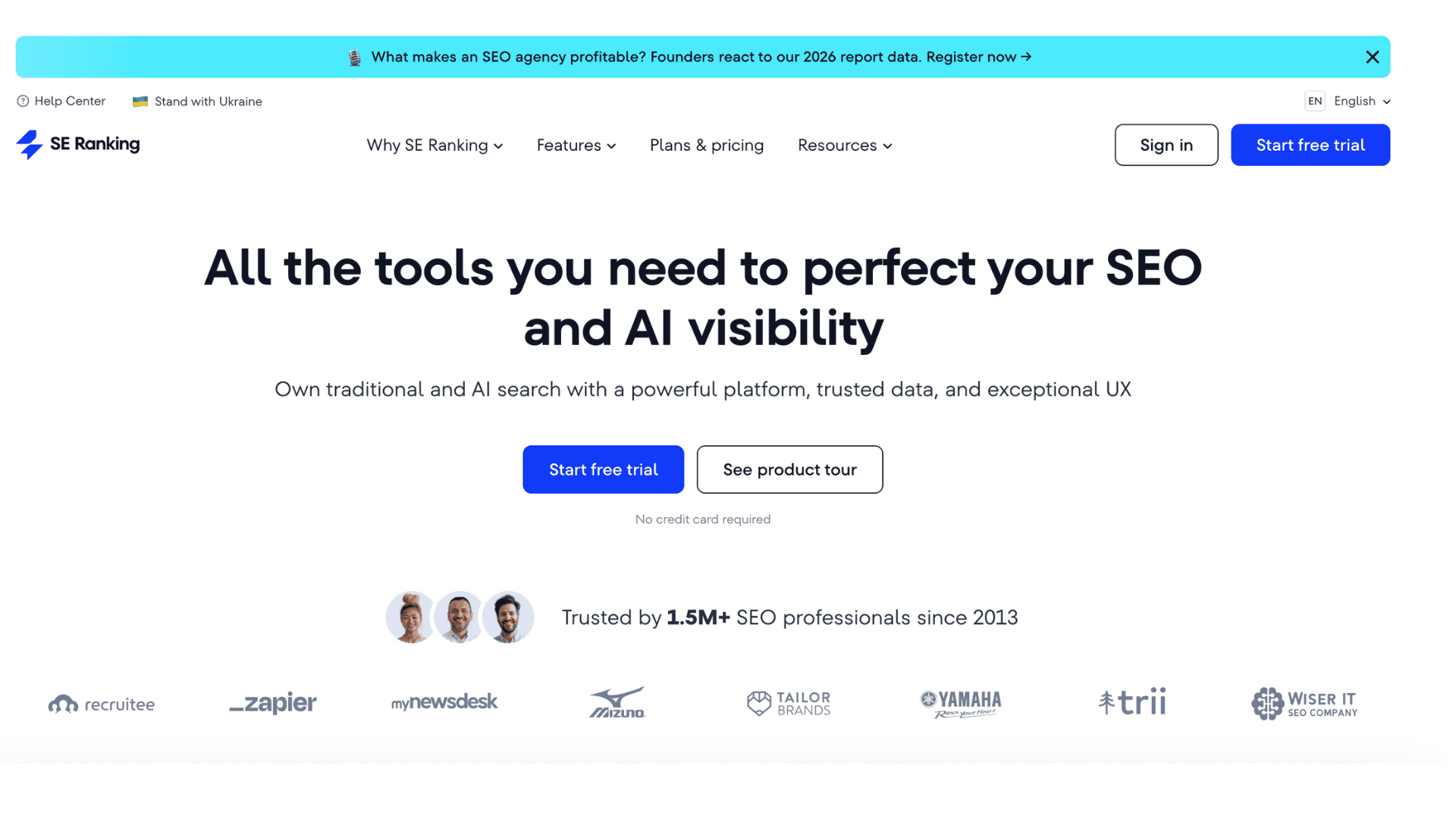
SE Ranking offers a balanced set of SEO tools including rank tracking, website audits, and keyword research. It provides teams with a clear overview of their search performance without the complexity of larger enterprise platforms.
One of its main strengths is usability. The interface is straightforward, making it easy to track rankings, monitor competitors, and identify technical issues without a steep learning curve.
While it is not heavily focused on AI visibility, it provides a strong SEO foundation. This makes it useful for teams that want to ensure their core SEO performance is solid before expanding into AI-driven strategies.
Best for:
Small to mid-sized teams looking for a practical, easy-to-use SEO solution
9. BrightEdge
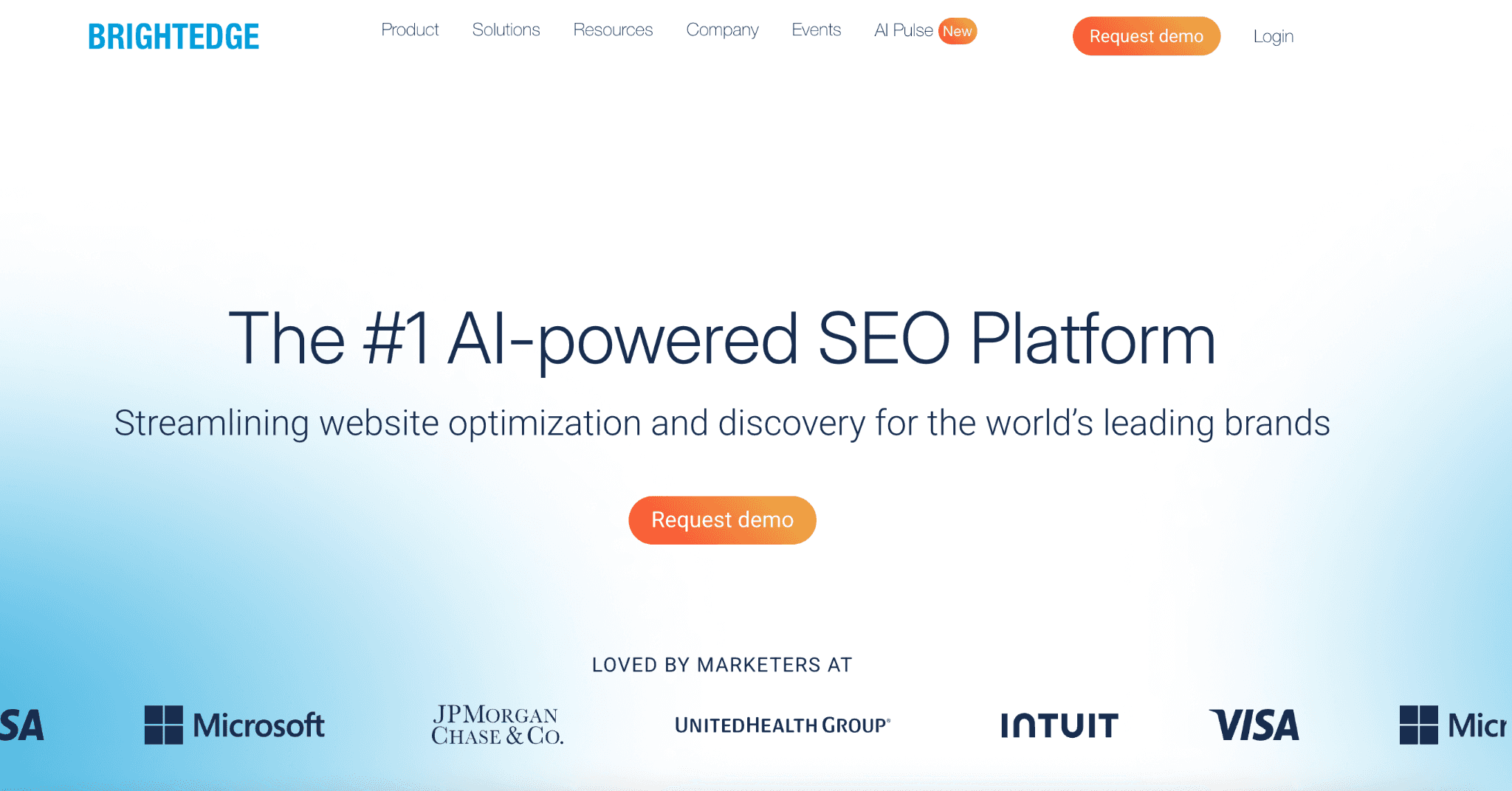
BrightEdge is designed for large-scale SEO operations and enterprise-level teams. It provides advanced analytics, reporting, and data integrations to support complex SEO strategies across multiple markets and channels.
One of its main strengths is its data depth and scalability. Teams can track performance across thousands of keywords, manage large content portfolios, and connect SEO insights with broader business metrics.
BrightEdge is also expanding its AI-driven capabilities, helping teams better understand evolving search behavior and content performance. However, its core strength remains in enterprise reporting and operational scale.
Best for:
Enterprises managing complex SEO strategies and large-scale content operations
10. Conductor
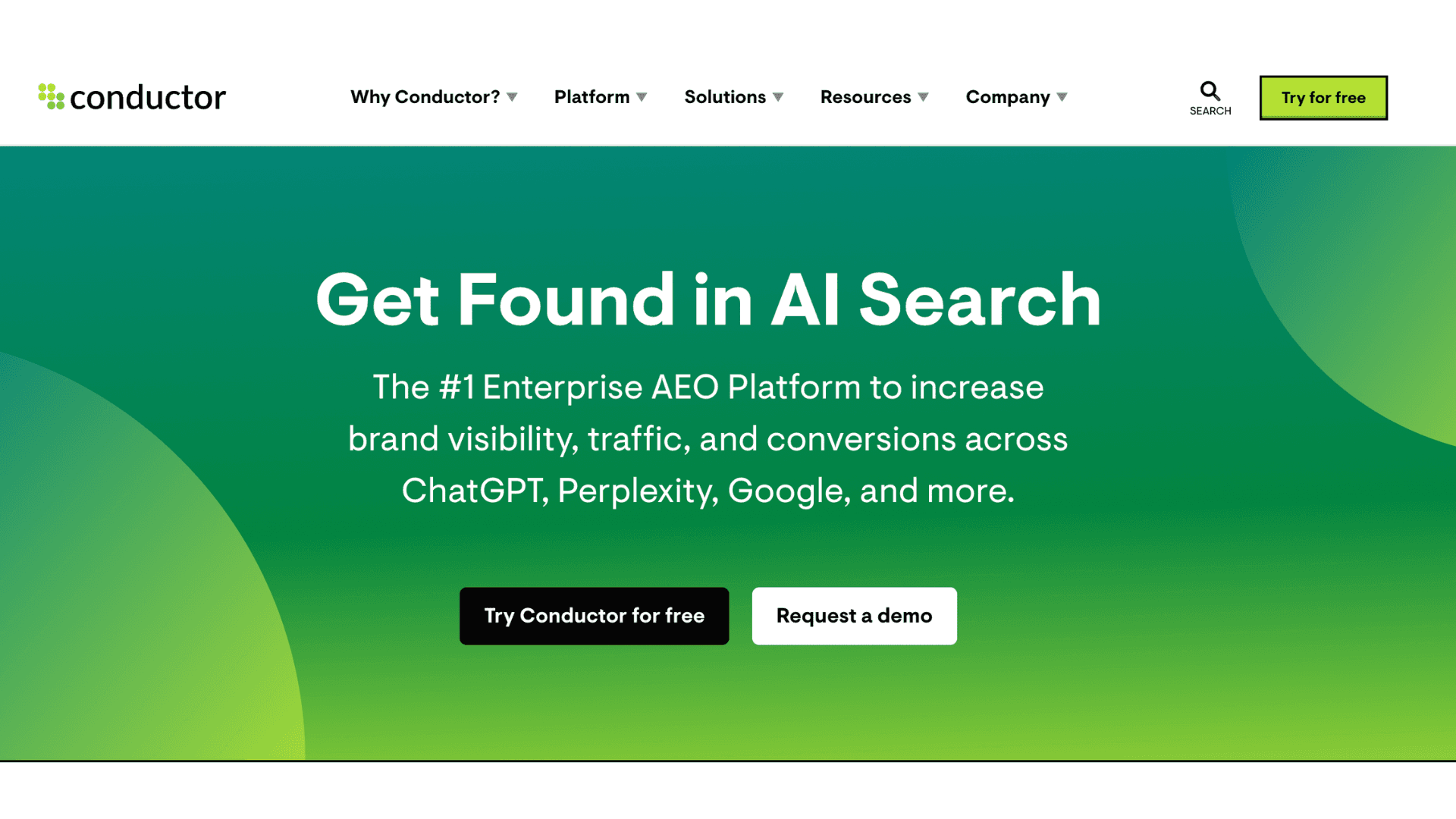
Conductor connects SEO performance with broader marketing insights, helping teams understand how content contributes to overall business outcomes. It brings together data from multiple channels to give a more complete view of visibility and performance.
One of its main strengths is its focus on audience insights and content performance. Teams can analyze how users interact with content, which topics drive engagement, and how SEO supports wider marketing goals.
While it is not a dedicated AI visibility tool, its emphasis on content and user behavior makes it relevant for adapting to changing search patterns, including AI-driven discovery.
Best for:
Marketing teams aligning SEO efforts with broader growth and content strategies
11. WriterZen
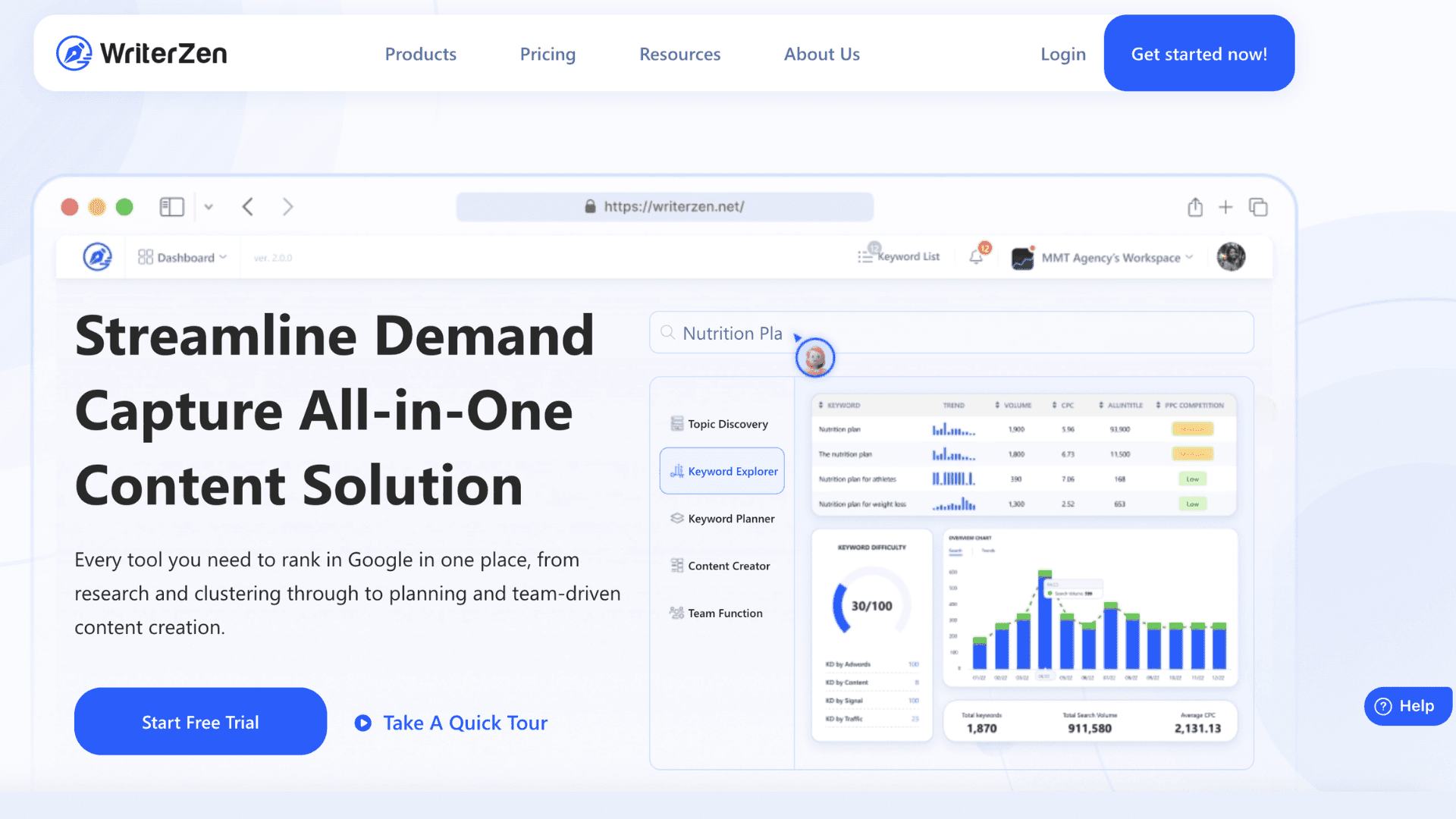
WriterZen focuses on keyword research and content planning, helping teams identify content opportunities and organize them into structured workflows. It combines keyword discovery, topic clustering, and content brief creation in a single platform.
One of its main strengths is simplifying the planning phase. Teams can quickly move from keyword research to actionable content ideas without needing multiple tools, making it especially useful for content-first SEO strategies.
While it does not directly focus on AI visibility, its structured approach to content planning supports both traditional search performance and AI-driven discovery.
Best for:
Content marketers focused on keyword research, planning, and scalable content production
How to Choose the Right AI SEO Tool?
Choosing the right tool depends on your goals. If your focus is traditional SEO performance, tools like Semrush and Ahrefs provide strong data and insights.
If your focus is content optimization, platforms like Surfer SEO and Clearscope are more relevant.
If your focus is AI visibility and understanding how your brand appears inside AI-generated answers, you need tools that go beyond tracking and provide actionable insights.
That distinction between analysis and execution is becoming increasingly important.
How Much Does AI SEO Software Cost?
Pricing for AI SEO software varies depending on the platform, feature set, and level of usage. Some tools offer basic entry-level plans for tracking and reporting, while others provide more advanced capabilities such as automation, content generation, and AI visibility insights through higher-tier or enterprise solutions.
In most cases, pricing is based on factors like the number of tracked prompts or keywords, domains, users, and available features. As tools become more advanced and action-oriented, pricing structures tend to scale accordingly.
Platforms like Visby AI offer flexible pricing plans designed around usage and tracked prompts, making it easier for teams to start small and expand over time. If you want to explore how different tiers are structured, you can review detailed pricing plans to better understand what fits your needs.

Emir Erçelen
Sr. SEO/GEO Executive at Visby
Latest posts
Discover other pieces of writing in our blog