All articles
·
6 min read
How to Optimize Content for AI Search in 2026?
Optimizing for AI search requires focusing on clear, structured, intent-driven content and continuously improving it with updates and data-driven insights.

To optimize content for AI search in 2026, you need to move beyond traditional SEO and focus on how AI systems understand, select, and present information. AI tools like ChatGPT or search assistants no longer just rank pages they generate answers. This means your content must be clear, structured, and directly useful.
The key is to create content that answers questions quickly, uses simple language, and provides real value. Instead of writing for keywords only, you should write for intent. AI prefers content that is easy to scan, fact-based, and well-organized.
You should also support your content with examples, structured headings, and clear explanations. Visby AI can help you understand how your content appears in AI-generated answers and where you need to improve.
In short, if you want to optimize content for AI, focus on clarity, usefulness, and structure not just rankings.
What Does It Mean to Optimize Content for AI Search?
Optimizing content for AI search means making your content easy for AI systems to read, understand, and reuse in their answers.
Unlike traditional search engines, AI does not only list results. It creates direct answers. So your content should clearly respond to user questions and present information in a structured way.
This means writing with intent in mind. Instead of focusing only on keywords, you should think about what the user really wants to learn and answer that directly. Clear language, logical flow, and strong structure make your content more usable for AI systems.
How Can You Structure Content for AI Understanding?
Structure plays a critical role in AI content optimization.
AI systems scan content quickly, so your information needs to be easy to follow. Using clear headings, short paragraphs, and logical sections helps AI understand your content better.
You should also place the most important information at the beginning. Answering the main question early increases your chances of being selected by AI systems.
For example, instead of long paragraphs, divide your content into smaller sections with clear subheadings. This improves both readability and AI visibility.
What Type of Content Works Best for AI Search?
Not all content performs well in AI search environments.
Content that directly answers questions tends to perform better. Guides, how-to articles, and step-by-step explanations are especially effective because they provide clear value.
AI systems also prefer content that is specific rather than general. Instead of writing broad topics, focusing on clear and targeted questions improves your chances of being used as a source.
For example, a detailed guide explaining a process will perform better than a general overview without actionable insights.
Content Type | Why It Works for AI Search | Example Use Case |
Question-based content | Directly answers user intent | “How to optimize content for AvI search?” |
How-to guides | Provides clear, actionable steps | Step-by-step SEO optimization guide |
Step-by-step explanations | Easy for AI to extract and summarize | Process breakdowns |
Specific & focused topics | Matches precise search intent | “AI content optimization checklist” |
Actionable content | Offers real value and practical insights | Templates, frameworks, examples |
Broad/general content | Lacks clarity and direct answers | “What is AI?” (too generic) |
How Can You Improve AI Visibility with Tools?
Creating content is only one part of the process. You also need to understand how your content performs in AI systems.
This is where Visby AIbecomes valuable. Beyond content creation, it helps you manage the entire AI visibility workflow. You can track how your brand appears across AI-generated answers, monitor prompt-level visibility, and identify which queries trigger (or fail to trigger) your content.
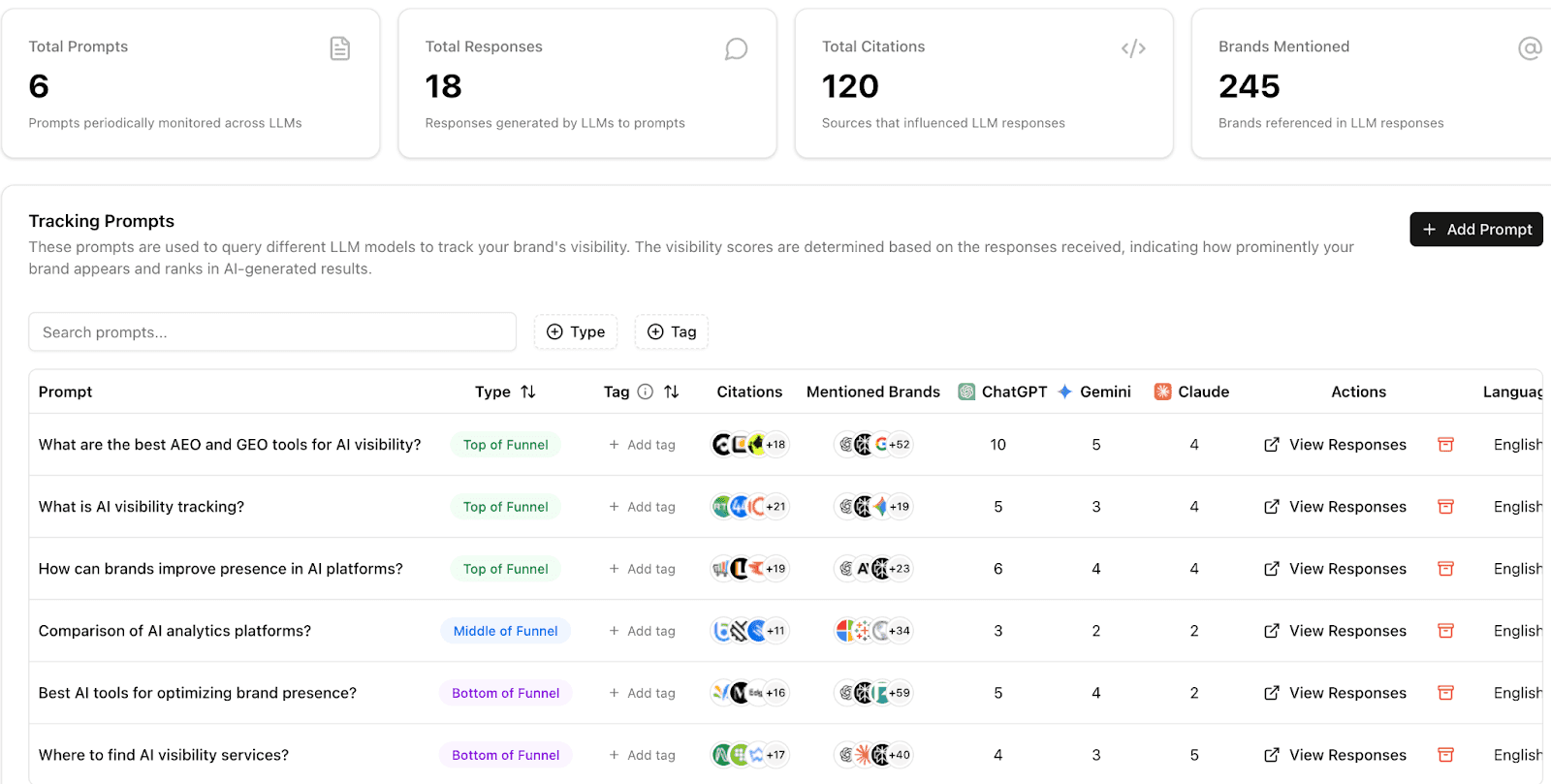
With Visby AI, you can analyze which pages are being referenced by AI systems, detect content gaps, and generate GEO-focused tasks based on real performance data. It also allows you to benchmark against competitors, understand where they are gaining visibility, and uncover missed opportunities.
In addition, Visby AI provides automated task generation, content briefs, and reporting features that turn insights into action. Instead of relying on assumptions, you can continuously optimize your strategy with clear data, structured recommendations, and measurable AI visibility improvements.
How Should You Adapt Your Content Strategy for 2026?
To succeed in AI search, your content strategy needs to evolve. In 2026, it is no longer enough to publish a high volume of content and hope that some pages perform well. AI systems are better at understanding quality, intent, and clarity. That is why brands need a more focused and structured content approach.
Step 1: Focus on Quality Instead of Quantity
The first step is to move away from the idea that publishing more content always leads to better results. In AI search, weak or repetitive content is less useful because AI systems look for pages that offer clear and valuable answers.
Instead of producing many similar articles, focus on creating fewer but stronger pieces. Each page should cover a topic with a clear purpose and give the user a meaningful takeaway.
Step 2: Build Content Around Real Search Intent
Your content should be based on what users are actually trying to learn, compare, or solve. This means you should not write only around keywords. You should also understand the reason behind the search.
For example, someone searching for “optimize content for AI” may want practical steps, examples, or a strategy they can apply. When your content matches that need directly, it becomes more useful for both users and AI systems.
Step 3: Make Every Page Easy to Understand
Once you choose the right topic, the next step is to make the page easy to scan and understand. AI systems prefer content that is clearly structured and easy to extract information from.
Use question-based headings, short paragraphs, and direct explanations. Avoid adding unnecessary filler. A page that explains one topic clearly often performs better than a page that tries to say too many things at once.
Step 4: Refresh Existing Content Regularly
Creating strong content is important, but updating it is just as necessary. AI systems prefer fresh, relevant, and maintained information. If a page becomes outdated, it may lose value over time.
Review your existing content regularly and improve sections that are weak, unclear, or no longer accurate. Updating examples, refining headings, and expanding useful points can make a big difference.
Step 5: Measure What AI Systems Actually Pick Up
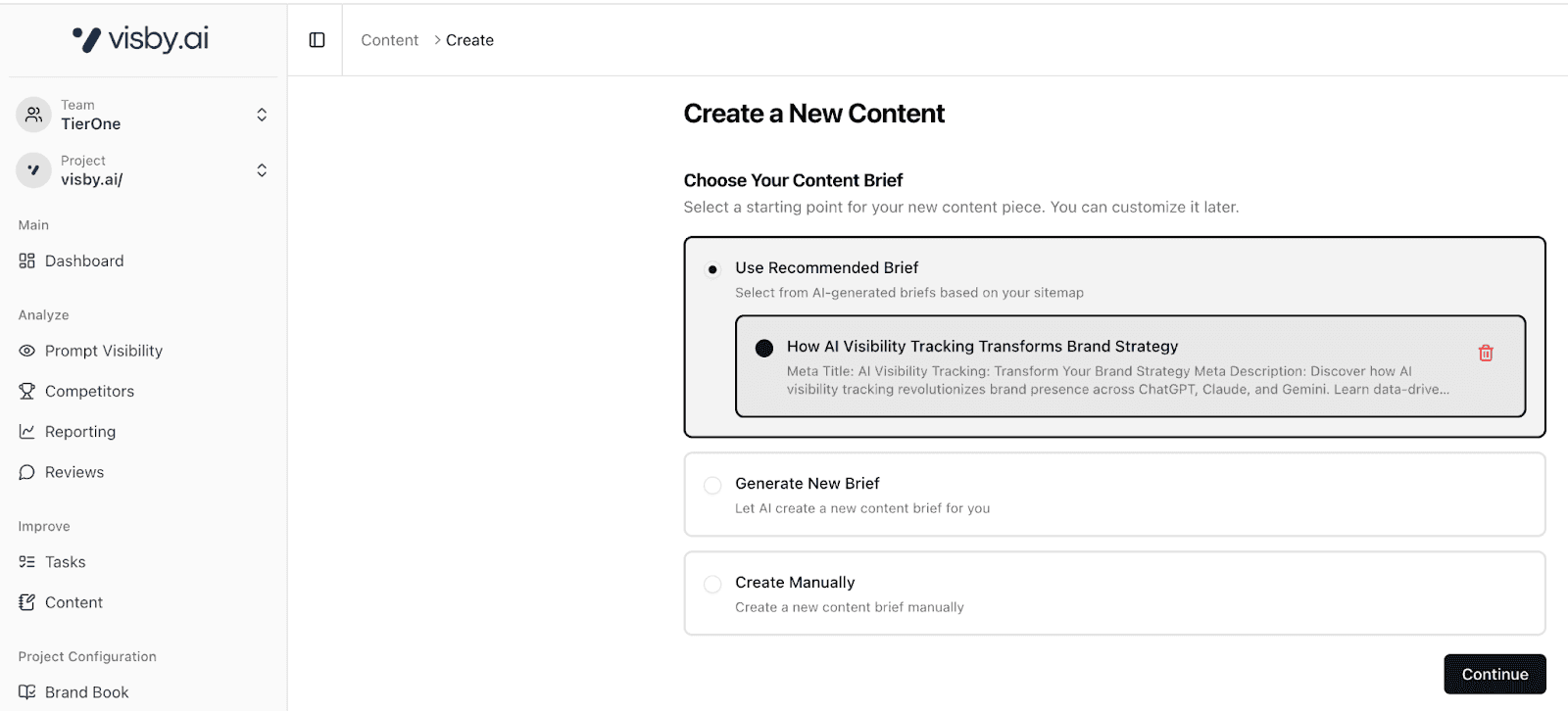
A modern content strategy should also include tracking. It is not enough to publish content and assume it is performing well. You need to understand whether AI systems are actually using your pages in generated answers.
This is where a Visby AI can support your strategy in a more advanced way. It not only shows how your content appears across AI-driven experiences, but also analyzes your website by scanning your sitemap and existing pages.
Based on this analysis, Visby AI identifies content gaps and suggests missing topics that can improve your AI visibility. Instead of guessing what to create next, you can rely on data-backed recommendations.
In addition, the platform supports the full content creation process. It can generate structured content briefs and full blog articles. You can either follow automated suggestions or provide your own brief, choose your target language, and adjust the tone of voice to match your brand.
This makes content optimization more practical, scalable, and aligned with how AI systems actually select and use content.
What Should You Prioritize First?
If you want to simplify the process, start with these priorities:
Focus on high-quality, intent-driven content
Continuously update and improve existing pages
By adapting your strategy step by step in this way, you can build stronger visibility in AI-driven search environments and create content that performs better over time.
What Is the Most Important Thing to Remember?
The most important thing is simple:
If your content is not useful for humans, it will not work for AI.
AI systems aim to deliver the best possible answers. If your content is clear, structured, and valuable, it will naturally be selected.
That’s why learning how to optimize content for AI is not just a trend it is the future of content strategy.

