Back
7 Best ChatGPT Rank Tracker Tools for 2026
Compare the 7 best ChatGPT rank tracker tools for citation tracking.


ChatGPT now sees more than 900 million weekly active users and handles roughly 2.5 billion prompts a day, which puts it in a different league from every other AI answer engine on this list of platforms. For a brand, that scale changes what visibility even means. A mention inside a ChatGPT answer is not a click on a blue link, it is a recommendation delivered to someone who has already decided to trust the response. This guide breaks down how to track that visibility and where each tool lands on AI visibility rank tracker pricing.
That is a different competition than the one SEO has trained us for. Ranking on Google used to be the whole game. Now you also need to be the brand ChatGPT reaches for when someone asks for a recommendation, a comparison, or a fix to a problem your product solves.
Tracking that is harder than it sounds, and it is structurally different from tracking Perplexity or Google AI Overviews. ChatGPT does not always show its work. Many answers are generated straight from the model with no search step and no citation at all, which means a brand can be recommended by name with nothing to click, and most tracking tools built for Perplexity's link heavy source panel miss that entirely.
We tested and compared the 7 best ChatGPT rank tracker tools in 2026 based on how they handle that gap, how deep their prompt coverage goes, and how much of the data actually turns into something you can act on rather than just a dashboard to check.
Best ChatGPT Rank Tracker Tools Comparison Table in 2026
Here is a side by side comparison of the tools covered in this guide, based on their core strengths, ideal use case, and starting price.
Tool | Best For | Key Insight | Starting Price |
Visby | Turning ChatGPT citation gaps into prioritized, site specific tasks | Prompt level ChatGPT tracking plus automated task generation across Claude, Google AI Overview and Gemini too | From $79/mo |
Profound | Enterprise ChatGPT visibility monitoring | Conversation Explorer and crawler analytics on top of deep multi engine coverage | From $99/mo |
Otterly AI | Fast, low cost entry point | Simple ChatGPT citation and mention tracking with minimal setup | From $29/mo |
Peec AI | Lightweight prompt tracking and sentiment on ChatGPT | Interface scraped data that mirrors what real ChatGPT users see | From $95/mo |
Ahrefs (Brand Radar) | SEO teams extending an existing Ahrefs workflow into ChatGPT | ChatGPT citation tracking layered onto keyword and backlink data | From $199/mo |
Nightwatch | SEO teams adding ChatGPT tracking without leaving their rank tracker | Citation and sentiment analysis bundled with classic Google rank tracking | €79/mo (~$85) |
Semrush (AI Toolkit) | Existing Semrush users who want ChatGPT data in one place | ChatGPT mention tracking inside the familiar Semrush dashboard | From $99/mo |
What Is a ChatGPT Rank Tracker Tool?
A ChatGPT rank tracker is a tool that monitors how your brand shows up inside ChatGPT's answers, whether that is a direct citation with a link, a mention in the text with no link at all, or simply the absence of your brand where a competitor appears instead.
Unlike a traditional rank tracker, which watches a position on a results page, a ChatGPT tracker runs a defined set of prompts against the model on a schedule and records what comes back. Good tools separate cited answers, where ChatGPT is using its search or browsing capability and links to a source, from mention only answers, where the model is drawing on its training data or memory and naming a brand without a link.
That distinction matters more for ChatGPT than for almost any other engine, because a large share of ChatGPT's answers still come back with no citation attached.
Why ChatGPT Tracking Needs Its Own Approach?
Most teams assume a tool built for Perplexity or Google AI Overviews will work fine for ChatGPT. It usually does not, and the gap comes down to three structural differences.
Citations are conditional, not constant. ChatGPT only shows a source when it actually searches the web, which happens for time sensitive or fact heavy prompts. For a lot of comparison and recommendation queries, especially ones ChatGPT feels confident answering from memory, there is no citation at all, just a brand name in the prose. Tools that only count links miss most of that volume.
Memory and custom instructions shift the answer. Logged in users with memory turned on, or a saved set of custom instructions, can get a noticeably different answer to the same prompt than a fresh, logged out session. Most trackers test a clean, memory off session by default, which is the right baseline, but it is worth knowing that it is a floor rather than a full picture of what every user sees.
The model changes under you. OpenAI ships new default models and routing logic on a rolling basis, and a prompt that returned your brand last month can return a competitor this month with no change on your end. Tracking needs to run continuously, not as a one time audit, or the data goes stale within weeks.
One implication follows from all three: mention tracking is not optional for ChatGPT the way it might be for Perplexity. A tool that only reports citations is reporting a fraction of your real visibility.
The 7 Best ChatGPT Rank Tracker Tools in 2026
1. Visby
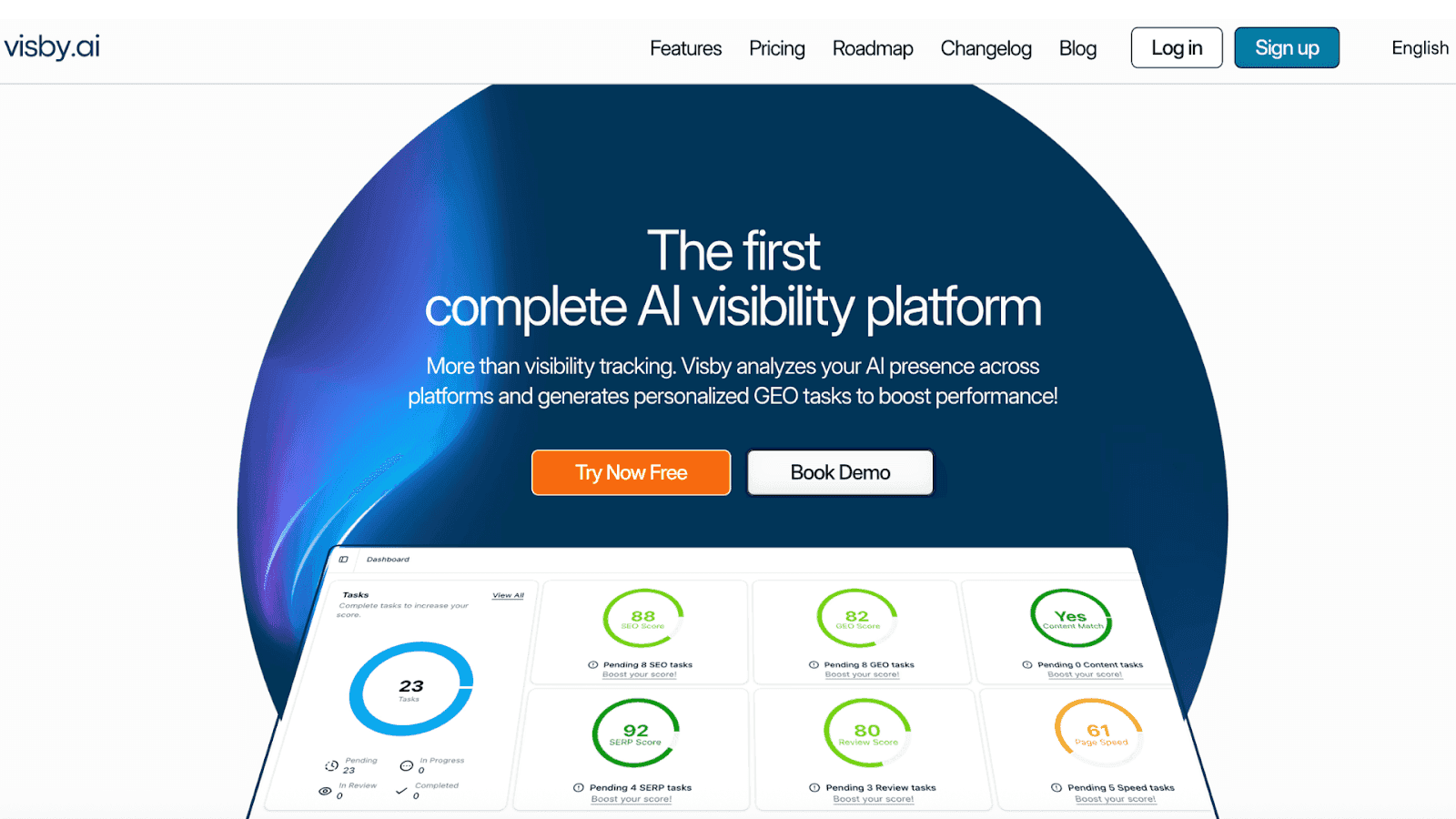
Visby AI is our top pick for ChatGPT tracking in 2026, and it is built for teams that want to do more than watch a dashboard fill up with numbers.
Most ChatGPT rank trackers stop at reporting. They show you how often you are cited, how often you are mentioned without a link, and how you compare to competitors across a prompt set. That is useful, but it does not tell you what to do about a gap, and that is where Visby is different.
The platform tracks ChatGPT performance at the prompt level, alongside Claude and Gemini, and separates cited answers from mention only answers so you can see exactly which of your gaps are a missing source and which are a missing brand mention entirely. It then converts what it finds into site specific tasks tied to the actual prompts where a competitor is showing up instead of you.
Visibility is also mapped across the funnel. Awareness, consideration, and conversion prompts are tracked separately, which makes it possible to prioritize fixes by where you are actually losing buyers rather than chasing every visibility metric with equal weight. Visby connects that data to Google Analytics, so referral sessions from chatgpt.com show up next to the citation and mention gains that produced them.
Best for
SEO teams, growth marketers, and product led companies that want prompt level ChatGPT tracking, competitor gap analysis, and actionable tasks rather than a monitoring only dashboard.
Pros
Tracks ChatGPT visibility at prompt level, and separates citations from mention only appearances
Shows exactly which prompts a competitor is winning instead of you
Automatically generates prioritized, site specific SEO and GEO tasks from the gaps it finds
Funnel based tracking for awareness, consideration, and conversion prompts
Ties ChatGPT visibility gains to real referral traffic and conversions through Google Analytics
Covers Claude and Gemini in the same workspace, useful once ChatGPT tracking is dialed in
Cons
Advanced features are still expanding as the product evolves
Teams brand new to AI visibility may need a short ramp up to use the task system fully
Pricing
Starter plan starts at $79 per month
Growth plan starts at $199 per month
Enterprise plan uses custom pricing
Full plan details, including what unlocks at each tier, are on the AI visibility rank tracker pricing page.
Verdict: Visby is the strongest pick on this list for teams that do not want ChatGPT visibility data to sit unused in a dashboard. The citation versus mention split and the automated task engine are what set it apart from monitoring only tools, and it is the only platform here built end to end to close the gap rather than just measure it.
2. Profound
Profound is the enterprise standard for AI visibility monitoring, and its ChatGPT coverage is among the deepest available.
The platform's Conversation Explorer lets teams read through how ChatGPT actually builds an answer, what sources get pulled in when search is triggered, and how a competitor is framed relative to your brand. On top of that, Profound tracks crawler activity from GPTBot at the page level, which is a useful diagnostic for large sites trying to understand why certain pages get pulled into ChatGPT answers and others do not.
Best for
Enterprise marketing and SEO teams that need deep ChatGPT analytics, multi engine coverage, and integration with existing BI infrastructure.
Pros
Deep Conversation Explorer view into how ChatGPT constructs an answer
Crawler level analytics via GPTBot tracking for large content operations
Broad engine coverage beyond ChatGPT once you move up tiers
Strong fit for governance and auditability requirements
Cons
Entry plan covers ChatGPT only, with no room for Perplexity or Gemini until Growth
Pricing and onboarding complexity favor larger teams
Mostly an insights layer, turning data into action still falls on your team
Pricing
Starter plan starts at $99 per month and covers ChatGPT only
Growth plan starts at $399 per month and adds more engines
Enterprise plan uses custom pricing
Verdict: Profound is the right call for large teams that need the deepest available ChatGPT dataset and are prepared to work through a sales process to get it. Smaller teams on a tighter budget will likely outgrow the entry tier fast.
3. Otterly AI
Otterly AI is the clearest entry point on this list, with straightforward monitoring, fast setup, and a low monthly cost.
It covers ChatGPT alongside the other major AI engines, surfaces brand mentions and citation trends, and presents competitive positioning in a dashboard built for teams that are new to AI visibility rather than teams that need deep diagnostics.
Best for
Beginners, small teams, and consultants who want to start tracking ChatGPT visibility without a steep learning curve or a big upfront spend.
Pros
Low starting price and fast setup
Covers ChatGPT and other major AI engines out of the box
Simple dashboard with minimal configuration
Cons
Built for fast time to value, not deep diagnostics
No funnel level analysis or task driven optimization
Teams tend to outgrow it within a few months of active use
Pricing
Starts at $29 per month
Verdict: Otterly is a sensible starting point for teams that just need to know whether they show up in ChatGPT answers. Once you need to act on that data, you will likely need to graduate to a more complete platform.
4. Peec AI
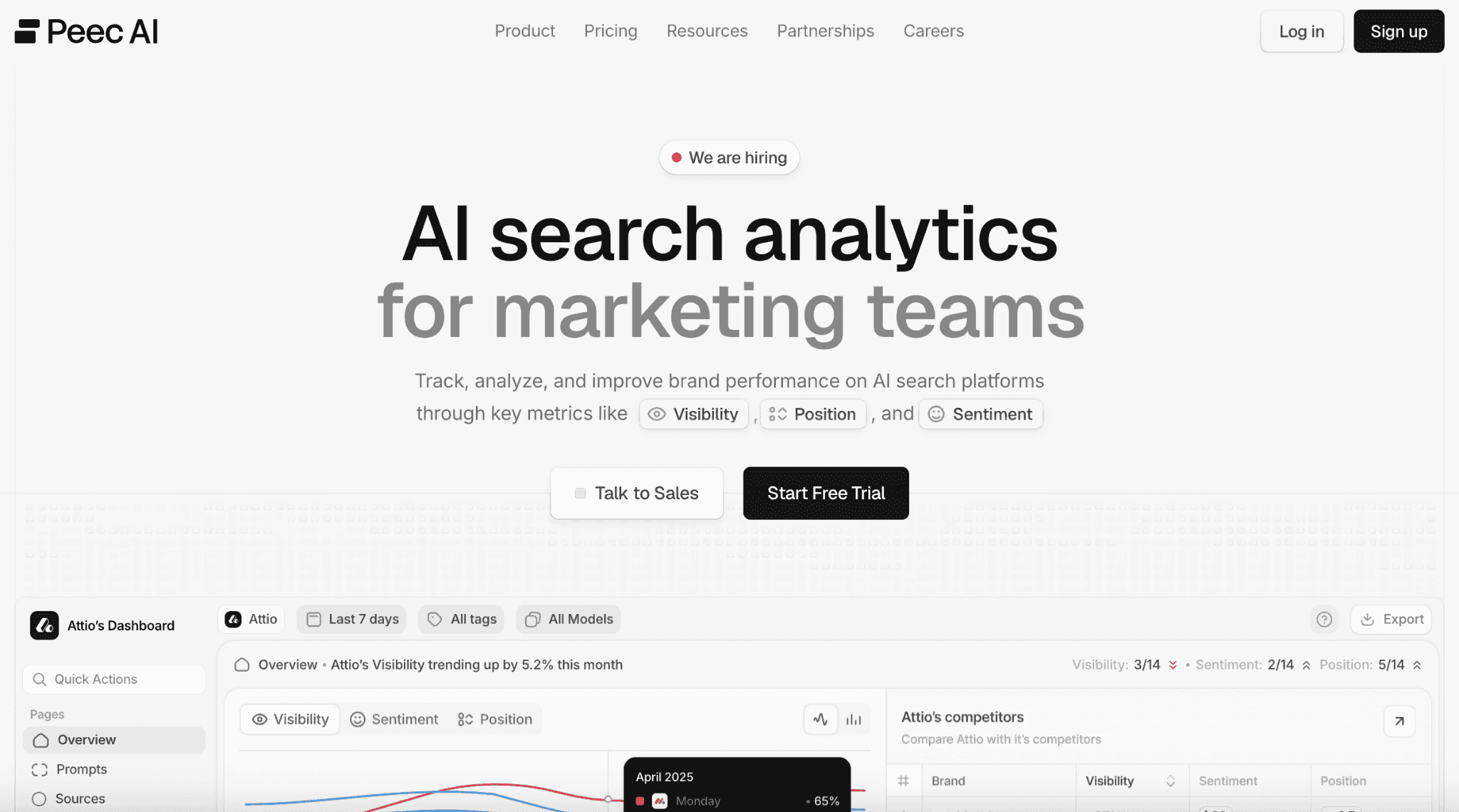
Peec AI is a lightweight tracker focused on prompt visibility and sentiment, and it takes a different approach to collecting ChatGPT data than most of the tools on this list.
Instead of querying the API, Peec scrapes the actual chat interface, which means it captures the response a real user would see, browsing behavior and citations included, rather than a stripped down API version of the answer. It also scores sentiment at the attribute level, so you can see not just whether ChatGPT mentions your brand but how it frames you.
Best for
Growing startups and mid market teams that want accurate, sentiment aware ChatGPT tracking without a heavy setup process.
Pros
Interface scraped data reflects what real ChatGPT users actually see
Attribute level sentiment tracking, useful for reputation sensitive categories
Clean interface and fast onboarding
Unlimited seats on every plan
Cons
Focused mainly on monitoring, with no built in task system to act on gaps
Self serve tiers cap engine selection, so ChatGPT competes for a slot with other engines
Additional engines and advanced features require higher tiers
Pricing
Starter plan starts at $95 per month
Pro plan starts at $245 per month
Advanced plan starts at $495 per month
Enterprise plan uses custom pricing
Verdict: Peec is a solid choice for teams that want accurate, sentiment aware ChatGPT reporting over built in execution. Teams that also want a platform to tell them what to fix will likely need to pair it with something else.
5. Ahrefs (Brand Radar)
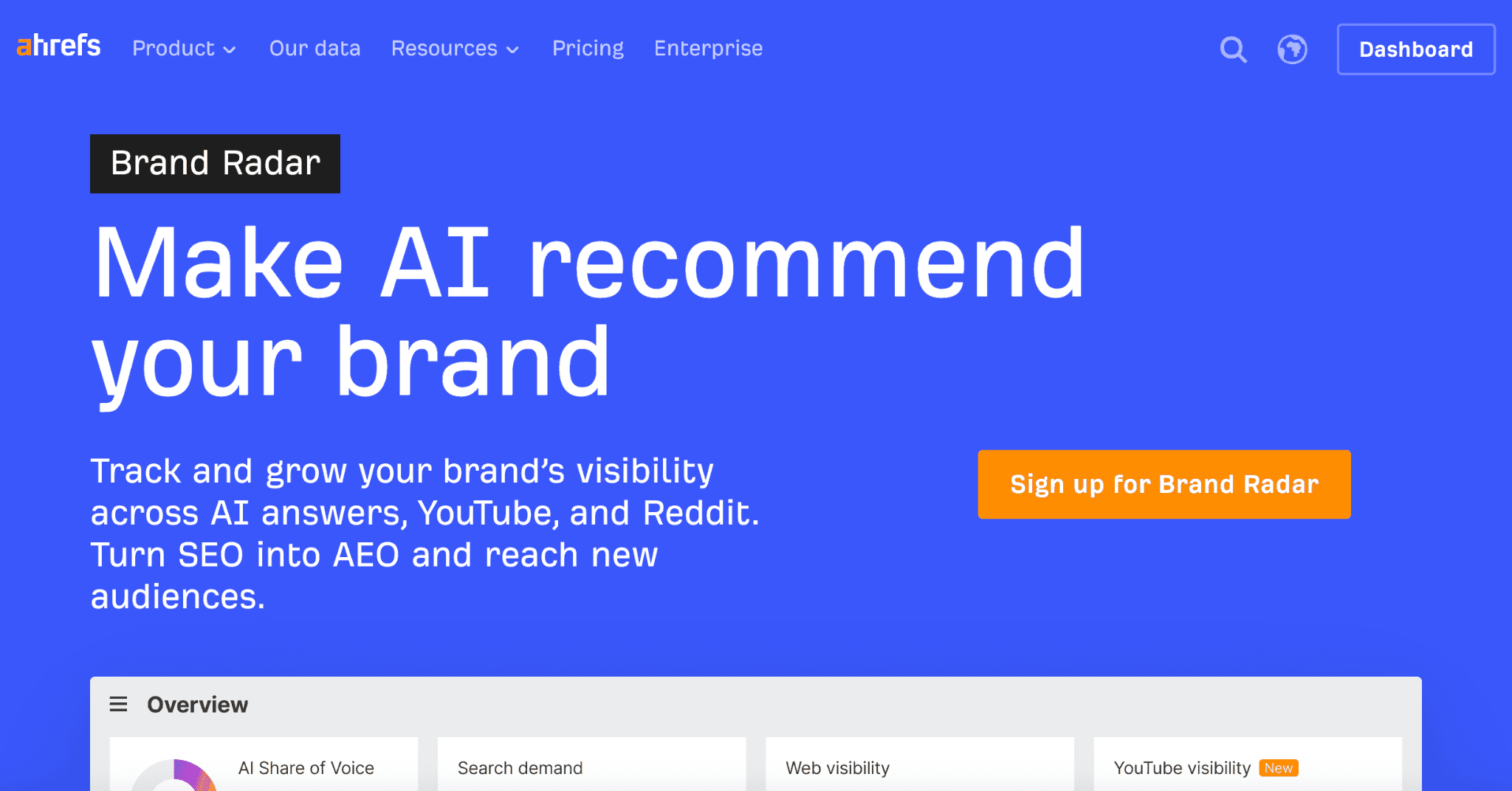
Ahrefs extends its well known SEO ecosystem into ChatGPT tracking through Brand Radar, and its biggest structural advantage is scale. The platform pulls from a database of more than 395 million monthly organic prompts drawn from real search behavior, rather than a synthetic prompt generator, which makes it useful for discovering ChatGPT prompts you did not know to track.
For teams already running Ahrefs for organic search, this is also the path of least resistance. ChatGPT visibility sits next to the keyword and backlink data you already check, and historical trend data comes built in.
Best for
SEO professionals already using Ahrefs who want ChatGPT citation tracking without adopting an entirely new platform.
Pros
Largest real search prompt database in this category, strong for prompt discovery
Strong integration with existing keyword and backlink data
Historical data supports trend analysis over time
Cons
ChatGPT specific features are less mature than dedicated AEO specialists
Requires an active Ahrefs subscription plus add on pricing
Leans toward analysis over actionable next steps
Pricing
Starts at $199 per month per AI platform, and requires an active Ahrefs plan from $129 per month
Full platform access runs up to $699 per month
Verdict: Brand Radar makes the most sense for teams that already run their SEO program inside Ahrefs. Teams without an existing subscription will likely get more from a purpose built ChatGPT tracker for the price.
6. Nightwatch
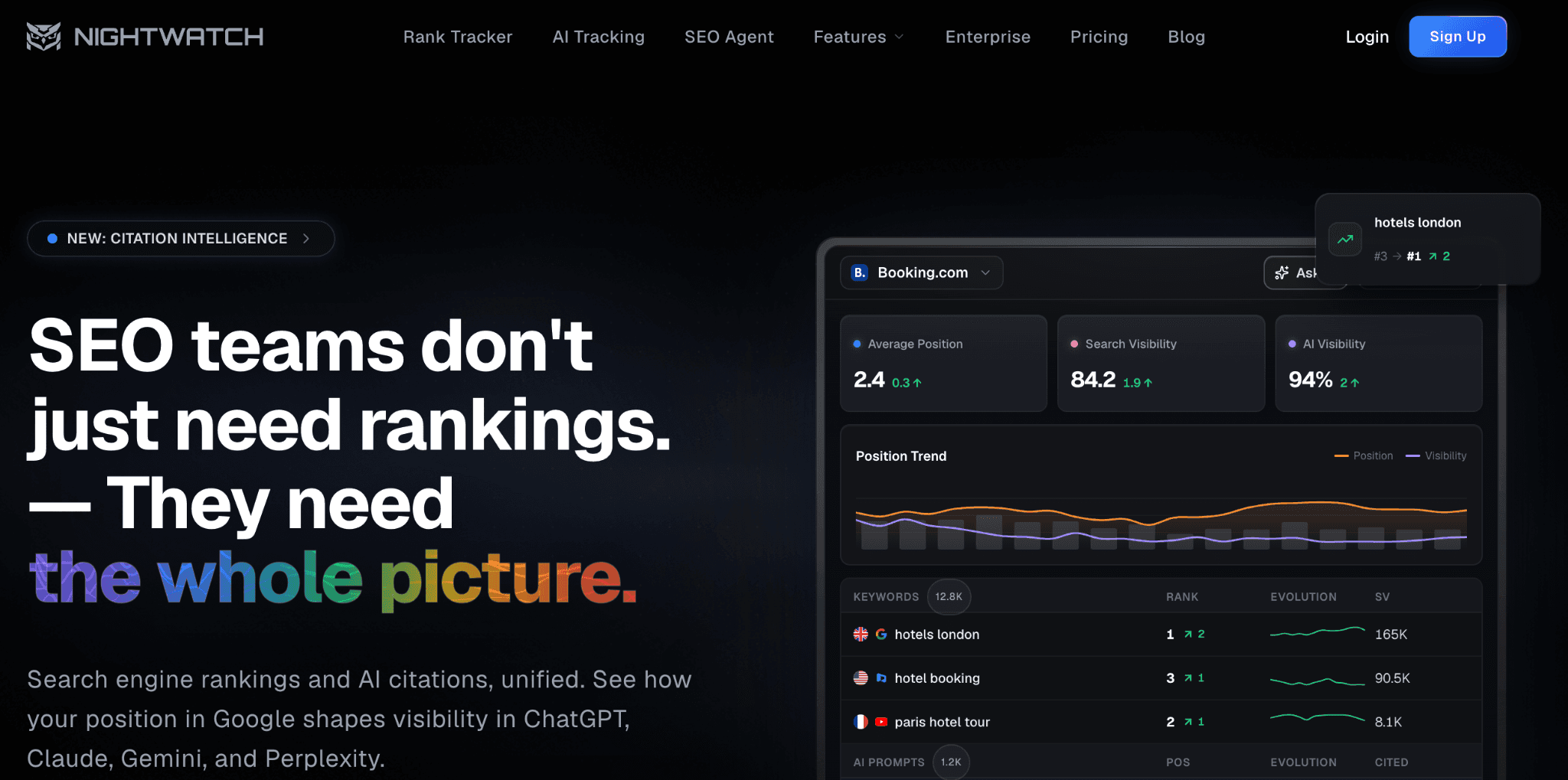
Nightwatch pairs long standing Google rank tracking with AI visibility, and ChatGPT is included on every tier, starting with the entry plan. For SEO teams that already think in terms of keyword rank tracking and want to add ChatGPT without learning a new tool or paying per seat, it is a natural fit.
Unlimited team seats on every plan is the structural differentiator here. Agencies tracking several client brands tend to get more value out of Nightwatch's pricing model than out of the per seat tools elsewhere on this list.
Best for
SEO teams adding ChatGPT tracking without leaving their existing rank tracker, especially agencies managing multiple client accounts.
Pros
ChatGPT, Perplexity, Claude, Gemini, AI Mode, and AI Overviews on every tier
Citation analysis and sentiment analysis included with AI tracking
Unlimited user seats on every plan, no per seat fees
Classic rank tracking across Google, Bing, YouTube, and Maps in the same tool
Cons
50 AI prompts on the entry tier is modest for a fully built out prompt set
AI tracking features are newer than those of ChatGPT first specialists
Pricing in euros means USD buyers face some FX noise
Pricing
Starter plan starts at €79 per month (roughly $85), 500 keywords and 50 AI prompts
Professional plan starts at €159 per month
Agency plan starts at €399 per month
Verdict: Nightwatch fits SEO teams and agencies that want ChatGPT tracking bundled with the classic rank tracking they already run, without paying extra per seat.
7. Semrush (AI Toolkit)
Semrush layers ChatGPT tracking onto its existing SEO platform through the AI Toolkit, which gives teams a familiar place to check AI visibility without adding a new login to the stack.
It tracks brand mentions across ChatGPT, Google AI Overviews, Gemini, and Perplexity from inside the same interface used for organic rankings and traffic, which cuts down on context switching when reporting to stakeholders who already know the Semrush dashboard.
Best for
Existing Semrush users who want ChatGPT visibility data without adding a new platform to the stack.
Pros
Seamless integration with Semrush's existing SEO workflows
Clear reports and dashboards that non technical stakeholders can read
Low friction adoption for current Semrush customers
Cons
An add on to a general SEO platform, not a purpose built ChatGPT tracker
Limited prompt level depth and customization
Requires higher tiers or add ons to scale prompt volume
Pricing
Starts at $99 per month, with additional features and limits available through add ons
Verdict: The AI Toolkit is a practical add for teams already inside the Semrush ecosystem. Teams without an existing subscription will likely find more prompt level depth in a dedicated ChatGPT tracker.
How to Choose the Right ChatGPT Rank Tracker?
ChatGPT trackers sit on a spectrum from monitoring to optimization, and where you need to be on that spectrum depends on how you plan to use the data.
New to ChatGPT tracking and just need a baseline: Otterly AI gives you a low cost way to start tracking brand mentions.
Already inside Ahrefs or Semrush: Brand Radar or the AI Toolkit are the lowest friction way to add ChatGPT data to a workflow you already run.
Need enterprise scale coverage and governance: Profound offers the deepest single engine analytics and crawler data for large teams.
Want clean, sentiment aware competitive benchmarking: Peec AI is built for exactly that, with fast onboarding.
Already run a classic SEO rank tracker and want to bolt on AI: Nightwatch adds ChatGPT tracking with unlimited seats on every tier.
Want to actually close the visibility gap instead of just measuring it: Visby is built for this. It is the only platform here that separates citations from mention only appearances, turns prompt level ChatGPT data into prioritized, site specific tasks, and ties them back to real traffic and conversions.
That last distinction, monitoring versus improving, is the one that matters most. Monitoring tells you where you stand. It does not change the outcome. If the goal is to close the gap between where your brand is and where it should be in ChatGPT's answers, you need a platform built to act on the data, not just display it.
FAQ About ChatGPT Rank Tracker Tools
What is a ChatGPT rank tracker?
A ChatGPT rank tracker is a tool that monitors how a brand appears inside ChatGPT's answers, tracking citations, mentions without a link, and competitor visibility across a defined set of prompts run on a schedule.
How is ChatGPT tracking different from Perplexity or Google AI Overviews tracking?
The biggest difference is how often ChatGPT actually links to a source. Perplexity shows a prominent, ordered source panel on almost every answer, and Google AI Overviews link inline fairly consistently. ChatGPT only cites when it triggers a search step, which means a large share of its answers mention a brand with no link at all. Tools built for Perplexity's link heavy format will undercount ChatGPT visibility unless they also track mentions.
What is the best ChatGPT rank tracking tool under $100 per month?
Otterly AI at $29 per month is the cheapest entry point. Visby Starter at $79 per month covers ChatGPT tracking with automated task generation on a flat plan. Semrush AI Toolkit and Profound Starter both begin at $99 per month, though Profound's entry tier covers ChatGPT only.
How does ChatGPT decide which sources to cite or mention?
When ChatGPT triggers its search or browsing capability, it pulls from a mix of high authority publishers, recent content, and structured pages that answer a question clearly and quickly. When it answers from training data or memory instead, it draws on whatever brands and products it associates most strongly with the topic, which is shaped by how often and how favorably a brand appears across the sources the model was trained or fine tuned on.
How do I get cited or mentioned by ChatGPT?
Do not block GPTBot in robots.txt. Publish clear, scannable content that answers a specific question in the first sentence of each section, since that structure is easiest for the model to pull into a cited answer. Build genuine authority and mentions across the web, since training and memory driven answers lean on how consistently a brand shows up across high quality sources, not just a single optimized page. Track which competitors are showing up for the prompts that matter and work backward from their content and mention profile.
Can I track ChatGPT rankings in Google Search Console?
No. Google Search Console only reports on Google Search and has no visibility into ChatGPT's answers. A dedicated ChatGPT tracker is required to see whether a brand is being cited or mentioned inside ChatGPT's responses.
How much do ChatGPT rank tracking tools cost?
Pricing varies by platform and depth of coverage. Entry level tools like Otterly AI start under $30 per month, mid market platforms like Visby, Peec AI, and Semrush's AI Toolkit start around $80 to $100 per month, and enterprise platforms like Profound scale into the hundreds or move to custom pricing at full engine coverage.
What to Do Next?
The fastest way to see where a brand stands inside ChatGPT is to run a check with a dedicated tracker and see which prompts surface the brand, which competitors share the answer, and whether the appearance is a real citation or just a mention. For related reading, our guides to the best GEO tools, the best AEO tools, and the best AI SEO tools cover the wider set of platforms this list connects to, along with how citation and mention tracking differs across ChatGPT, Claude and Gemini.

Latest posts
Discover other pieces of writing in our blog