Back
How to Get Cited by ChatGPT? 9 Proven Tactics in 2026
Getting cited by ChatGPT comes from structured, up-to-date content and consistent brand presence across the web.
Mar 24, 2026
Getting cited by ChatGPT is one of the most talked-about goals in digital marketing right now, and for good reason. AI-powered search tools are changing how people find information, compare products, and make decisions. If your brand doesn't show up in those answers, you're missing a growing share of the conversation.
But here's the thing: most of the advice out there treats ChatGPT citations like some kind of hidden trick. It's not. What works is a mix of solid content fundamentals and a few specific adjustments that make your pages easier for AI systems to read, trust, and repeat. This guide covers 9 tactics that actually move the needle in 2026.
Why Doesn't ChatGPT Cite Every Source?
ChatGPT doesn't work like Google. It doesn't return a ranked list of links and let users decide. Instead, it synthesizes information from many sources into a single answer, and only occasionally surfaces citations. That means most content gets read and used without any credit.
The model leans toward sources that are clear, consistent, and appear across multiple trusted pages. If your brand only lives on your own domain with no mentions elsewhere, you're essentially invisible to the system's consensus-building process. It's not personal, it's just how probabilistic text generation works.
This is why you'll sometimes see a weaker competitor cited over you even when your content is objectively better. The model isn't reading for quality the way a human editor would. It's pattern-matching across a large set of inputs, and the pattern it trusts most is: many places say the same thing about this brand.
How Does ChatGPT Actually Decide What to Cite?
Understanding the basic logic behind citations helps you stop guessing and start making deliberate choices. You don't need a technical deep-dive, but a rough mental model goes a long way.
What Happens Between a User Query and Your Brand?
When someone asks ChatGPT a question, the model doesn't just scan your site. It runs multiple related searches internally, collects candidate pages, compares them, and then generates a response that blends what it found. Your page is one input among many.
The parts of this process you can actually influence are: how well your content ranks in classic search (which feeds into what gets fetched), how cleanly your HTML is structured (which affects how easily the page is parsed), and how consistently your brand appears across different domains (which shapes the consensus the model builds). From a user query to your brand being cited, this process happens in five stages:
Stage | What Happens | Where You Can Influence It |
1. Understand the query | Model detects intent, entities, and needed detail level | How clearly your niche, product type, and use cases appear across the web |
2. Fan out to the web | LLM runs multiple related searches internally | Classic search rankings, strong topical coverage, clean metadata |
3. Collect candidates | Pages are fetched and processed as text chunks | Clean HTML, crawlable content, no heavy client-side rendering walls |
4. Re-rank and deduplicate | System blends sources, removes near-duplicates | Appearing on multiple domains, consistent messaging, strong authority |
5. Generate answer | Model writes a response and selects citations | Tables, lists, and clear direct answers increase likelihood of being cited |
Why Does Consensus Matter More Than One Great Article?
If ten different sites describe your product in similar terms, that description starts to look like a fact to the model. It's not about being quoted once by a high-authority publication. It's about showing up repeatedly, in consistent language, across a variety of sources.
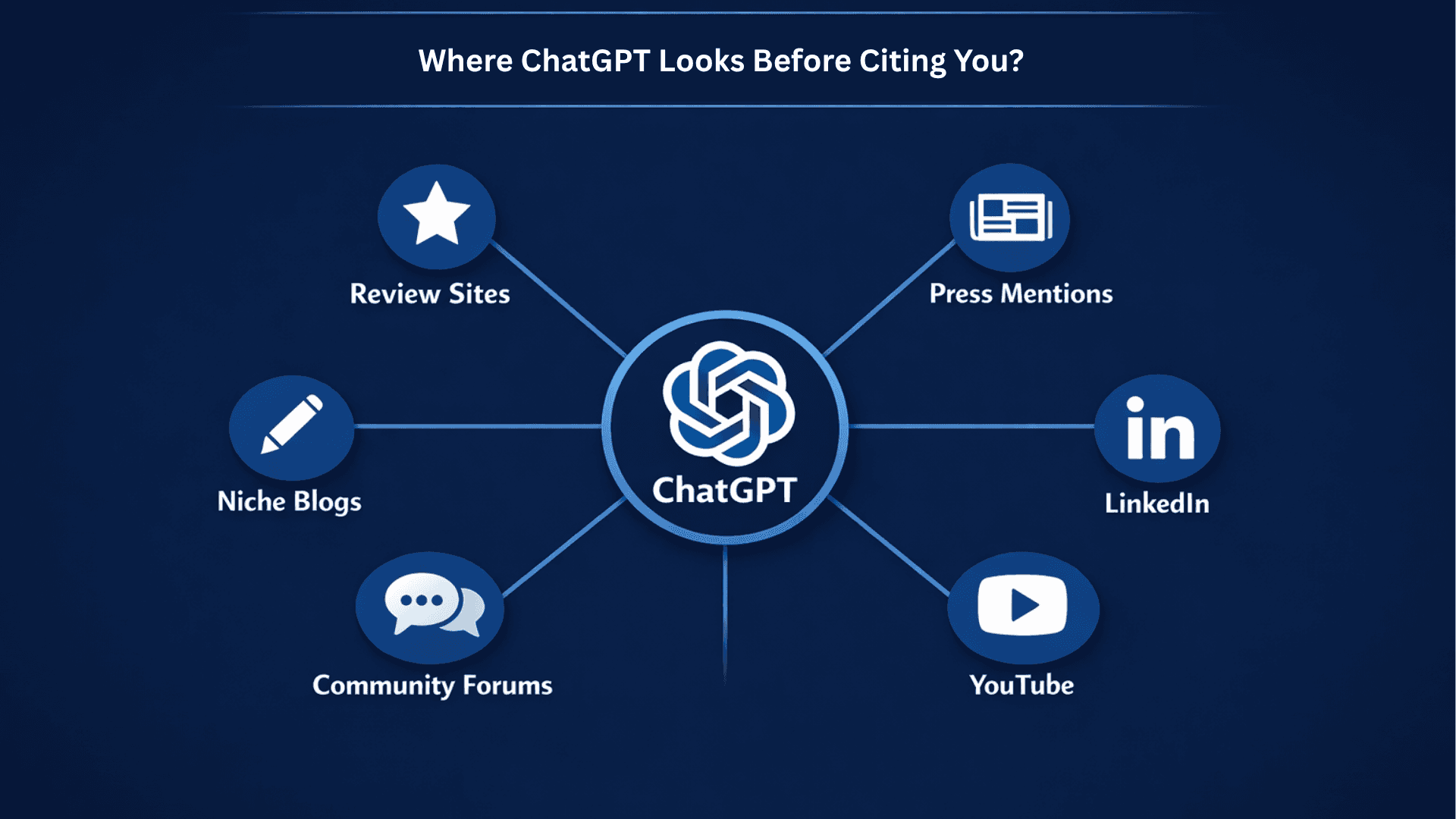
This is why brands that actively manage their presence on review platforms, comparison sites, niche blogs, and community forums tend to perform better in AI-generated answers. It's less about SEO in the traditional sense and more about making sure the web's collective description of your brand is accurate, specific, and repeated often enough to stick.
What is the 180 Day Recency Rule?
LLMs, including ChatGPT, tend to favor content that has been published or updated within the past three to six months, especially for commercial topics like tools, products, and best-of comparisons. The model's search layer often appends the current year to queries internally, which means older pages can get filtered out even if the underlying content is still accurate.
This doesn't mean you need to rewrite everything constantly. But if you have important pages that haven't been touched in over a year, they're likely underperforming in AI answers regardless of how good they are.
1. Build Brand Consensus Across Multiple Sites
This is the single most important tactic on this list, and also the most underestimated. Your own website saying great things about your brand is not enough. ChatGPT needs to see that story repeated across sources it has no reason to distrust.
Start by identifying the core phrases that describe what you do. Something like "project management tool for remote-first teams" or "AI visibility platform for e-commerce brands." Then make sure that description, or something very close to it, shows up on independent review sites, niche comparison pages, community threads, and any press coverage you can generate.
The goal isn't volume for its own sake. You want these mentions to feel natural and editorial, not like a coordinated PR blast. A handful of genuinely specific, consistent descriptions across different platforms will do more than dozens of vague brand mentions.
2. Get Listed in "Best Of" and Comparison Content
ChatGPT is trained on the kind of content people actually read, and people read a lot of listicles and comparison articles. "Best CRM for small agencies," "top AI writing tools in 2026," "Notion vs. Coda for remote teams" - these formats get cited heavily because they're structured in a way that's easy for models to extract and repeat. This is what a ChatGPT-friendly comparison table looks like:
Product Name | Best For | Key Feature | Pricing Model |
Tool A | Solo consultants | Auto-reporting | From $29/mo |
Tool B | Small agencies | Client dashboards | From $79/mo |
Tool C | Enterprise teams | Role-based access | Custom pricing |
Getting your product or brand into these articles is one of the most direct ways to increase your citation chances. Reach out to publishers who maintain these lists and ask to be included or reviewed. Offer a free trial, a clear value proposition, and a short description they can actually use.
One thing worth noting: the description you provide matters a lot. Don't just send your homepage copy. Write a one or two sentence summary that's specific, honest, and matches how real users describe your product. Models are good at detecting when something sounds like marketing fluff.
If you're a smaller brand, even getting into a few niche comparison posts on industry blogs can move the needle. You don't need to be on every major roundup. You need to be on the ones that your target audience actually reads and searches for.
3. Use Press Mentions to Reinforce Your Brand Entity
Press coverage used to be primarily about link equity and brand awareness. In the context of AI citations, it serves a slightly different purpose: it helps the model build a clear, consistent picture of who you are and what category you belong to.
When a tech blog, industry newsletter, or news site writes about your brand using specific language, that language gets fed into the training and retrieval layers that power ChatGPT's answers. The more those mentions use consistent terminology, the stronger your entity becomes in the model's understanding.
This means the quality of what gets written matters as much as where it gets written. A short mention in a mid-tier industry newsletter that uses precise, specific language about your product can outperform a vague feature in a major publication. Brief your PR contacts on the exact terms you want associated with your brand and make sure they use them.
4. Refresh Your Key Pages Regularly
Refreshing content isn't glamorous, but it's one of the most consistent wins when it comes to AI visibility. Pages that are actively maintained perform better in both traditional search and AI-generated answers.
You don't need to rewrite everything from scratch. For most pages, a real refresh means updating any outdated statistics, revising product features that have changed, adding a short section that addresses something people are asking about right now, and reviewing your FAQ to make sure the questions still match what users actually type.
The key word is "real." Changing a date in the footer or tweaking a meta description doesn't count as a content refresh to an AI system. The changes need to be substantive enough that a crawler returning to the page sees something meaningfully different from what it saw six months ago.
Pick your 10 to 20 most commercially important pages and build a quarterly refresh habit around them. That alone puts you ahead of most competitors who treat their content as a one-time publishing effort.
5. Structure Content for Easy AI Parsing
Models don't read pages the way humans do. They work with chunks of text, and the structure of your page determines how easily those chunks can be identified and extracted. A well-structured page gives the model clear anchor points to pull from when composing an answer.
In practice, this means each heading should represent one distinct idea or question. Paragraphs should be short enough that a single one can stand alone as a quotable answer. Tables and bullet lists placed in the middle of long sections help break up the text in a way that signals clear divisions between topics.
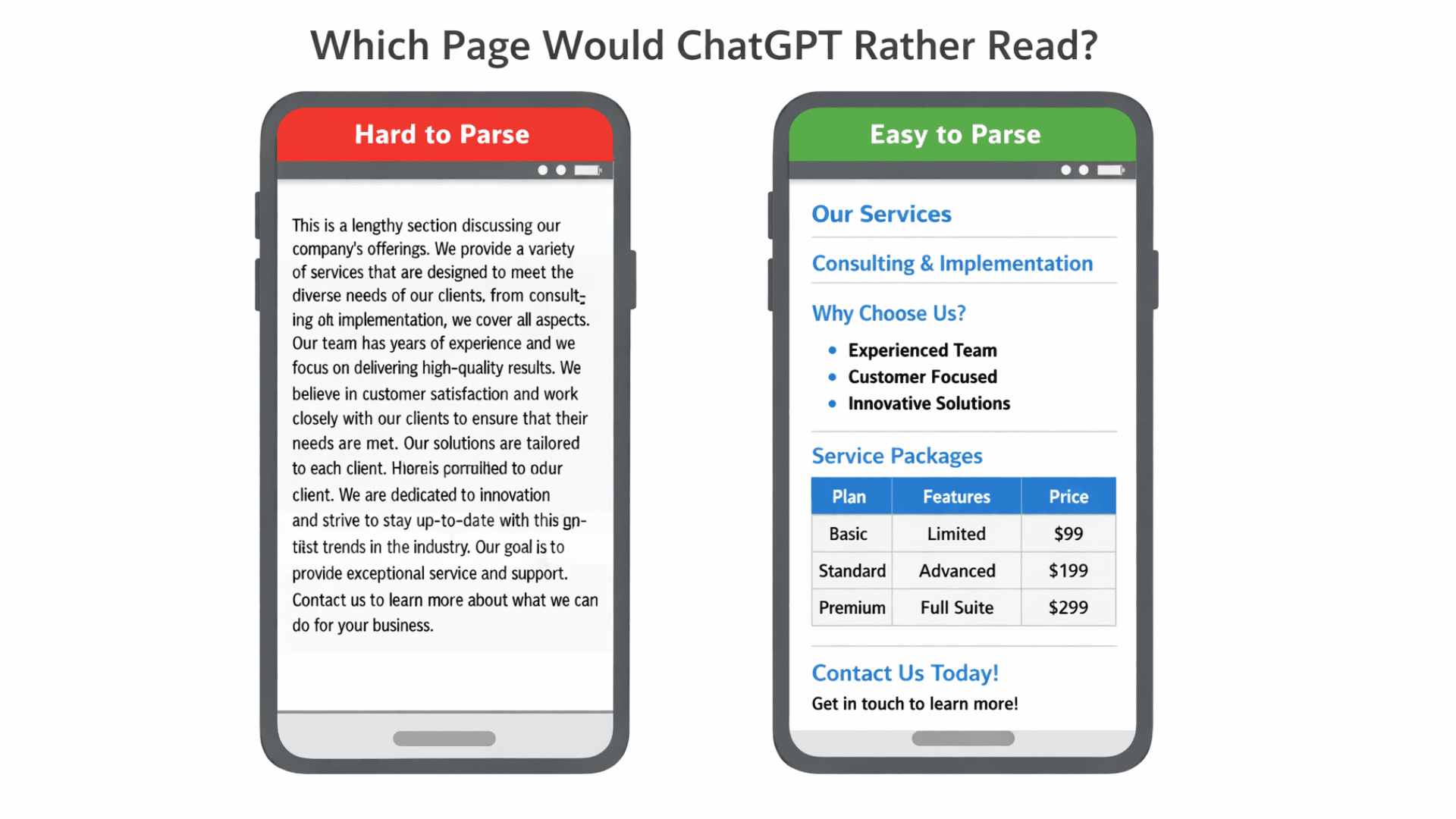
One pattern that works especially well: answer the question first, then expand. Don't bury the lead in three paragraphs of context. If your H2 is "How does X work?", the first sentence under it should answer that question directly. This structure matches how GEO content optimization principles work across generative platforms, not just ChatGPT.
6. Add FAQ Sections That Match Real User Questions
FAQs are one of the most reliable ways to get cited because they're essentially pre-formatted answers. ChatGPT is trained to answer questions, so pages that already contain a clear question followed by a direct answer are easy targets for extraction.
The catch is that generic FAQs don't work. "What is your pricing?" or "How do I contact support?" won't show up in AI answers. The questions need to match the actual language users type into chat interfaces.
Look at your support tickets, sales call transcripts, Reddit threads, and People Also Ask results for your main topics. Those are the questions worth including. Write the answers in plain, direct language: one to two sentences that get straight to the point, followed by any necessary context. Use H3 headings for each question, not just bold text, since heading structure is easier for models to parse.
7. Mine Real User Questions to Drive Your Content
Most content roadmaps are built around keyword tools. That's fine for SEO, but it tends to produce content that covers topics at a surface level rather than answering the specific things real people are confused about. For AI citations, specificity wins.
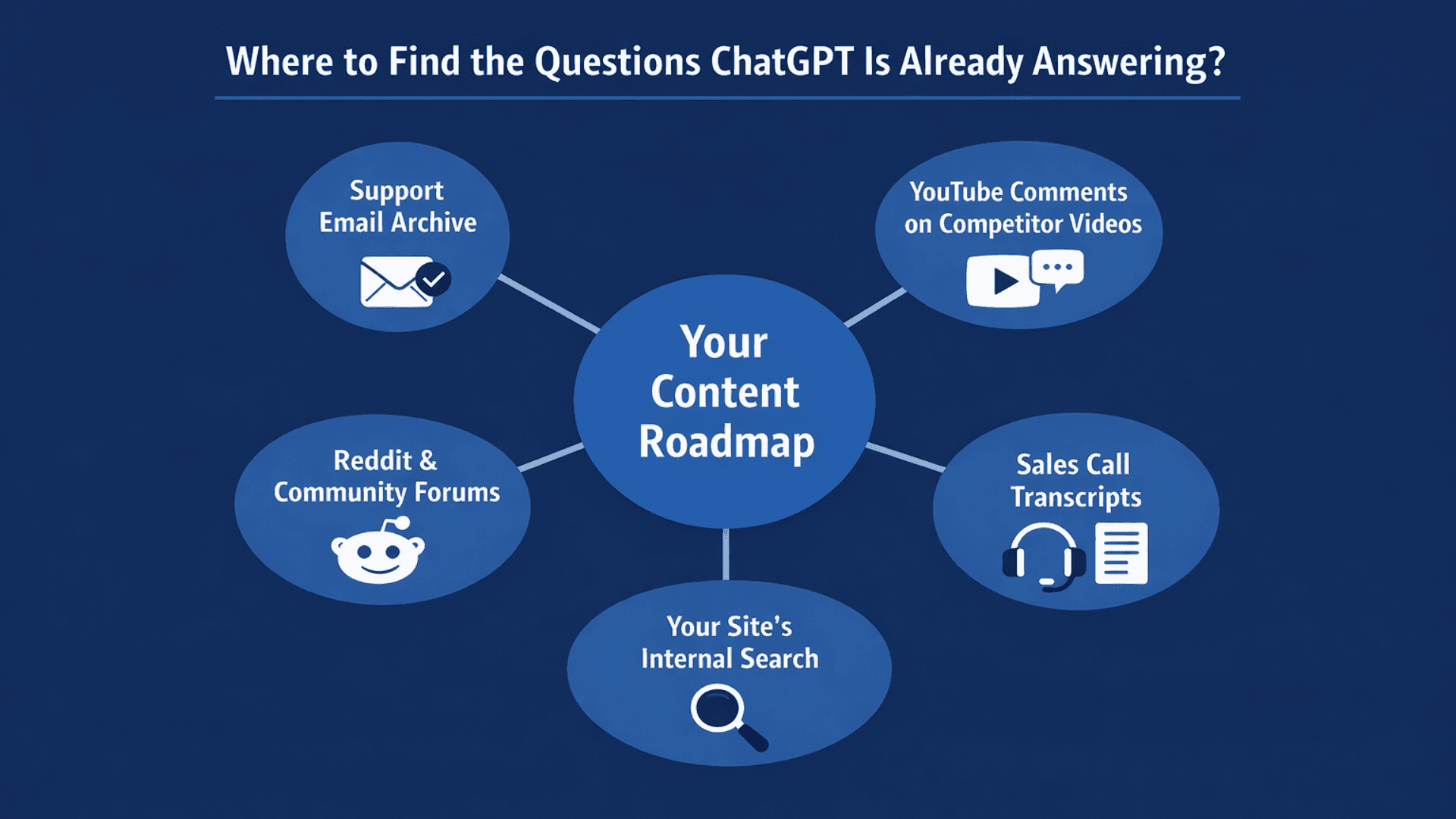
The best sources for real user questions are places most content teams overlook: closed community forums, YouTube comment sections on competitor videos, support email archives, and the search bar on your own site. These are the places where people ask questions in their own words, without any SEO intent behind them.
Once you have a list of genuine questions, you can use them to shape FAQ sections, create standalone blog posts, and build out topic clusters that feel more human and less templated. This connects directly to GEO best practices for beginners, where question-driven content is one of the first recommendations.
8. Show Up on YouTube and Text-First Platforms
A lot of marketers still treat video as a brand channel and text as an SEO channel. That split doesn't reflect how AI systems actually gather information. YouTube descriptions, video transcripts, and LinkedIn articles are all text sources, and they're all crawlable.
If you're already producing videos, make sure the descriptions are doing real work. Include a short summary of what the video covers, list the specific questions you answer, and use chapter titles that are descriptive rather than clever. A video titled "How a 5-person marketing team can automate monthly reporting" with a well-written description will surface in long-tail AI queries in a way that a video titled "Our productivity tips" simply won't.
For LinkedIn and similar text-first platforms, the most effective posts for AI visibility are the ones that read like mini case studies: a specific problem, a clear approach, a concrete result. These posts get scraped, summarized, and fed into models over time. You probably won't see a direct citation, but the language and claims you put out there become part of the broader picture the model builds around your brand.
9. Fix the Technical Basics for AI Crawlers
This one gets skipped more often than it should, usually because teams assume that if Google can crawl their site, AI systems can too. That's mostly true, but there are a few specific issues that cause problems for AI crawlers in particular.
Heavy client-side rendering is the biggest one. If your key content only appears after JavaScript executes, some crawlers will miss it entirely. Server-side rendering or proper pre-rendering for your main content pages is worth the investment if you're relying on those pages for AI visibility.
Clean HTML structure also matters more than most people realize. Meaningful heading hierarchies, proper use of lists, and readable content that doesn't require clicking through tabs or expanding accordions all make a crawler's job easier. For a full picture of how GEO and SEO differ in their technical requirements, it's worth reviewing both side by side.
Where to Start? Simple ChatGPT Visibility Checklist
If you try to act on all nine tactics at once, you'll spread yourself too thin and see results from none of them. A more practical approach is to start with what you already have and build outward.
Begin with your top 10 to 20 pages. Look for the ones that already rank for commercial terms, cover problems your buyers actually have, and haven't been updated in a while. Refresh them with current data, add or improve a comparison table if relevant, and make sure each one has a proper FAQ section with real questions.
From there, identify two or three external platforms where your buyers already spend time and focus your off-site effort there. One in-depth article, a few YouTube videos with real descriptions, and a handful of neutral mentions in comparison content is a more sustainable starting point than trying to be everywhere. Your ChatGPT visibility improves with this simple three-step action plan:
Step | Action | What It Achieves |
1 | Identify your 10-20 top commercial pages and refresh them: update stats, add FAQs, improve tables. | Gives AI crawlers fresher, more structured content to extract from your own domain. |
2 | Pick 2–3 external platforms where your buyers spend time. Publish one in-depth piece on each using consistent brand language. | Builds the cross-domain consensus that makes your brand look credible to LLMs. |
3 | Every quarter, collect new questions from sales and support. Feed them back into pages, FAQs, and videos. | Creates a compounding loop where your content keeps aligning with real user intent. |
After that, set up a simple quarterly loop: collect new questions from sales and support, feed them back into your pages and FAQs, and track which content is getting picked up in AI answers. That's also why understanding what GEO actually is at a foundational level makes all of these tactics click together more clearly.
FAQ About Getting Cited by ChatGPT
Does ChatGPT cite websites directly?
ChatGPT can include citations when using its Browse or search features, but in standard responses it typically synthesizes information without linking to sources. The goal isn't always a direct citation link; it's having your brand's language, claims, and descriptions reflected in the answers the model generates.
How long does it take to get cited by ChatGPT?
There's no fixed timeline. Some brands see improvements within a few weeks of making structural and content changes, while others take several months. The biggest variable is how consistently your brand is described across multiple sources. Building that consensus takes time, especially if you're starting from scratch.
Does having a high domain authority help with ChatGPT citations?
It helps indirectly. High domain authority usually means your pages rank well in traditional search, which increases the chances of them being fetched by ChatGPT's search layer. But domain authority alone won't get you cited if your content is vague, outdated, or poorly structured.
Can small brands get cited by ChatGPT?
Yes and this is one of the more encouraging things about AI search. A small brand with very specific, well-structured content in a niche topic can get cited over a larger brand with generic content. Specificity and clarity often matter more than raw authority when it comes to AI-generated answers.
Is there a way to track if ChatGPT is citing my content?
Directly, no. ChatGPT does not provide a referral or citation dashboard. The most practical approach is to manually query ChatGPT with questions related to your brand and topics, and check whether your content or brand appears in the responses. To manage this process more systematically, Visby enables you to track your brand’s visibility across ChatGPT, Gemini, and Claude through different prompts and analyze how it changes over time.

Emir Erçelen
Sr. SEO/GEO Executive at Visby
Latest posts
Discover other pieces of writing in our blog