All articles
·
15 min read
11 Best AI SEO Tools for Small Business: Tested & Ranked
We tested 11 AI SEO tools for small business by price, features, and AI coverage.

If you run a small business, you’ve probably felt this shift already. Someone asks ChatGPT for “the best accounting software for a five-person team” or “a good dentist near me that takes new patients,” and the answer comes back as a short list, not a page of blue links. Whether your business is even in that list has almost nothing to do with your old Google rankings.
That’s the gap generative engine optimization tries to close. But most GEO platforms are priced and built for marketing teams with a dedicated SEO hire and a five-figure monthly budget, the kind of coverage our broader best GEO tools roundup walks through. A small business doesn’t need that. It needs a tool that tells it, in plain terms, whether AI assistants know it exists and what to fix if they don’t.
We put together this list specifically with that constraint in mind: real self-serve pricing, no mandatory sales call, and a setup you can finish in an afternoon. Think of it as the small-business cut of our full best AI SEO tools comparison. Visby is included and ranked first, since this is our own blog, and we’re obviously not neutral about our own product. Where a competitor beats us on price or on a specific feature, like Rankscale’s engine count or Otterly’s entry price, we’ve said so directly in that tool’s section.
Why AI SEO Matters for Small Businesses in 2026?
Enterprise brands have had a head start on this. They’ve had budget for GEO agencies and dedicated software since the category existed, often layering AEO-specific platforms on top too, which our best AEO tools guide covers in more depth. A small business competing for the same customer, a local law firm against a national chain, a boutique SaaS tool against a funded competitor, doesn’t have that budget, but it does have something bigger companies often lack: a narrower, more specific set of prompts to win.
A five-person accounting firm doesn’t need to rank for “best accounting software” everywhere. It needs to show up when someone asks about accountants in its specific city or niche, which is a much smaller and more winnable target. That’s also why local and niche businesses tend to see faster results from GEO work than large brands chasing broad category terms. If most of your customers come from a specific city or region, our guide on GEO for local businesses goes deeper into that angle specifically.
The practical reason to act now rather than later: AI assistants build their sense of who the trustworthy options are over time, from citations, reviews, and consistent mentions across the web. The businesses that start building that presence in 2026 have a real head start over the ones that wait until it’s an obvious problem. If you want to see how this plays out across every platform and buyer type, not just the small-business cut, our best AI visibility tools comparison covers the fuller landscape.
Best AI SEO Tools for Small Business at a Glance
Best overall for small business: Visby, because it pairs prompt level tracking with tasks that tell you what to actually fix, instead of leaving you with a dashboard.
Cheapest way to start: Rankscale AI at $20/mo, or Otterly AI’s $29/mo Lite plan.
Best free option to test the waters: HubSpot’s AI Search Grader.
Best if you already pay for Semrush or Ahrefs: their built-in AI visibility add-ons.
Best for a content heavy small business: Frase, since tracking lives next to the actual writing tool.
AI SEO Tools for Small Business: Tools Pricing Comparison
Tool | Best For | Starting Price | Engines Tracked |
Visby | Tracking + turning gaps into action | $79/mo | ChatGPT, Claude, Gemini, Google AIO |
Otterly AI | Cheapest published entry price | $29/mo | 4 core (Gemini, AI Mode extra) |
Rankscale AI | Widest engine coverage on a small budget | $20/mo (credit-based) | 17+ |
HubSpot AI Search Grader | Free one-time diagnostic | Free | ChatGPT, Perplexity, Gemini |
Frase | Content teams that want writing + tracking together | $39/mo | ChatGPT, Perplexity, Claude, Gemini |
Writesonic | Combined GEO + SEO workflow | $39/mo | ChatGPT, Perplexity, AI Overviews, Claude |
SE Ranking AI Search | Classic SEO and AI tracking in one bill | $89/mo add-on | 5 |
Peec AI | Clean, low-friction prompt monitoring | $95/mo | 3 of 7 (self-serve) |
Semrush AI Toolkit | Existing Semrush users | $99/mo | ChatGPT, Gemini, AI Overviews + |
Surfer SEO AI Tracker | Existing Surfer content teams | $119/mo | Limited, add-on feature |
Ahrefs Brand Radar | Existing Ahrefs users | $199/mo per engine | 6 |
What Does an AI SEO Tool Actually Do?
Small business owners searching for this end up bundling two different things together, and it’s worth separating them before you buy anything.
AI visibility tracking, sometimes called GEO or AEO, answers a specific question: does ChatGPT, Gemini, or Perplexity mention your business when someone asks a relevant question, and what do they say? This is the newer category, and it’s what most of the tools below focus on.
Traditional SEO with AI features bolted on, like Semrush’s AI Toolkit or Surfer’s AI Tracker, is useful if you already run your SEO through one of those platforms, since it saves you from paying for a second tool. If you’re starting from zero, a dedicated tracker usually gives you more depth for less money.
We’ve included both types below because a real small business budget often means picking one tool to cover both jobs, not two.
1. Visby: Best Overall for Small Business
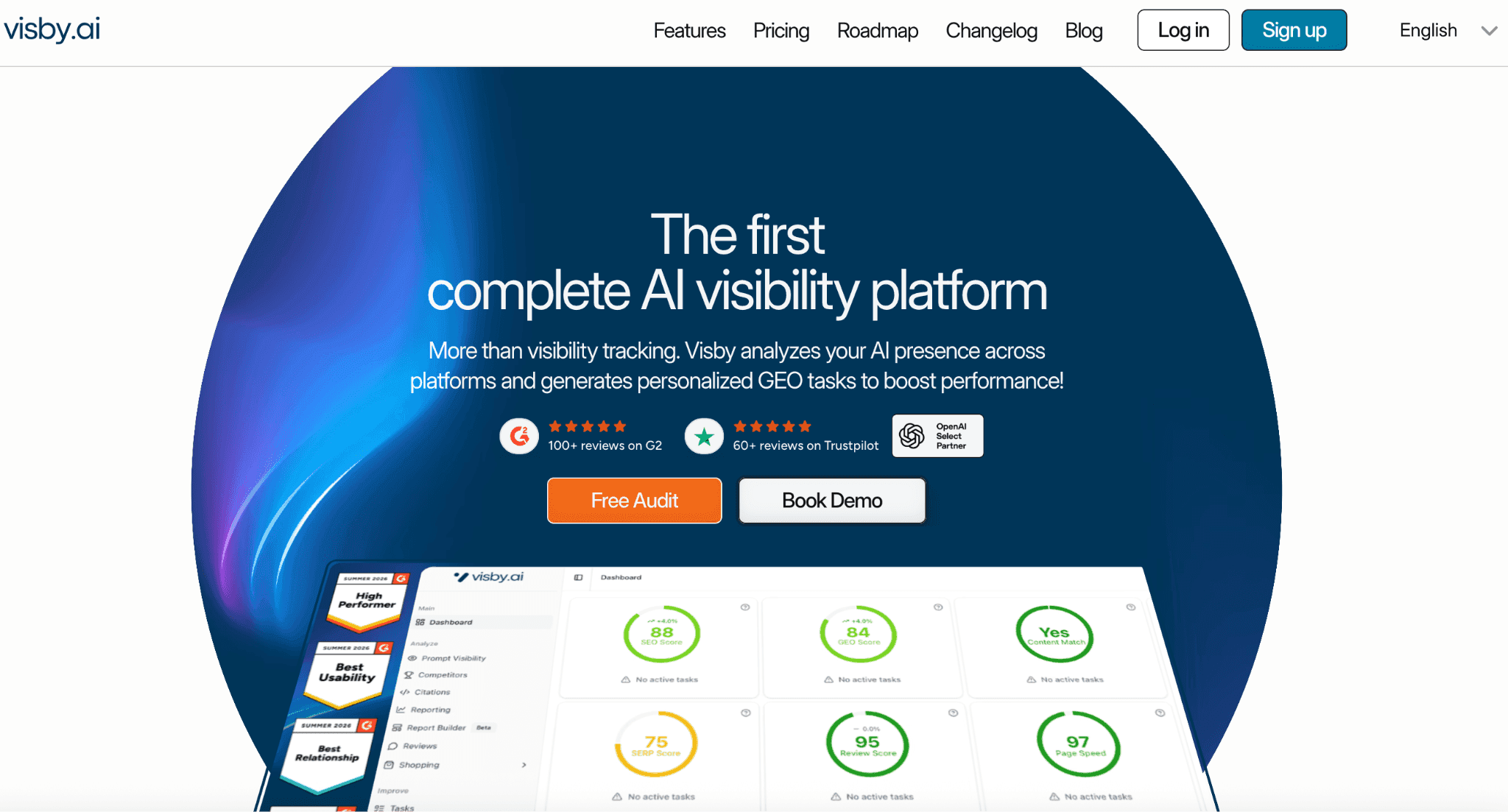
Visby tracks how your brand shows up across ChatGPT, Claude, and Gemini at the prompt level, then turns the gaps it finds into a prioritized task list rather than leaving you to interpret a dashboard yourself. That last part is the reason we put it first: a two-person marketing team doesn’t have time to translate “your citation rate dropped 8%” into an actual to-do list, and Visby does that translation for you.
Starting price:$79/mo (Starter), $199/mo (Growth), custom Enterprise pricing.
Key Features
Prompt-level tracking across major AI engines with competitor share-of-voice
Auto-generated GEO and SEO tasks ranked by likely impact
Content and internal linking suggestions built from your actual visibility gaps
Google Search Console and Google Analytics integration, so AI traffic sits next to your existing SEO data
Shopify support for small ecommerce brands checking product visibility in AI shopping answers
Pros
Turns visibility data into a task list instead of a dashboard you have to decode yourself
One subscription covers tracking, competitor gaps, and content recommendations
No enterprise sales process to get started
Cons
$79/mo entry price is higher than the cheapest options on this list
No permanent free tier, unlike HubSpot’s grader
Verdict:if a five-figure monthly GEO budget was never on the table for you, and you’d rather have one tool that tells you what to fix than three tools that each show you a different slice of data, Visby is built for that. For a first look at where you currently stand, our step-by-step guide to getting started with GEO walks through the setup.
2. Otterly AI: Cheapest Published Entry Price
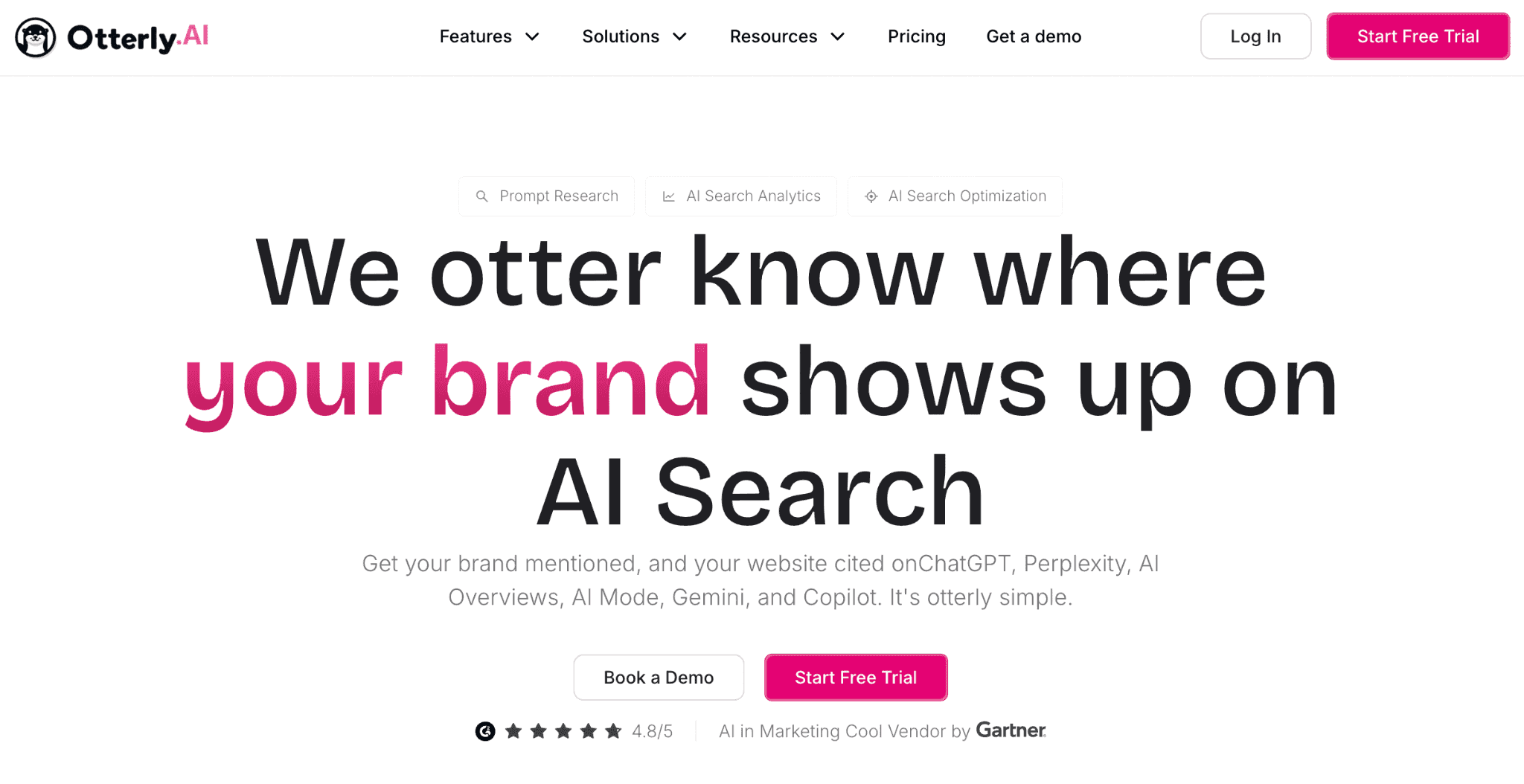
Otterly’s Lite plan is the lowest fixed price in this list at $29/mo, and it’s a real plan rather than a stripped-down trial: 15 tracked prompts across ChatGPT, Google AI Overviews, Perplexity, and Microsoft Copilot.
Starting price:$29/mo (Lite), $189/mo (Standard), $489/mo (Premium).
Key Features
Daily tracking across four core engines, with Gemini and Google AI Mode available as paid add-ons
Unlimited team seats on every tier, which is unusual at this price
A built-in GEO audit and AI keyword research tool
Coverage across 50+ countries, useful for local or multi-market small businesses
Pros
Genuinely the cheapest way to start tracking AI mentions with a published price
No credit card required for the free trial
Simple, transparent pricing ladder
Cons
The jump from Lite to Standard, $29 to $189, is steep with no in-between tier
Claude, Gemini, and Google AI Mode all cost extra, so the real all-in price is higher than the headline number
Only weekly data refresh on the lower tiers
Verdict:a sensible starting point if you want to spend as little as possible just to find out whether AI visibility is even a problem for your business before committing further.
Visit Otterly AI Website
3. Rankscale AI: Widest Engine Coverage for the Price
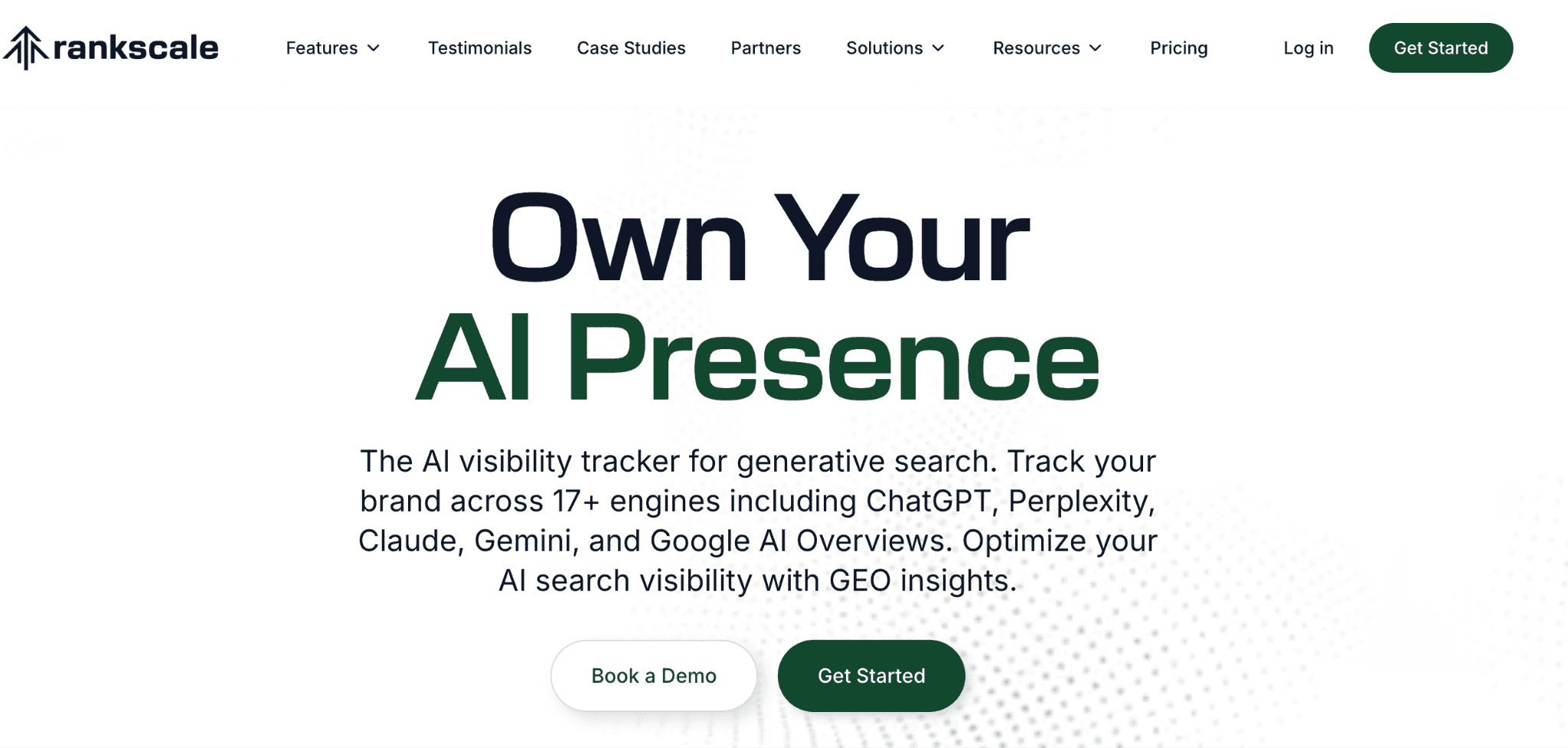
Rankscale tracks 17+ AI engines, including ChatGPT, Claude, Gemini, DeepSeek, and Grok, on every tier including its $20/mo entry plan. That’s more engines than any other tool on this list, at any price.
Starting price:$20/mo (Essentials, credit-based), up to $780/mo (Enterprise).
Key Features
Credit-based pricing, so you pay for actual usage rather than a flat prompt cap
Page-level GEO audits scoring content against 200+ AI-readiness checkpoints
Competitor benchmarking and citation-source analysis
White-labeled dashboards on the Growth tier, aimed at small agencies
Pros
Broadest engine coverage per dollar in this category
No name required to create an account, low-friction signup
Credits roll over, so a slow month doesn’t waste your spend
Cons
The credit system takes some getting used to; different engines cost different amounts of credit
No content generation or task features, this is a monitoring tool
The $20 Essentials tier works better as a starting point than as a fully-loaded ongoing plan
Verdict:the right pick if raw engine breadth matters more to you than being told what to do about the numbers.
4. HubSpot AI Search Grader: Best Free Option
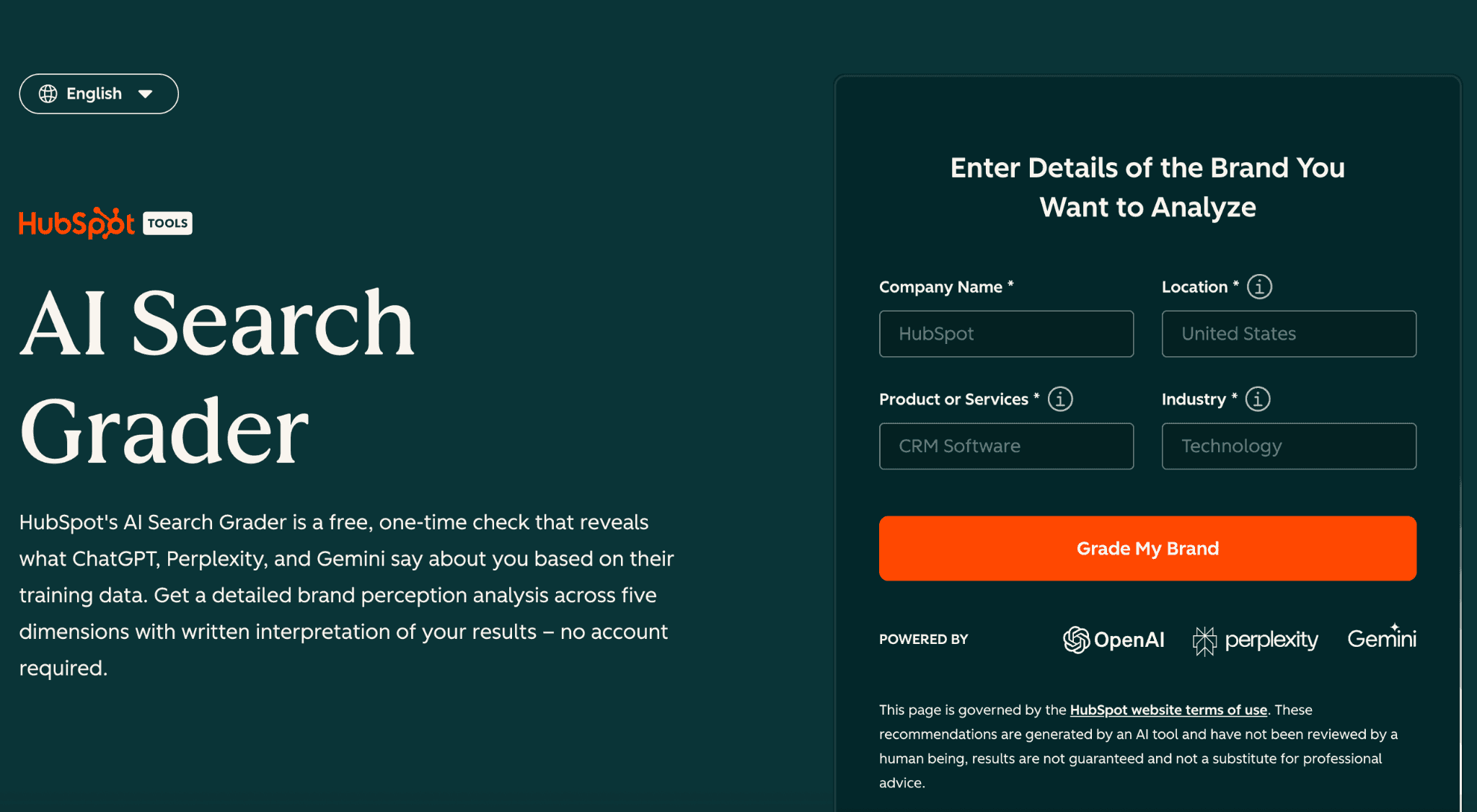
If your budget for this quarter is genuinely zero, HubSpot’s AI Search Grader gives you a real diagnostic score without a card or a trial period. It’s a snapshot rather than ongoing tracking, but it’s a legitimate starting point, scoring your brand on sentiment, presence quality, brand recognition, and share of voice.
Starting price:Free (grader), $50/mo for the ongoing HubSpot AEO monitoring product.
Key Features
One-time visibility score across ChatGPT, Perplexity, and Gemini
No account creation needed to run a check
Ties into HubSpot’s broader marketing tools if you already use the CRM
Pros
Completely free, with no catch
Fast, useful as a first gut-check before spending anything
Works well if you’re already inside the HubSpot ecosystem
Cons
Only three engines covered
A single snapshot, not continuous tracking
Limited value once you actually need to act on the findings week over week
Verdict:run this first if you’re not sure AI visibility is worth paying for yet. It’ll tell you fast whether it’s worth moving to a paid tool.
Visit HubSpot AI Search Grader Website
5. Frase: Best for Content-First Small Businesses
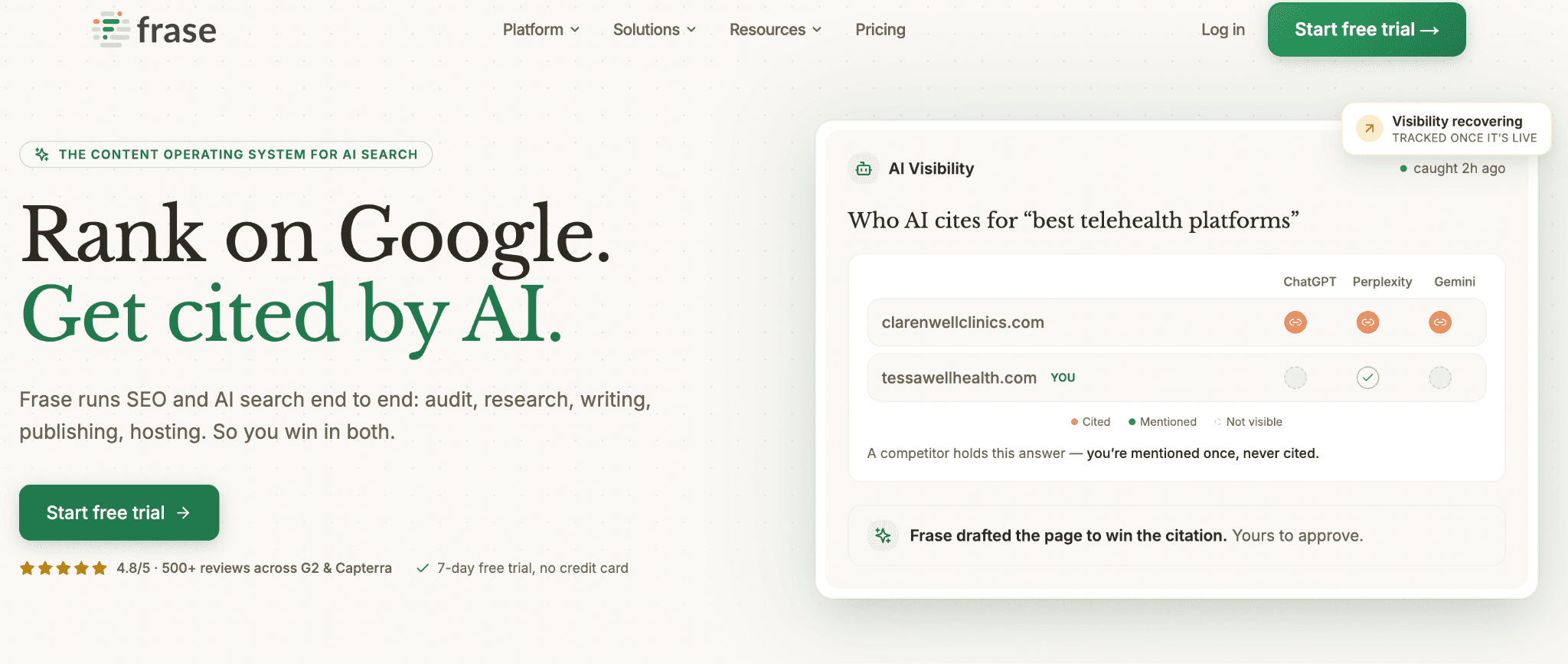
Frase started as a content brief and SEO writing tool and has since layered AI visibility tracking directly into the editor, so a solo content marketer can check their GEO score while writing instead of switching tools.
Starting price:$39/mo (Starter, billed yearly).
Key Features
Real-time GEO score inside the content editor
SERP research, content briefs, and AI writing bundled together
Publishes directly to WordPress, Webflow, and a few other CMS platforms
Alerts when a competitor takes your spot in an AI answer
Pros
Visibility tracking lives where the actual writing happens
Reasonable entry price for a combined content and tracking tool
Good fit if content is your main small-business marketing channel
Cons
AI-drafted content still needs manual editing for tone
Less depth on pure visibility tracking than a dedicated monitor
Interface gets busy with everything packed into one workspace
Verdict:if most of your marketing effort already goes into blog posts or landing pages, this keeps GEO tracking from becoming a second job.
6. Writesonic: Combined GEO and SEO in One Subscription

Writesonic bundles brand tracking across ChatGPT, Perplexity, Google AI Overviews, and Claude with content generation aimed at closing the gaps it finds, at a self-serve entry price.
Starting price:$39/mo (Lite).
Key Features
Cross-platform AI tracking with citation gap identification
In-platform content fixes rather than just a report
Agency-friendly dashboards if you manage more than one brand
Pros
One subscription covers both monitoring and the content work to fix issues
Entry tier is priced for small teams, not enterprise procurement
Cons
Can feel like more platform than a very small team needs at first
Higher tiers get expensive quickly if you scale usage
Verdict:worth a look if you’d rather have monitoring and content generation under one login than manage two separate subscriptions.
7. SE Ranking AI Search: For Teams That Also Want Classic SEO
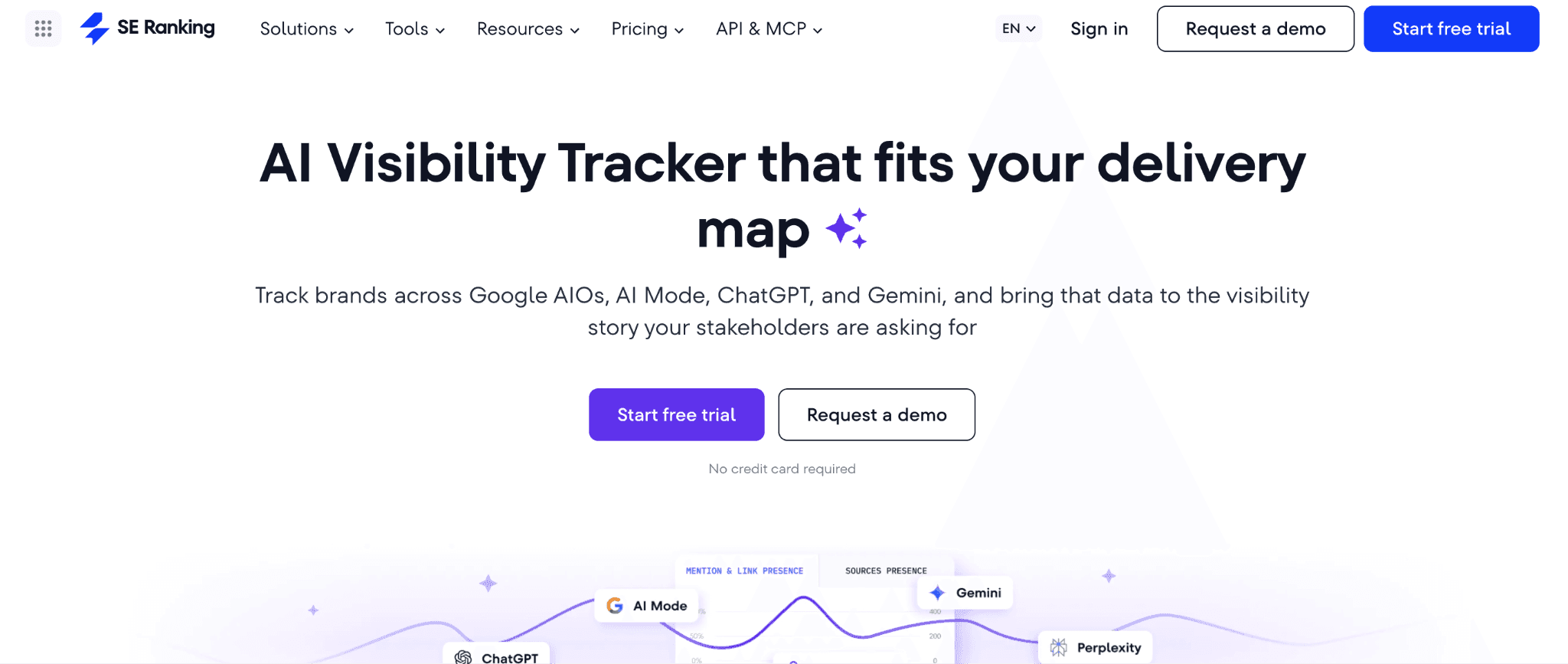
If part of the reason you’re shopping for an AI visibility tool is that you also need basic rank tracking and site audits, SE Ranking bundles both under one account.
Starting price:$89/mo add-on (requires the Core SEO plan, roughly $218/mo realistic floor).
Key Features
AI visibility tracking across five engines alongside standard SEO tools
A free AI search checker with five checks per day, no subscription needed
Combined dashboard for keyword rankings and AI citations
Pros
One platform for both traditional SEO and AI visibility
The free daily checker is genuinely useful before you commit
Cons
The AI module isn’t sold on its own, you need the Core plan underneath it
Real monthly floor is higher than the headline add-on price suggests
Verdict:makes the most sense if classic rank tracking was already on your shopping list and AI visibility can ride along with it.
Visit SE Ranking AI Search Website
8. Peec AI: Cleanest Interface for Quick Setup
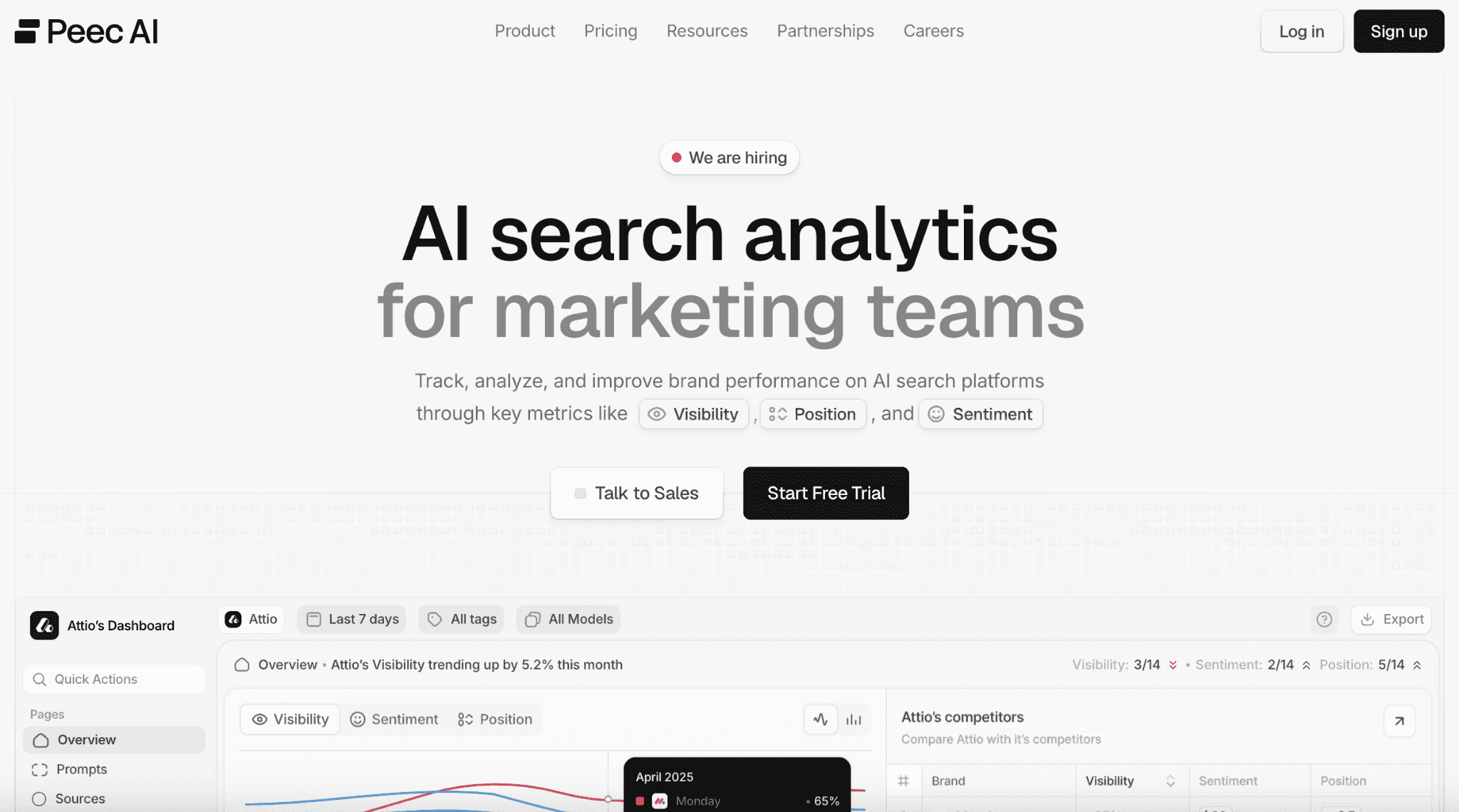
Peec AI is built for teams that want a fast answer with minimal configuration. It scrapes what real users actually see in AI engines rather than calling APIs, which some buyers consider more accurate.
Starting price:$95/mo (Starter).
Key Features
Daily prompt tracking and sentiment analysis on every tier
Multilingual and country-level breakdowns, strong for businesses with several markets
Unlimited seats on every paid plan
Pros
Clean, low-friction onboarding
Strong price-to-value ratio for what’s included
Good sentiment detail for a monitoring-focused tool
Cons
Choose only 3 of 7 engines on self-serve plans; Claude requires an Enterprise conversation
Mostly monitoring, limited guidance on next steps
Verdict:a good fit if you want visibility answers fast and don’t mind pairing it with your own content process. See our Peec AI vs Visby breakdown if you’re weighing the two directly.
9. Semrush AI Toolkit: For Existing Semrush Users
If you already pay for Semrush, its AI Toolkit is the lowest-friction way to add AI visibility without learning a new interface.
Starting price:$99/mo, on top of an existing Semrush subscription.
Key Features
AI visibility reporting inside the existing Semrush dashboard
Content optimization suggestions alongside classic keyword data
Pros
No new login or workflow if you’re already a Semrush customer
Clear, visual reporting
Cons
Requires an active Semrush plan underneath it, so it isn’t really a standalone $99/mo tool
Less prompt-level depth than a dedicated GEO platform
Verdict:skip this if you don’t already use Semrush; a purpose-built tracker will get you more for a similar or lower price.
Visit Semrush AI Toolkit Website
10. Surfer SEO AI Tracker: For Existing Surfer Content Teams
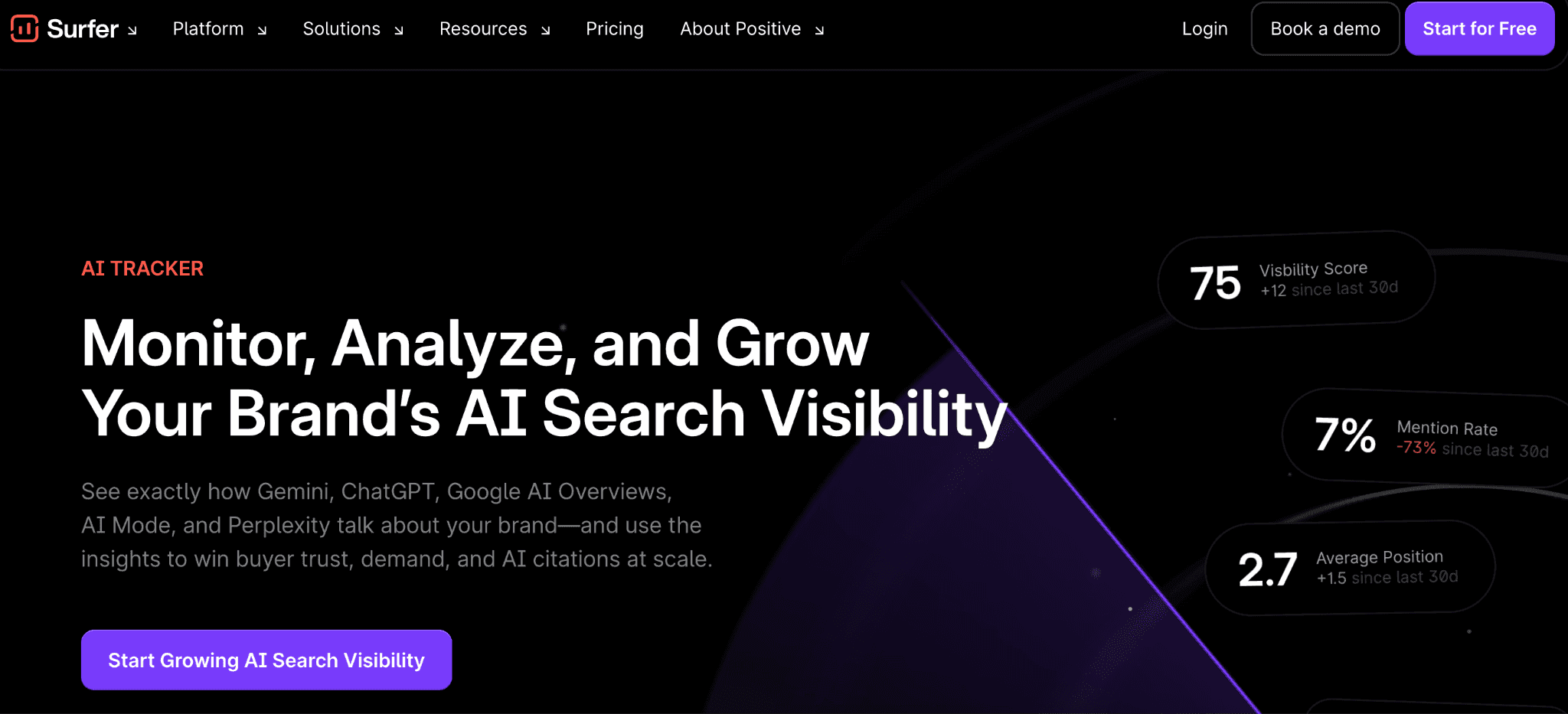
Surfer’s AI Tracker is an add-on to its content optimization platform, aimed at teams that want a first read on AI visibility without adopting a whole new tool.
Starting price:$119/mo (Standard).
Key Features
Prompt-level visibility insights inside the existing Surfer workflow
Shows which sources AI answers actually cite
Pros
Easy add for teams already writing content in Surfer
No separate account to manage
Cons
Limited engine coverage next to a dedicated tracker
A relatively new feature with less historical data behind it
Verdict:a reasonable bolt-on, not a primary reason to buy Surfer on its own.
Visit Surfer SEO AI Tracker Website
11. Ahrefs Brand Radar: For Existing Ahrefs Users
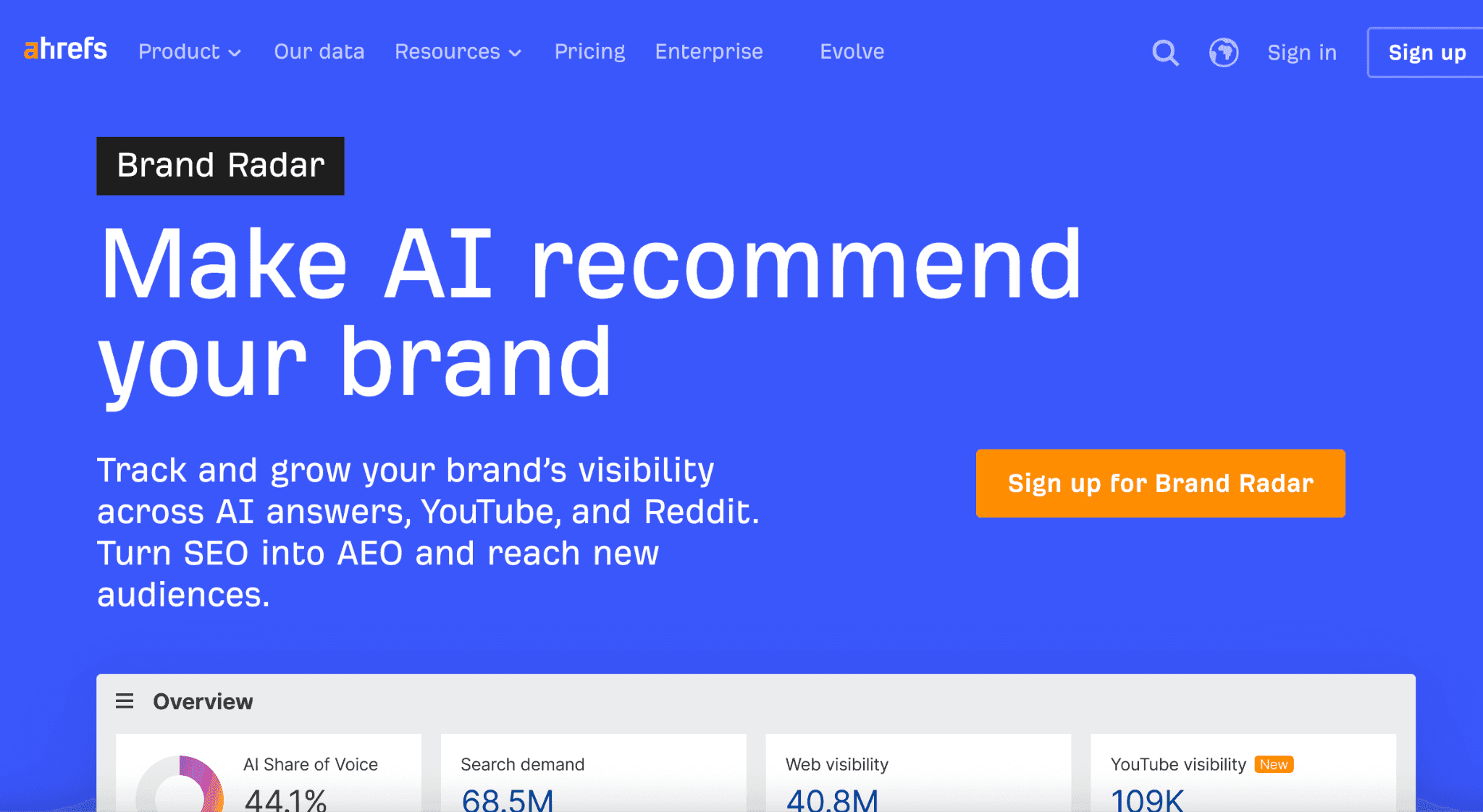
Ahrefs extends its SEO suite into AI visibility with Brand Radar, and it’s the only tool here where the underlying keyword and backlink data genuinely adds context to the AI numbers.
Starting price:$199/mo per AI platform (requires an active Ahrefs plan from $129/mo), or $699/mo for all six platforms.
Key Features
AI visibility tied directly to existing keyword and backlink history
Historical trend data for benchmarking over time
Pros
Strong if you’re already deep in the Ahrefs ecosystem
Large underlying dataset backing the numbers
Cons
By far the most expensive path to entry on this list once you add the required base plan
No Claude coverage
Overkill if AI visibility is your only need right now
Verdict:worth it only if you’re already paying for Ahrefs and want AI data in the same place. Otherwise, almost every other tool on this list gets you there for less.
Visit Ahrefs Brand Radar Website
How to Choose an AI SEO Tool on a Small Business Budget?
A few honest questions to ask before picking one:
Can you spend anything at all right now?
If not, start with HubSpot’s free grader and revisit this list once you have a number to react to.Do you already pay for Semrush, Ahrefs, or Surfer?
If yes, their add-ons are the path of least resistance, even if they’re not the deepest option.Do you need someone to tell you what to fix, or just whether you’re visible?
Monitoring-only tools like Rankscale and Peec are cheaper; tools that also generate tasks or content, like Visby, Frase, and Writesonic, cost more but save you the step of figuring out what the data means.How many AI engines actually matter to your customers?
A local service business probably cares more about Google AI Overviews than Grok. Don’t pay extra for engine coverage you won’t use.
For a broader look at where AI SEO fits next to the classic version, our GEO vs SEO comparison breaks down what actually changes in day-to-day work.
FAQ About AI SEO Tools for Small Business
Do Small Businesses Really Need a Separate AI Visibility Tool?
Not always right away. If most of your customers still find you through Google search or word of mouth, a free grader is enough to check whether it’s worth paying for anything. If a meaningful share of your leads mention “I asked ChatGPT” or similar, it’s worth tracking properly.
What’s the Cheapest Way to Start?
Rankscale AI at $20/mo or HubSpot’s free grader. Neither gives you the full picture, but both are enough to find out if there’s a problem worth solving.
Is GEO the Same Thing as SEO?
No, though they overlap. Traditional SEO optimizes for ranking position on Google. GEO optimizes for whether AI engines cite or recommend you inside a generated answer, which is a different mechanism even when some of the underlying content work looks similar. Our AEO tools roundup covers the closely related answer-engine side of this if you want the fuller picture.
Can I Just Use ChatGPT Myself to Check if My Business Shows Up?
You can, and it’s a fine sanity check, but manually running the same handful of prompts won’t show you trends over time or what competitors are doing instead of you. A tracking tool automates that and catches changes you’d otherwise miss.
How Much Should a Small Business Actually Budget for This?
Most of the genuinely self-serve options on this list sit between $20 and $100/mo to start. That’s a realistic range for testing the waters before deciding whether to go deeper.
NEXT ARTICLE
