Back
Back
What Is Answer Engine Optimization (AEO)? Complete Guide 2026
Discover what Answer Engine Optimization (AEO) is, how it works, and why it matters in 2026.
Jan 7, 2026


What Is Answer Engine Optimization (AEO)?
Answer Engine Optimization (AEO) is the process of optimizing content so that AI-powered search engines can directly understand, select, and present it as an answer. Especially in 2026, AEO plays a critical role in how brands appear inside tools like ChatGPT, Google AI Overviews, and other ai-powered search experiences.
Instead of focusing only on rankings, AEO focuses on answer eligibility. This means your content must clearly respond to user questions, use structured language, and provide reliable information that AI systems can confidently reuse. As AI-generated answers replace traditional result pages, AEO becomes essential for sustainable ai search visibility.
How Does Answer Engine Optimization Work in AI Search
AEO works by aligning content with how AI models process and generate answers. AI systems prioritize clarity, context, and intent over keyword density. They scan content to identify direct responses, definitions, and structured explanations.
For this reason, AEO-friendly content usually answers a question in the first few sentences, then expands with supporting details. This structure improves the likelihood of being used as an ai citation inside conversational answers rather than being ignored. This is also where platforms like Visby.ai help brands understand how their content is interpreted and detected across AI-driven search environments.
This logic is closely connected to generative engine optimization (GEO), which focuses on how AI engines generate and assemble responses from multiple sources.
What Is the Difference Between AEO and GEO?
The difference between AEO and GEO lies in their focus within AI-driven search experiences. AEO is centered on making content eligible to be selected as a direct answer, ensuring it is clear, structured, and easy for AI systems to quote accurately. GEO, on the other hand, takes a broader view by focusing on how brands appear across AI-generated responses, including comparisons, recommendations, and summaries built from multiple sources. While AEO improves answer-level visibility, GEO strengthens overall presence and consistency in ai-powered search, making the two approaches complementary rather than interchangeable.
Why is AEO Important in 2026?
AEO is important in 2026 because user behavior has fundamentally changed. People now expect instant answers instead of links. When AI provides a summarized response, only a few sources are selected, and many websites receive no visibility at all.
This shift means traditional SEO alone is no longer enough. Even high-ranking pages can lose exposure if they are not optimized for AI interpretation. AEO helps brands stay present inside AI-generated answers, protecting long-term ai visibility as zero-click searches increase. This difference becomes much clearer when you look at how classic ranking-focused SEO compares with AI-first optimization approaches, as explained in GEO vs SEO in 2026.
How Do AI Engines Decide Which Content to Answer With?
AI engines decide which content to use based on relevance, authority, structure, and consistency. Content that clearly answers a question, uses simple language, and aligns with known facts is more likely to be selected.
They also favor content that mirrors real user queries. Pages written around natural questions rather than abstract keywords perform better in ai-powered search environments. This is why H2 structures framed as questions improve AEO performance.
What Type of Content Performs Best for AEO?
Content that performs best for AEO is designed to be easily summarized. AI models prefer content that delivers value quickly and avoids unnecessary complexity.
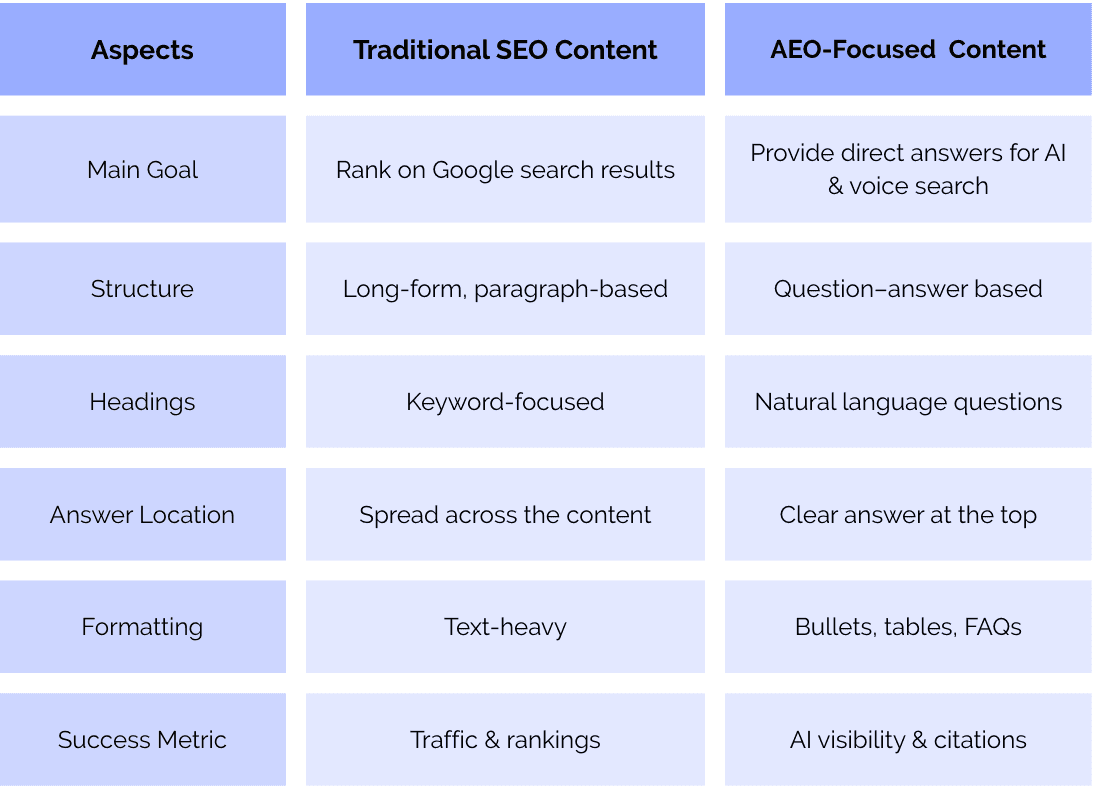
Formats that consistently work well include definition-based articles, comparison tables, and explanatory guides written in a conversational tone. Content optimized for ai search visibility often looks simpler than classic SEO content, but it is far more intentional.
What Is the Difference Between AEO and GEO?
AEO and GEO are related but serve different purposes. AEO focuses on answers, ensuring your content can be quoted or summarized accurately. On the other hand, GEO focuses on presence, ensuring your brand is visible across AI-generated narratives, product suggestions, and comparisons.
Together, they form a complete strategy for AI-era visibility. While AEO improves answer selection, GEO improves brand continuity across AI responses. This combined approach strengthens ai citations and long-term discoverability.
How Can Brands Start Applying AEO Today?
Brands can start applying AEO by reviewing existing content and identifying where answers are unclear or buried too deep. Important pages should answer key questions within the first few sentences and use question-based headings throughout.
It is also critical to analyze how AI platforms mention your brand and whether your content is being referenced correctly. This is where tools like Visby.ai focused on AI visibility and generative search become essential.
In 2026, visibility is no longer about ranking first. It is about being chosen as the answer. Answer Engine Optimization ensures your content remains understandable, trustworthy, and usable in AI-driven search environments.
As AI continues to reshape how people discover information, AEO is no longer an experiment. It is a core content strategy for brands that want to stay relevant in ai-powered search.

What Is Answer Engine Optimization (AEO)?
Answer Engine Optimization (AEO) is the process of optimizing content so that AI-powered search engines can directly understand, select, and present it as an answer. Especially in 2026, AEO plays a critical role in how brands appear inside tools like ChatGPT, Google AI Overviews, and other ai-powered search experiences.
Instead of focusing only on rankings, AEO focuses on answer eligibility. This means your content must clearly respond to user questions, use structured language, and provide reliable information that AI systems can confidently reuse. As AI-generated answers replace traditional result pages, AEO becomes essential for sustainable ai search visibility.
How Does Answer Engine Optimization Work in AI Search
AEO works by aligning content with how AI models process and generate answers. AI systems prioritize clarity, context, and intent over keyword density. They scan content to identify direct responses, definitions, and structured explanations.
For this reason, AEO-friendly content usually answers a question in the first few sentences, then expands with supporting details. This structure improves the likelihood of being used as an ai citation inside conversational answers rather than being ignored. This is also where platforms like Visby.ai help brands understand how their content is interpreted and detected across AI-driven search environments.
This logic is closely connected to generative engine optimization (GEO), which focuses on how AI engines generate and assemble responses from multiple sources.
What Is the Difference Between AEO and GEO?
The difference between AEO and GEO lies in their focus within AI-driven search experiences. AEO is centered on making content eligible to be selected as a direct answer, ensuring it is clear, structured, and easy for AI systems to quote accurately. GEO, on the other hand, takes a broader view by focusing on how brands appear across AI-generated responses, including comparisons, recommendations, and summaries built from multiple sources. While AEO improves answer-level visibility, GEO strengthens overall presence and consistency in ai-powered search, making the two approaches complementary rather than interchangeable.
Why is AEO Important in 2026?
AEO is important in 2026 because user behavior has fundamentally changed. People now expect instant answers instead of links. When AI provides a summarized response, only a few sources are selected, and many websites receive no visibility at all.
This shift means traditional SEO alone is no longer enough. Even high-ranking pages can lose exposure if they are not optimized for AI interpretation. AEO helps brands stay present inside AI-generated answers, protecting long-term ai visibility as zero-click searches increase. This difference becomes much clearer when you look at how classic ranking-focused SEO compares with AI-first optimization approaches, as explained in GEO vs SEO in 2026.
How Do AI Engines Decide Which Content to Answer With?
AI engines decide which content to use based on relevance, authority, structure, and consistency. Content that clearly answers a question, uses simple language, and aligns with known facts is more likely to be selected.
They also favor content that mirrors real user queries. Pages written around natural questions rather than abstract keywords perform better in ai-powered search environments. This is why H2 structures framed as questions improve AEO performance.
What Type of Content Performs Best for AEO?
Content that performs best for AEO is designed to be easily summarized. AI models prefer content that delivers value quickly and avoids unnecessary complexity.
Formats that consistently work well include definition-based articles, comparison tables, and explanatory guides written in a conversational tone. Content optimized for ai search visibility often looks simpler than classic SEO content, but it is far more intentional.

What Is the Difference Between AEO and GEO?
AEO and GEO are related but serve different purposes. AEO focuses on answers, ensuring your content can be quoted or summarized accurately. On the other hand, GEO focuses on presence, ensuring your brand is visible across AI-generated narratives, product suggestions, and comparisons.
Together, they form a complete strategy for AI-era visibility. While AEO improves answer selection, GEO improves brand continuity across AI responses. This combined approach strengthens ai citations and long-term discoverability.
How Can Brands Start Applying AEO Today?
Brands can start applying AEO by reviewing existing content and identifying where answers are unclear or buried too deep. Important pages should answer key questions within the first few sentences and use question-based headings throughout.
It is also critical to analyze how AI platforms mention your brand and whether your content is being referenced correctly. This is where tools like Visby.ai focused on AI visibility and generative search become essential.
In 2026, visibility is no longer about ranking first. It is about being chosen as the answer. Answer Engine Optimization ensures your content remains understandable, trustworthy, and usable in AI-driven search environments.
As AI continues to reshape how people discover information, AEO is no longer an experiment. It is a core content strategy for brands that want to stay relevant in ai-powered search.
What Is Answer Engine Optimization (AEO)?
Answer Engine Optimization (AEO) is the process of optimizing content so that AI-powered search engines can directly understand, select, and present it as an answer. Especially in 2026, AEO plays a critical role in how brands appear inside tools like ChatGPT, Google AI Overviews, and other ai-powered search experiences.
Instead of focusing only on rankings, AEO focuses on answer eligibility. This means your content must clearly respond to user questions, use structured language, and provide reliable information that AI systems can confidently reuse. As AI-generated answers replace traditional result pages, AEO becomes essential for sustainable ai search visibility.
How Does Answer Engine Optimization Work in AI Search
AEO works by aligning content with how AI models process and generate answers. AI systems prioritize clarity, context, and intent over keyword density. They scan content to identify direct responses, definitions, and structured explanations.
For this reason, AEO-friendly content usually answers a question in the first few sentences, then expands with supporting details. This structure improves the likelihood of being used as an ai citation inside conversational answers rather than being ignored. This is also where platforms like Visby.ai help brands understand how their content is interpreted and detected across AI-driven search environments.
This logic is closely connected to generative engine optimization (GEO), which focuses on how AI engines generate and assemble responses from multiple sources.
What Is the Difference Between AEO and GEO?
The difference between AEO and GEO lies in their focus within AI-driven search experiences. AEO is centered on making content eligible to be selected as a direct answer, ensuring it is clear, structured, and easy for AI systems to quote accurately. GEO, on the other hand, takes a broader view by focusing on how brands appear across AI-generated responses, including comparisons, recommendations, and summaries built from multiple sources. While AEO improves answer-level visibility, GEO strengthens overall presence and consistency in ai-powered search, making the two approaches complementary rather than interchangeable.
Why is AEO Important in 2026?
AEO is important in 2026 because user behavior has fundamentally changed. People now expect instant answers instead of links. When AI provides a summarized response, only a few sources are selected, and many websites receive no visibility at all.
This shift means traditional SEO alone is no longer enough. Even high-ranking pages can lose exposure if they are not optimized for AI interpretation. AEO helps brands stay present inside AI-generated answers, protecting long-term ai visibility as zero-click searches increase. This difference becomes much clearer when you look at how classic ranking-focused SEO compares with AI-first optimization approaches, as explained in GEO vs SEO in 2026.
How Do AI Engines Decide Which Content to Answer With?
AI engines decide which content to use based on relevance, authority, structure, and consistency. Content that clearly answers a question, uses simple language, and aligns with known facts is more likely to be selected.
They also favor content that mirrors real user queries. Pages written around natural questions rather than abstract keywords perform better in ai-powered search environments. This is why H2 structures framed as questions improve AEO performance.
What Type of Content Performs Best for AEO?
Content that performs best for AEO is designed to be easily summarized. AI models prefer content that delivers value quickly and avoids unnecessary complexity.
Formats that consistently work well include definition-based articles, comparison tables, and explanatory guides written in a conversational tone. Content optimized for ai search visibility often looks simpler than classic SEO content, but it is far more intentional.

What Is the Difference Between AEO and GEO?
AEO and GEO are related but serve different purposes. AEO focuses on answers, ensuring your content can be quoted or summarized accurately. On the other hand, GEO focuses on presence, ensuring your brand is visible across AI-generated narratives, product suggestions, and comparisons.
Together, they form a complete strategy for AI-era visibility. While AEO improves answer selection, GEO improves brand continuity across AI responses. This combined approach strengthens ai citations and long-term discoverability.
How Can Brands Start Applying AEO Today?
Brands can start applying AEO by reviewing existing content and identifying where answers are unclear or buried too deep. Important pages should answer key questions within the first few sentences and use question-based headings throughout.
It is also critical to analyze how AI platforms mention your brand and whether your content is being referenced correctly. This is where tools like Visby.ai focused on AI visibility and generative search become essential.
In 2026, visibility is no longer about ranking first. It is about being chosen as the answer. Answer Engine Optimization ensures your content remains understandable, trustworthy, and usable in AI-driven search environments.
As AI continues to reshape how people discover information, AEO is no longer an experiment. It is a core content strategy for brands that want to stay relevant in ai-powered search.
Latest posts
Discover other pieces of writing in our blog