All articles
·
11 min read
11 Best AI SEO Tools for 2026: Tested & Compared
Compare the top AI SEO tools in 2026 and learn how to improve your visibility across AI-driven search platforms.

Search is going through one of its biggest transformations in the last decade. For years, SEO has been built around rankings. You optimize pages, track keywords, and compete for positions in search engine results. But that model is no longer the only way users discover information.
Today, people increasingly rely on AI systems like ChatGPT, Gemini, and Claude to ask questions, compare products, and make decisions. Instead of clicking through multiple links, they receive a single synthesized answer.
This shift introduces a new layer of competition. It is no longer enough to rank. You also need to be included, cited, or recommended inside AI-generated answers.
That is where AI SEO software comes in. Some tools are evolving from traditional SEO platforms by adding AI-related insights. Others are built specifically for tracking and improving AI visibility across large language models. For teams that want to isolate AI visibility as its own metric rather than folding it into a broader SEO toolkit, this guide to the best ai visibility monitoring tools covers platforms built specifically for that purpose.
Understanding the difference between these categories is critical if you want to build a sustainable search strategy in 2026 and beyond.
How We Evaluated the Best AI SEO Tools?
We evaluated each platform based on traditional SEO capabilities, AI visibility tracking, content optimization, competitor analysis, integrations, and pricing.
The comparison is based on our own testing and publicly available vendor information.
Traditional SEO capabilities
AI visibility tracking
Content optimization
Competitor analysis
Integrations and reporting
Pricing and overall value
Best AI SEO Tools Comparison Chart: Features & Pricing
The table below compares every AI SEO software tool covered in this article, including Visby AI, by type, key strength, ideal use case, and starting price.
Tool | Type | Key Strength | Best For | Price |
|---|---|---|---|---|
Visby AI | AI Visibility Platform | Prompt-level analysis, generates site-specific SEO/GEO tasks, funnel-based tracking (awareness/consideration/conversion) | Teams that want to actively improve AI visibility and connect it with real business outcomes | From $79/mo |
Semrush | Comprehensive SEO Platform | Keyword research, competitor analysis, content optimization; AI features still developing | Teams looking for an all-in-one SEO platform with evolving AI capabilities | From $139.95/mo |
Ahrefs | SEO + AI Visibility Platform | SEO/backlin data combined with Brand Radar AI visibility tracking | Teams that rely on backlink data and competitor insights to drive SEO strategy | SEO plans from $129/mo; Brand Radar from $199/mo |
Surfer SEO | Content Optimization + AI Visibility | Content optimization combined with AI prompt and citation tracking | Content teams focused on on-page optimization and scalable content performance | AI visibility from $82/mo annually |
Clearscope | Content Optimization + AI Visibility | Content optimization combined with prompt, brand, and citation tracking | Teams producing high-quality, intent-driven content with a focus on clarity and depth | From $129/mo |
Frase | Content Research & Production | Combines research, writing, and optimization into one workflow; speed-focused | Teams that need fast, AI-assisted content production without complex workflows | From $39/mo (annual) |
MarketMuse | Content Strategy / Topical Authority | Identifies content gaps and builds topic clusters for site-wide depth | Teams building long-term content authority and structured content strategies | Free tier; paid plans via demo |
SE Ranking | SEO + GEO Platform | SEO toolkit with built-in prompt, source, and AI competitor tracking | Small to mid-sized teams looking for a practical, easy-to-use SEO solution | From $103.20/mo (annual) |
BrightEdge | Enterprise SEO + AI Visibility | Enterprise SEO data combined with AI Catalyst visibility and optimization | Enterprises managing complex SEO strategies and large-scale content operations | Custom pricing |
Conductor | Enterprise AEO + SEO Platform | AI search performance connected with enterprise SEO and content workflows | Marketing teams aligning SEO efforts with broader growth and content strategies | Custom pricing |
WriterZen | Keyword Research & Planning | Combines keyword discovery, topic clustering, and content brief creation | Content marketers focused on keyword research, planning, and scalable content production | From $135 one-time |
What is an AI SEO Tool?
AI SEO software refers to tools that help you analyze and improve your performance across both traditional search engines and AI-driven platforms.
Unlike classic SEO tools that focus on rankings, clicks, and backlinks, AI SEO tools expand the scope by analyzing how your content is interpreted and surfaced inside AI-generated answers.
These platforms typically include capabilities such as:
Tracking brand visibility across AI prompts
Identifying which queries trigger your content
Analyzing how competitors appear in AI responses
Improving content structure for answer selection
Generating SEO and GEO tasks based on real data
The goal is not just visibility in search results, but inclusion inside the answer layer itself.
Why AI SEO Requires More Than Traditional SEO Metrics?
Traditional SEO metrics such as rankings, backlinks, traffic, and technical performance are still important. However, AI-generated search introduces additional visibility signals that traditional SEO tools were not originally designed to measure.
Brands now also need to understand whether they are mentioned, cited, recommended, or omitted across AI-generated answers, which prompts trigger those appearances, and how competitors perform in the same responses.
This is why newer AI SEO platforms combine traditional search data with prompt tracking, citation monitoring, competitor visibility, and AI-focused optimization workflows.
1. Visby AI
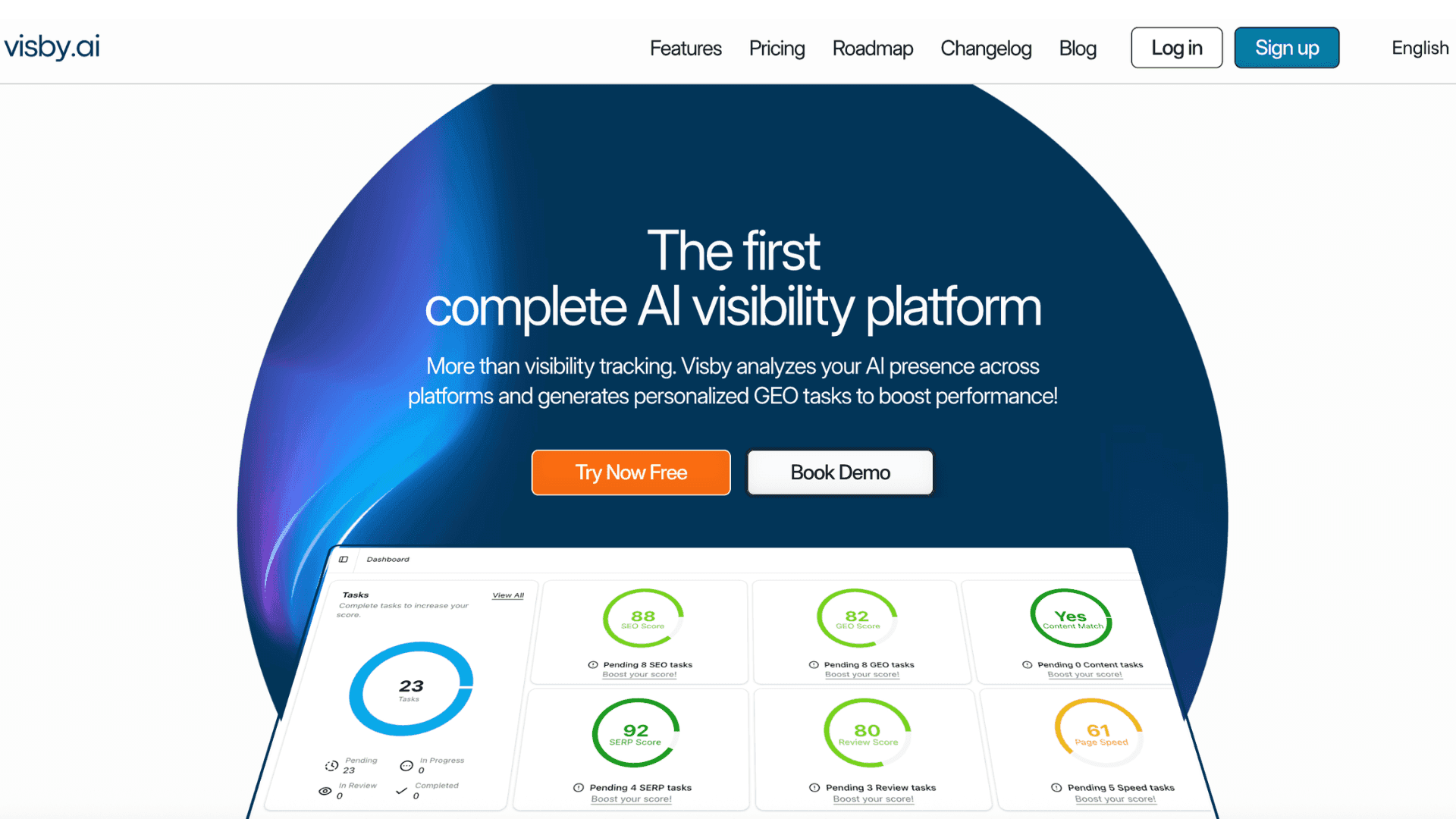
Visby is an AI SEO and AI visibility platform that combines prompt-level tracking, citation monitoring, competitor analysis, and prioritized SEO and GEO tasks. It helps teams understand where their brand appears across AI-generated answers, where competitors are gaining visibility, and which optimization opportunities should be prioritized.
The platform operates at the prompt level. It analyzes real queries across AI systems such as ChatGPT, Claude, Google AI and Gemini, and maps where your brand is present, missing, or being outperformed by competitors.
What makes Visby different is its ability to convert these insights into site-specific SEO and GEO tasks.
Instead of generic suggestions, the platform generates actions tailored to your website. These can include:
Content expansion based on missing query coverage
Internal linking improvements aligned with AI citation patterns
FAQ and structured content recommendations
Technical optimizations affecting AI selection
Review and reputation signals that influence AI responses
Another key differentiator is its funnel-based tracking model.
Rather than organizing visibility only around topics, Visby maps prompts across the customer journey:
Awareness (discovery stage)
Consideration (comparison stage)
Conversion (decision stage)
This allows teams to identify exactly where they lose visibility and where competitors take over.
Visby also connects AI visibility with traditional SEO metrics. It evaluates factors like content relevance, technical performance, and external signals together, helping teams understand how improvements in SEO impact AI-generated answers.
Best for:
Teams that want to actively improve AI visibility and connect it with real business outcomes, rather than only monitor performance
2. Semrush
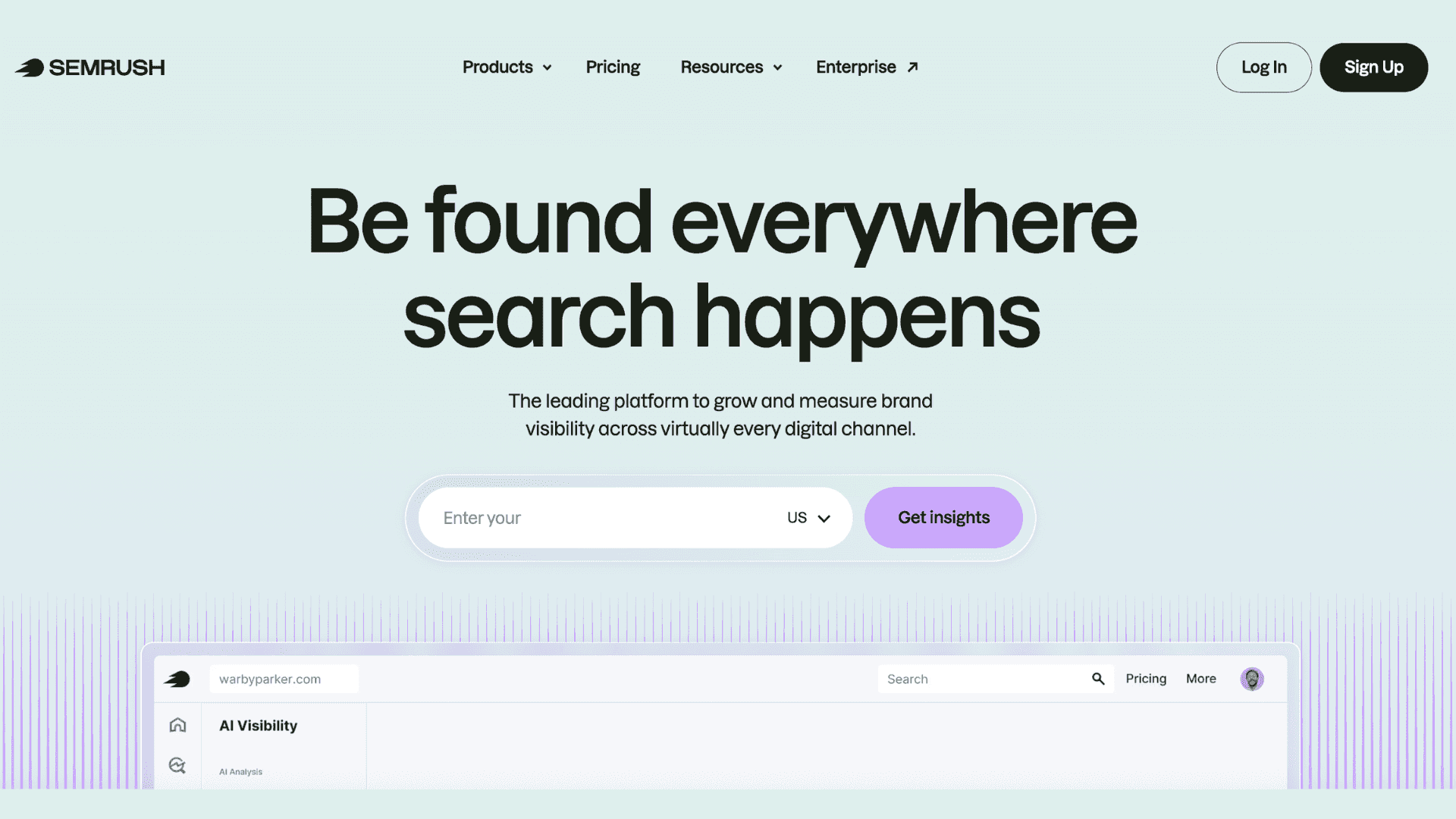
Semrush combines traditional SEO data with a dedicated AI Visibility Toolkit for tracking brand mentions, citations, prompts, competitors, and AI search performance. Its main advantage is bringing SEO and AI visibility data into the same ecosystem.
Best for:
Teams looking for an all-in-one SEO platform with evolving AI capabilities
3. Ahrefs
Ahrefs combines its established SEO and backlink datasets with Brand Radar, a dedicated AI visibility product for monitoring how brands appear across AI-generated answers.
Brand Radar tracks mentions, citations, AI Share of Voice, competitor visibility, and custom prompts across major AI platforms. This makes Ahrefs particularly useful for SEO teams that want traditional search data and AI visibility insights within the same ecosystem.
Best for:
SEO teams that want backlink, organic search, competitor, and AI visibility data in the same ecosystem
4. Surfer SEO
Surfer combines content optimization with AI visibility tracking through its AI Tracker. Teams can monitor brand mentions, citations, competitors, and prompt-level performance while using Surfer’s existing content optimization workflow.
Its AI Search Analytics product can also be used independently for teams that primarily want to monitor their presence across AI-generated answers.
Best for:
Content teams that want AI visibility tracking and content optimization in the same workflow
5. Clearscope
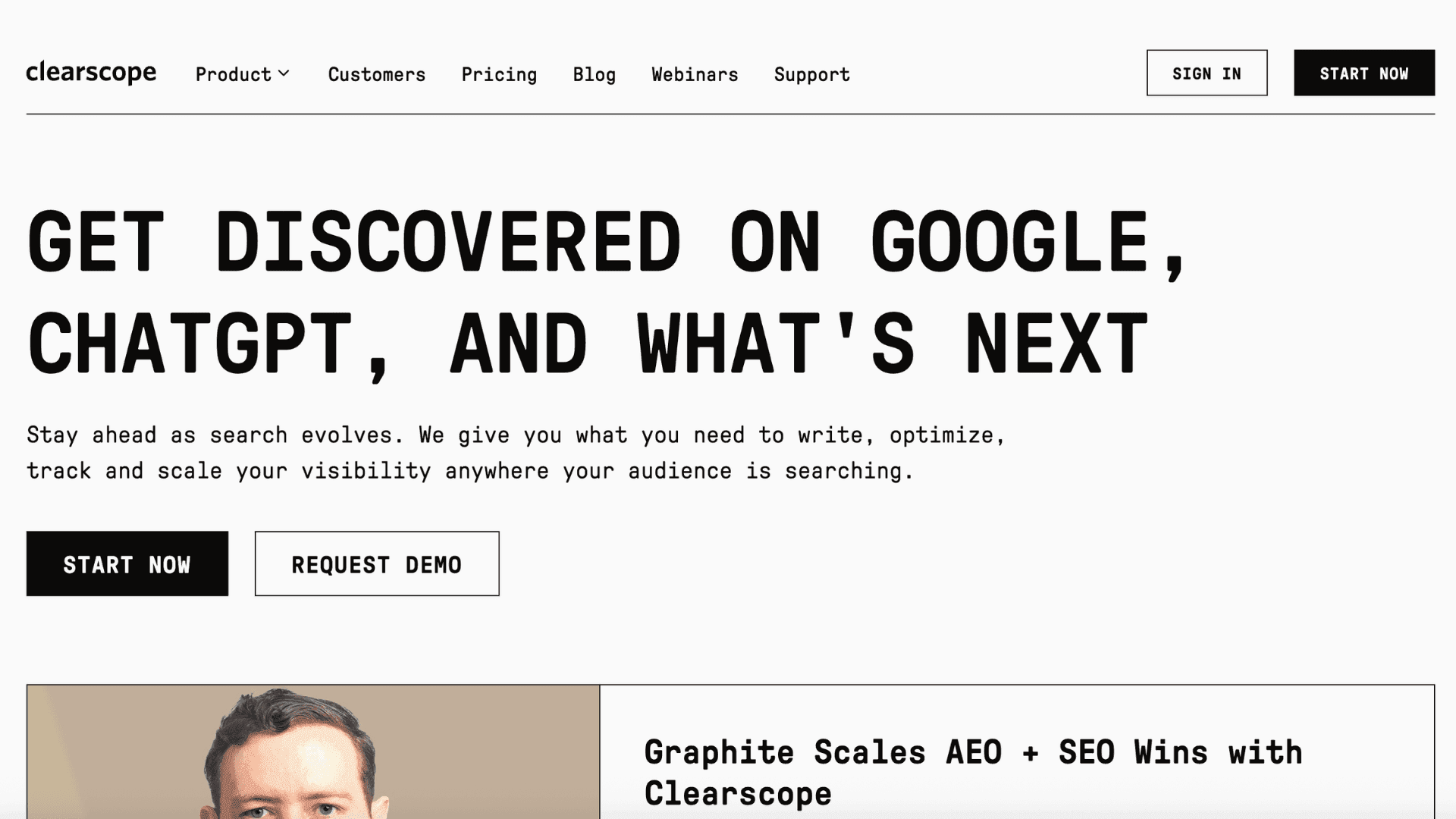
Clearscope combines content optimization and topical research with AI search visibility tracking. Its Prompt Tracking features help teams monitor brand mentions and visibility across AI-generated answers while connecting those insights with existing content workflows.
Clearscope also surfaces AI citations, content gaps, and topical opportunities, making it useful for teams that want to connect content quality with visibility across both traditional and AI search.
Best for:
Content teams that want semantic optimization, topical research, and AI visibility tracking in one platform
6. Frase
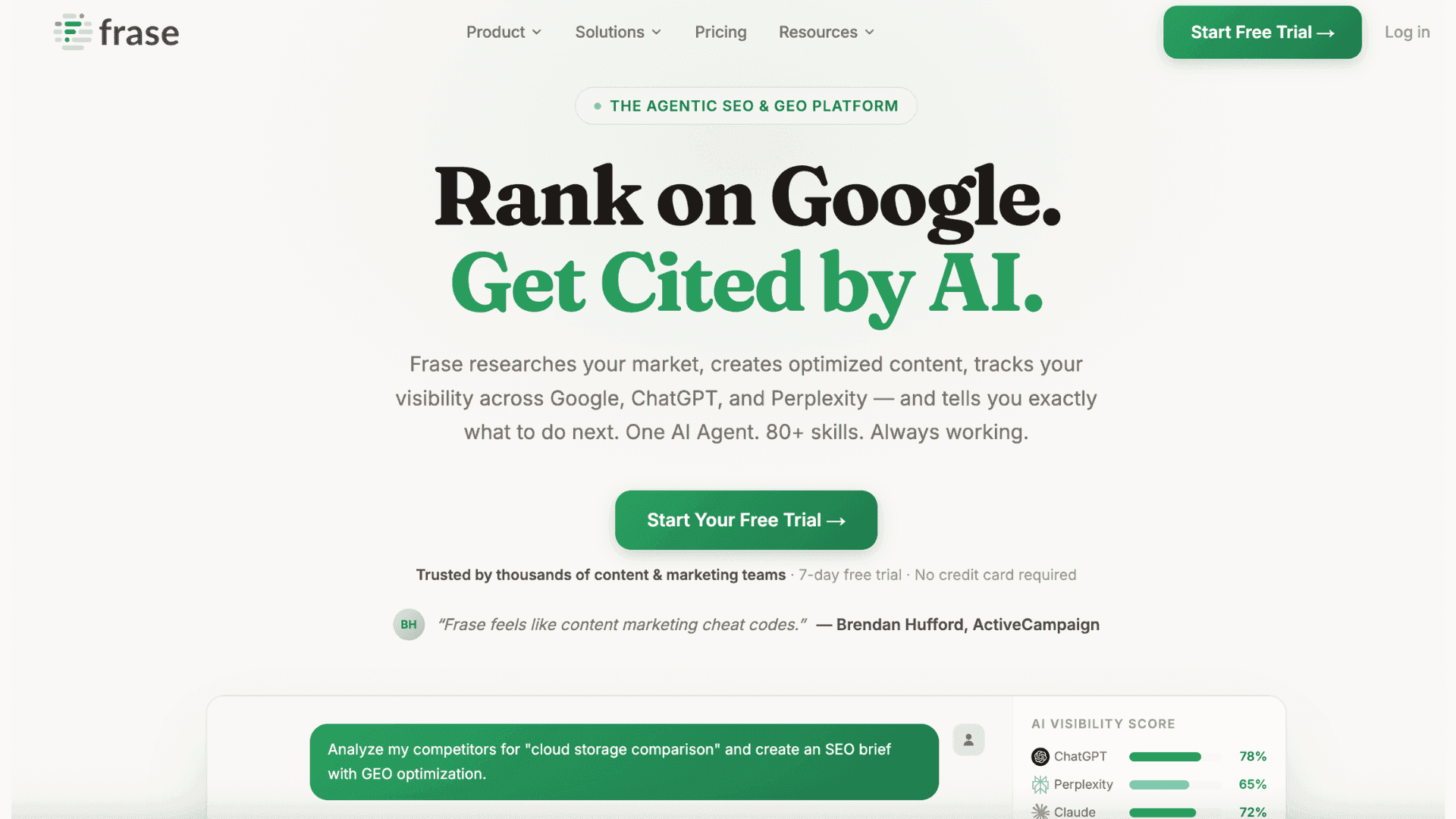
Frase combines content research, writing, optimization, and AI visibility tracking in a single workflow. Teams can monitor brand mentions and citations while using the same platform to research, create, optimize, and publish content.
This makes Frase particularly relevant for content teams that want AI visibility insights to sit directly alongside their content production workflow.
Best for:
Content teams that want research, content production, optimization, and AI visibility in one workflow
7. MarketMuse

MarketMuse focuses on long-term content strategy and building topical authority. It helps teams identify content gaps, prioritize opportunities, and develop structured content clusters that improve overall site coverage.
One of its main strengths is strategic planning. Instead of optimizing single pages, it looks at how entire topics are covered across your site and where you need to expand to stay competitive.
This approach is also valuable for AI-driven search, since AI systems tend to favor sites that demonstrate depth and authority across a topic, not just isolated pieces of content.
Best for:
Teams building long-term content authority and structured content strategies
8. SE Ranking
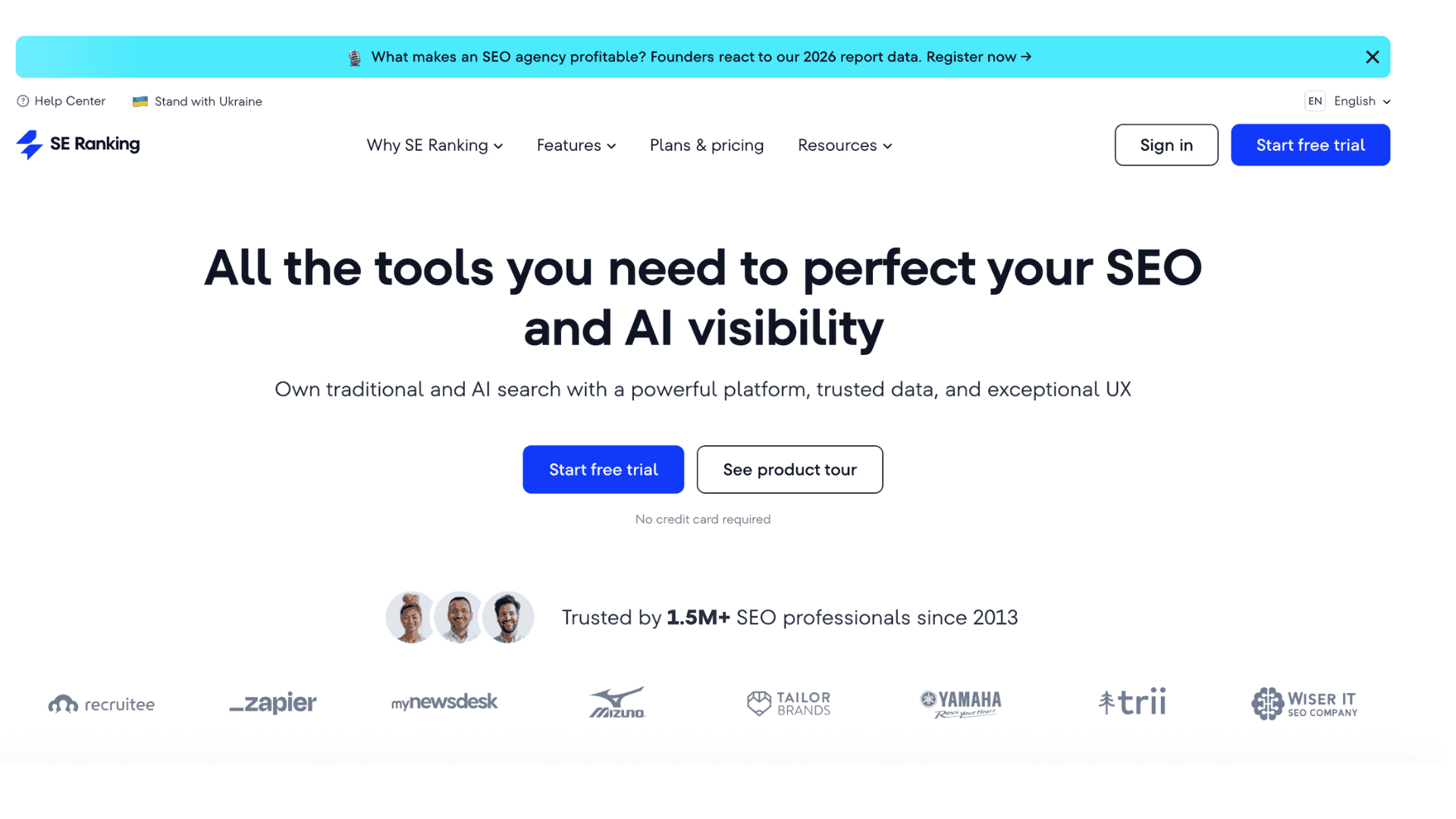
SE Ranking combines traditional SEO workflows with built-in GEO and AI visibility capabilities. Its current plans include AI prompt tracking, AI source monitoring, and competitive research alongside rank tracking, audits, backlink research, and keyword analysis.
Teams that need larger AI datasets can also use the AI Search Add-on for expanded tracking across Google AI Overviews, AI Mode, ChatGPT, Perplexity, and Gemini.
Best for:
SEO teams and agencies that want traditional SEO and AI visibility tracking in the same platform
9. BrightEdge

BrightEdge combines enterprise SEO with dedicated AI visibility capabilities through AI Catalyst. The platform tracks brand mentions, citations, sentiment, competitor visibility, and prompts across major AI search experiences.
AI Catalyst connects those visibility signals with BrightEdge’s broader SEO data and optimization workflows, making it most relevant for large organizations that want traditional and AI search reporting in the same enterprise platform.
Best for:
Large enterprises managing SEO and AI search visibility at scale
10. Conductor

Conductor combines enterprise SEO, content optimization, and AI search visibility in a unified AEO and SEO platform. Its AI Search Performance capabilities track mentions, citations, competitors, share of voice, topics, and prompts across major AI search experiences.
The platform is designed for enterprise teams that want to connect AI visibility insights directly with content creation, optimization, technical monitoring, and traditional search performance.
Best for:
Enterprise teams that want SEO, AEO, content, and AI visibility workflows in one platform
11. WriterZen
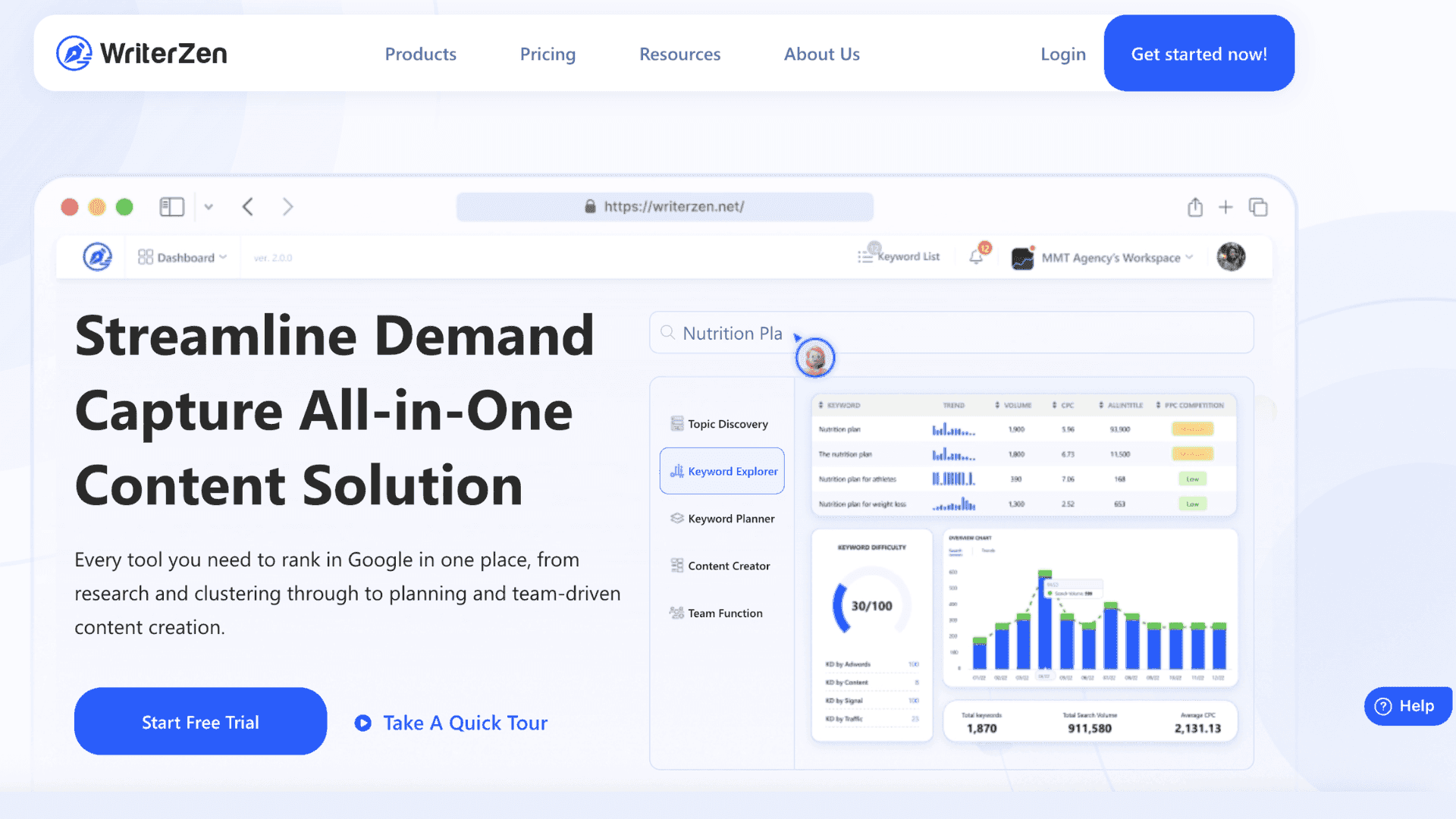
WriterZen focuses on keyword research and content planning, helping teams identify content opportunities and organize them into structured workflows. It combines keyword discovery, topic clustering, and content brief creation in a single platform.
One of its main strengths is simplifying the planning phase. Teams can quickly move from keyword research to actionable content ideas without needing multiple tools, making it especially useful for content-first SEO strategies.
While it does not directly focus on AI visibility, its structured approach to content planning supports both traditional search performance and AI-driven discovery.
Best for:
Content marketers focused on keyword research, planning, and scalable content production
How to Choose the Right AI SEO Tool?
Choosing the right tool depends on your goals. If your focus is traditional SEO performance, tools like Semrush and Ahrefs provide strong data and insights.
If your focus is content optimization, platforms like Surfer SEO and Clearscope are more relevant.
If your focus is AI visibility and understanding how your brand appears inside AI-generated answers, you need tools that go beyond tracking and provide actionable insights.
That distinction between analysis and execution is becoming increasingly important.
How Much Does AI SEO Software Cost?
Pricing for AI SEO software varies depending on the platform, feature set, and level of usage. Some tools offer basic entry-level plans for tracking and reporting, while others provide more advanced capabilities such as automation, content generation, and AI visibility insights through higher-tier or enterprise solutions.
In most cases, pricing is based on factors like the number of tracked prompts or keywords, domains, users, and available features. As tools become more advanced and action-oriented, pricing structures tend to scale accordingly.
Platforms like Visby AI offer flexible pricing plans designed around usage and tracked prompts, making it easier for teams to start small and expand over time. If you want to explore how different tiers are structured, you can review detailed pricing plans to better understand what fits your needs.
FAQ About Best AI SEO Tools
What is an AI SEO tool?
An AI SEO tool helps teams improve visibility across both traditional search engines and AI-generated search experiences. Depending on the platform, these tools can combine keyword research, content optimization, technical SEO, prompt tracking, citation monitoring, and competitor analysis.
How are AI SEO tools different from traditional SEO tools?
Traditional SEO tools primarily focus on rankings, keywords, backlinks, traffic, and technical performance. AI SEO tools can also measure whether a brand is mentioned, cited, or recommended in AI-generated answers and identify the prompts and competitors associated with that visibility.
Can AI SEO tools track visibility in ChatGPT?
Yes. Some AI SEO platforms track brand mentions, citations, prompts, and competitor visibility across ChatGPT and other AI platforms. If ChatGPT tracking is your main priority, compare dedicated ChatGPT rank tracker tools to see how platforms differ in coverage, prompt monitoring, and citation tracking.
Which AI SEO tool is best for AI visibility tracking?
The right tool depends on whether your priority is traditional SEO, AI visibility monitoring, content optimization, or a combination of these capabilities. Platforms such as Visby focus more heavily on AI visibility and GEO workflows, while tools such as Ahrefs, Semrush, and SE Ranking combine AI search features with broader SEO datasets.
Do AI SEO tools replace traditional SEO tools?
No. AI visibility and traditional SEO increasingly overlap, but they measure different parts of search performance. Rankings, backlinks, technical SEO, and organic traffic remain important, while AI-focused tools add visibility into mentions, citations, prompts, and AI-generated recommendations.
What should I look for in an AI SEO tool?
Look at AI engine coverage, prompt and citation tracking, competitor analysis, traditional SEO capabilities, content optimization features, integrations, reporting, and pricing. The right choice depends on whether your team mainly needs monitoring or also wants built-in optimization workflows.
How much do AI SEO tools cost?
Pricing varies significantly. Some content-focused platforms start below $50 per month, while AI visibility and enterprise SEO platforms can cost hundreds of dollars per month or use custom pricing. Compare the features included at the entry plan rather than looking only at the advertised starting price.

