Back
Best AI Visibility Monitoring Tools in 2026 (10 Tools Compared)


AI visibility monitoring tools track how often a brand, product, or website gets mentioned or cited inside AI-generated answers from platforms like ChatGPT, Perplexity, Google AI Overviews, and Gemini. Instead of measuring blue link rankings, these tools measure whether your brand shows up when someone asks an AI assistant a question related to your industry.
This matters because a growing share of research and buying decisions now start with a prompt instead of a search query. If your brand is invisible in those answers, you are losing awareness at the exact moment someone is forming an opinion.
Below is a comparison of AI visibility monitoring tools worth evaluating, along with the criteria to use when choosing one and additional GEO tactics that go beyond monitoring alone.
What to Look for in an AI Visibility Monitoring Tool?
Before comparing specific platforms, it helps to define the criteria that actually separate a useful tool from a superficial dashboard.
Model coverage: Does the tool track ChatGPT, Perplexity, Gemini, Google AI Overviews, and Copilot, or just one or two of them?
Prompt tracking depth: Can you monitor visibility across many real prompts and query categories relevant to your niche, not just a handful of branded searches?
Citation and source analysis: Does it show which domains and pages the AI model cited to generate its answer, so you can understand why you were or were not mentioned?
Competitor benchmarking: Can you compare your visibility against named competitors in the same prompts?
Historical tracking: Does it show changes in visibility over time rather than a single snapshot?
Actionability: Does the tool suggest content or technical changes, or does it only report numbers?
With those criteria in mind, here are some of the tools currently used for AI visibility and brand monitoring in generative search.
1. Visby
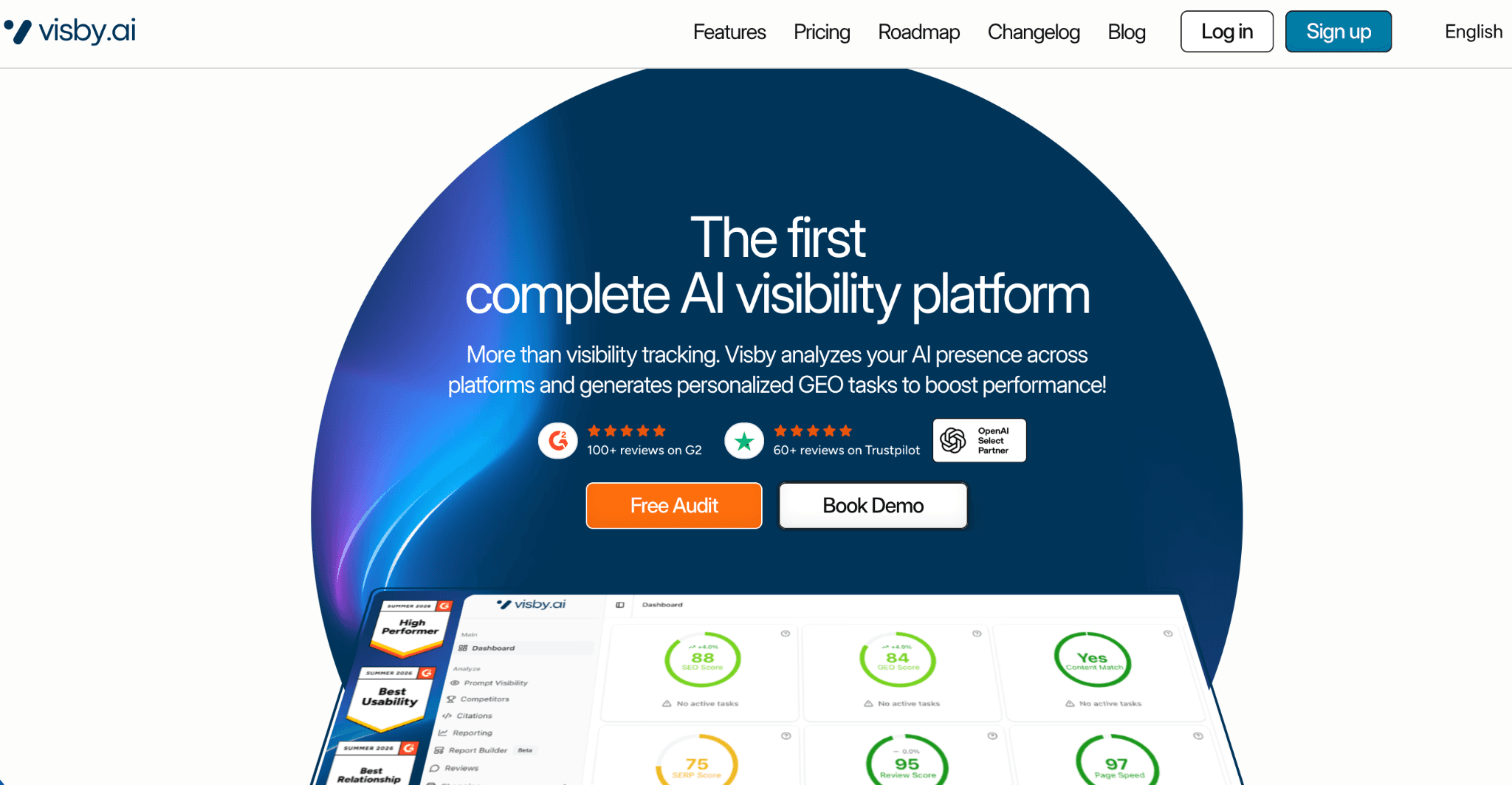
Visby tracks brand and competitor visibility across AI search platforms, showing which prompts trigger a mention, which sources get cited, and how that visibility shifts over time. It fits into the broader category of GEO and AI visibility platforms rather than sitting outside it, and it is generally used by marketing and content teams that want prompt-level detail alongside competitor comparisons.
As with any tool in this list, the most useful evaluation is a direct trial against your own brand's prompts and competitors, since visibility results vary heavily by industry and query type.
Visby Pros
Pairs AI visibility tracking with competitor benchmarking in a single view
Positioned within the broader GEO category rather than as an isolated point solution
Visby Cons
As with any AI visibility tool, results are best judged by testing it against your own brand's prompts rather than general claims
2. Profound
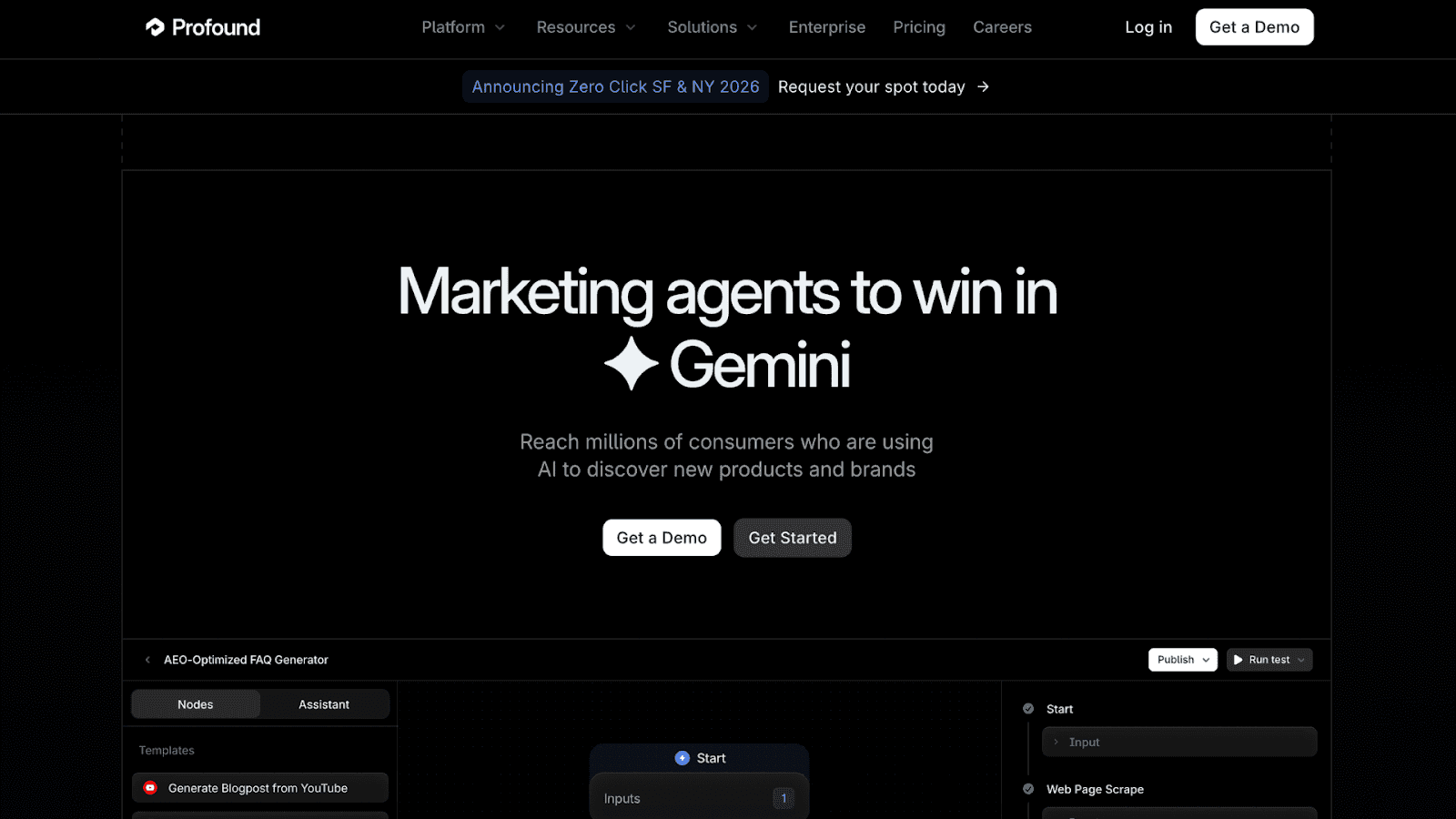
Profound focuses on tracking how brands appear across major AI answer engines and is often positioned toward enterprise and mid-market teams that need detailed reporting for marketing and product teams. It is built around monitoring prompt-level visibility and citation sources across multiple AI platforms.
Profound tends to suit teams that already have a GEO or AI search strategy in place and want deeper reporting to justify that investment internally.
Profound Pros
Deep reporting suited to enterprise and mid-market marketing teams
Tracks prompt-level visibility and citation sources across multiple AI platforms
Profound Cons
The depth of reporting may be more than smaller teams need, so it fits best for organizations that already have a GEO strategy in place
3. Peec AI
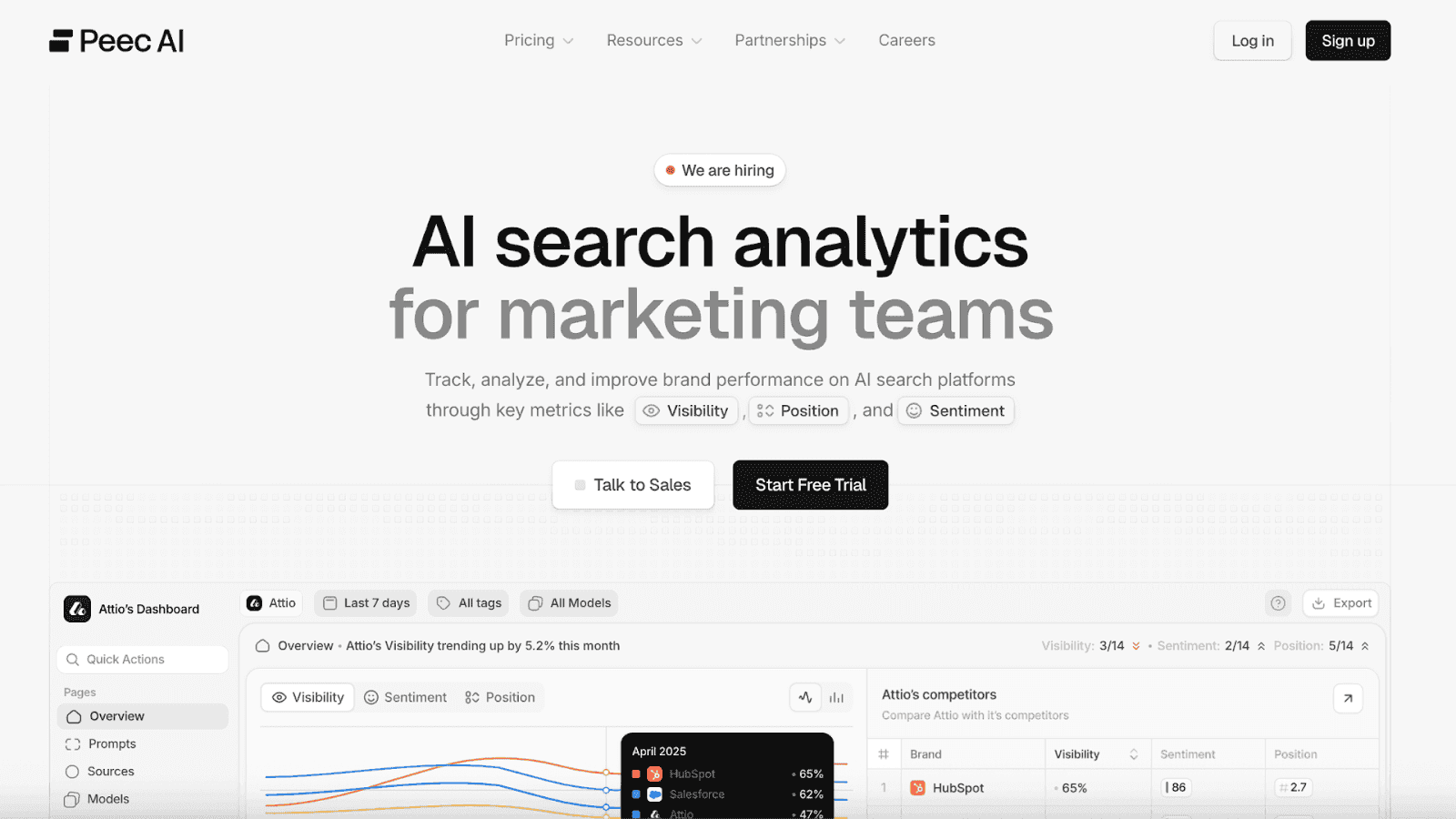
Peec AI is a GEO-focused platform built specifically to track brand visibility and citations inside AI chatbots and assistants. It is commonly used by marketing teams that want a dedicated view of prompt-level performance without pulling it manually from multiple AI tools.
This kind of platform works well for teams that want to isolate AI search visibility as its own reporting category, separate from traditional SEO dashboards.
Peec AI Pros
Dedicated, GEO-first design rather than an add-on to a broader SEO suite
Gives a focused view of prompt-level performance
Peec AI Cons
Being a specialized tool, it may not include the traditional SEO features some teams want in a single dashboard
4. Otterly.AI
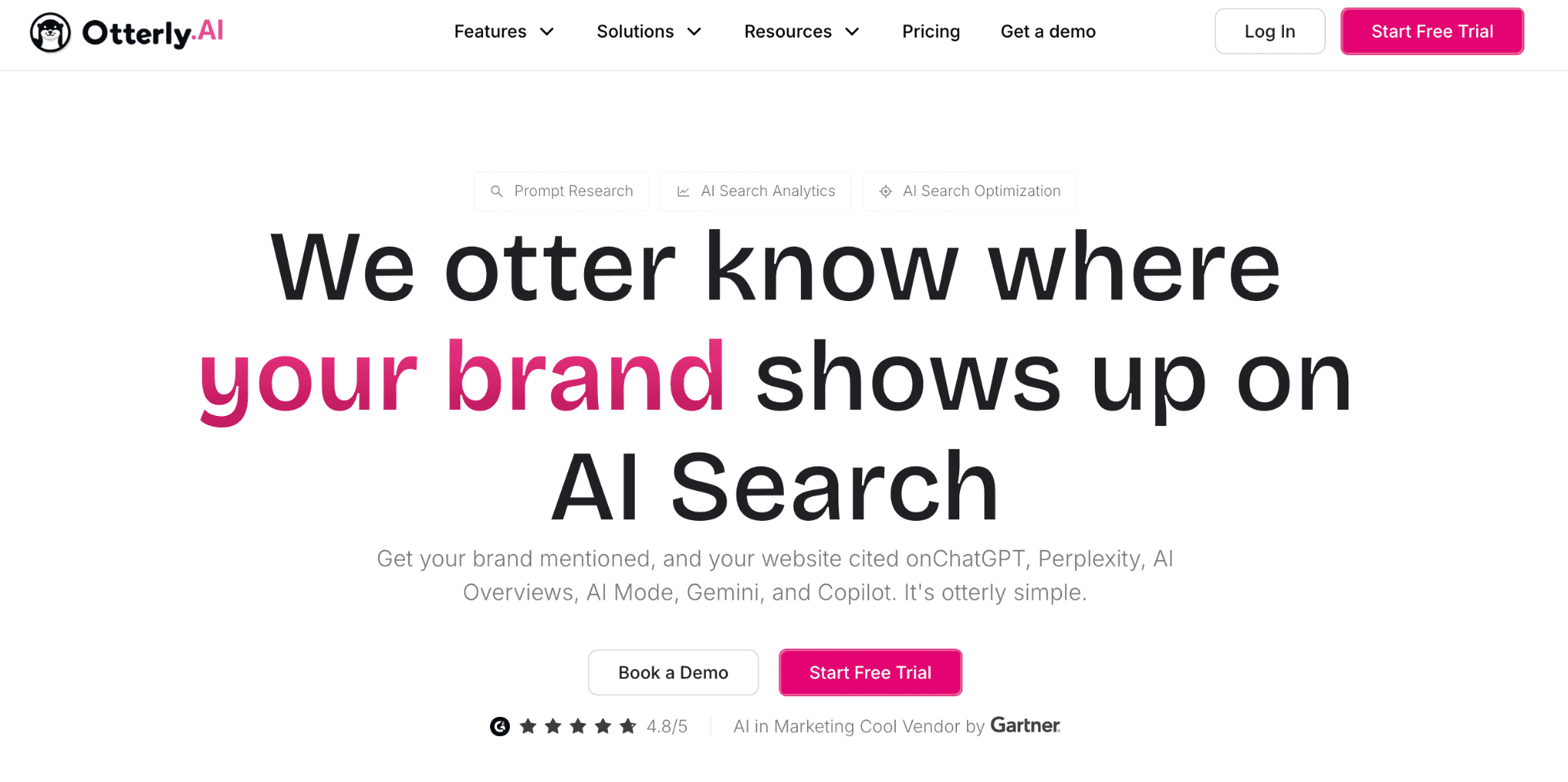
Otterly.AI monitors brand mentions and citations across generative AI tools and is often chosen by smaller marketing teams or agencies that want a simpler entry point into AI visibility tracking compared to larger enterprise platforms.
Because pricing tiers and platform coverage change frequently in this category, it is worth checking the current feature set directly on the provider's site before comparing it against alternatives.
Otterly.AI Pros
Simpler entry point that suits smaller marketing teams or agencies
Tracks brand mentions and citations across multiple generative AI tools
Otterly.AI Cons
Pricing tiers and platform coverage change frequently in this category, so features should be checked directly before comparing
5. Scrunch AI
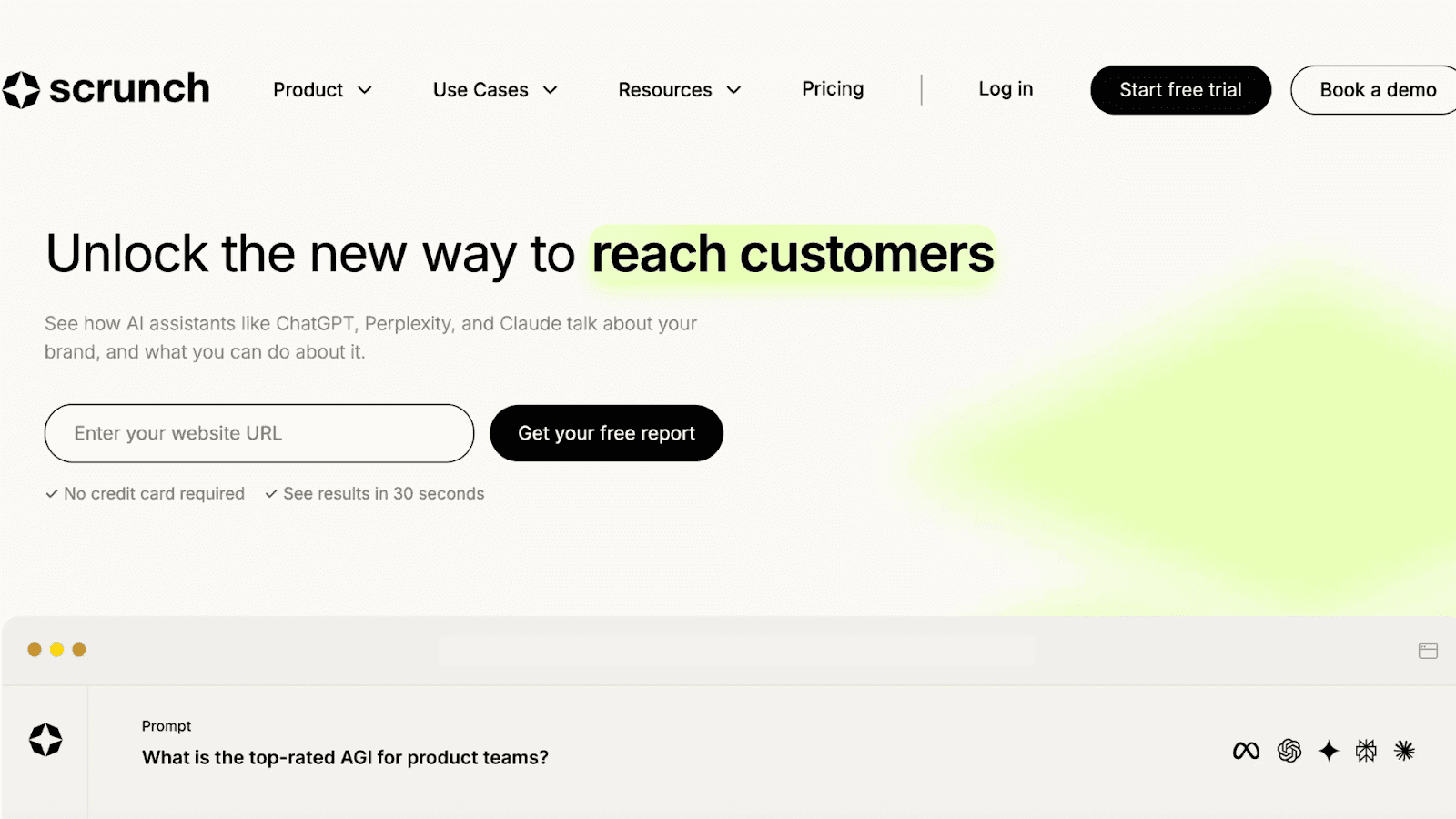
Scrunch AI positions itself around helping brands understand and improve how AI models interpret and represent them, going beyond pure monitoring into how content structure affects AI answers. Teams evaluating this kind of tool should confirm current model coverage, since generative engines update frequently and tool coverage can lag behind new releases.
Scrunch AI Pros
Goes beyond monitoring into how content structure affects AI answers
Useful for teams that want to act on visibility gaps, not just measure them
Scrunch AI Cons
Model coverage should be confirmed directly, since generative engines update often and tool coverage can lag behind new releases
6. Semrush (AI Toolkit)
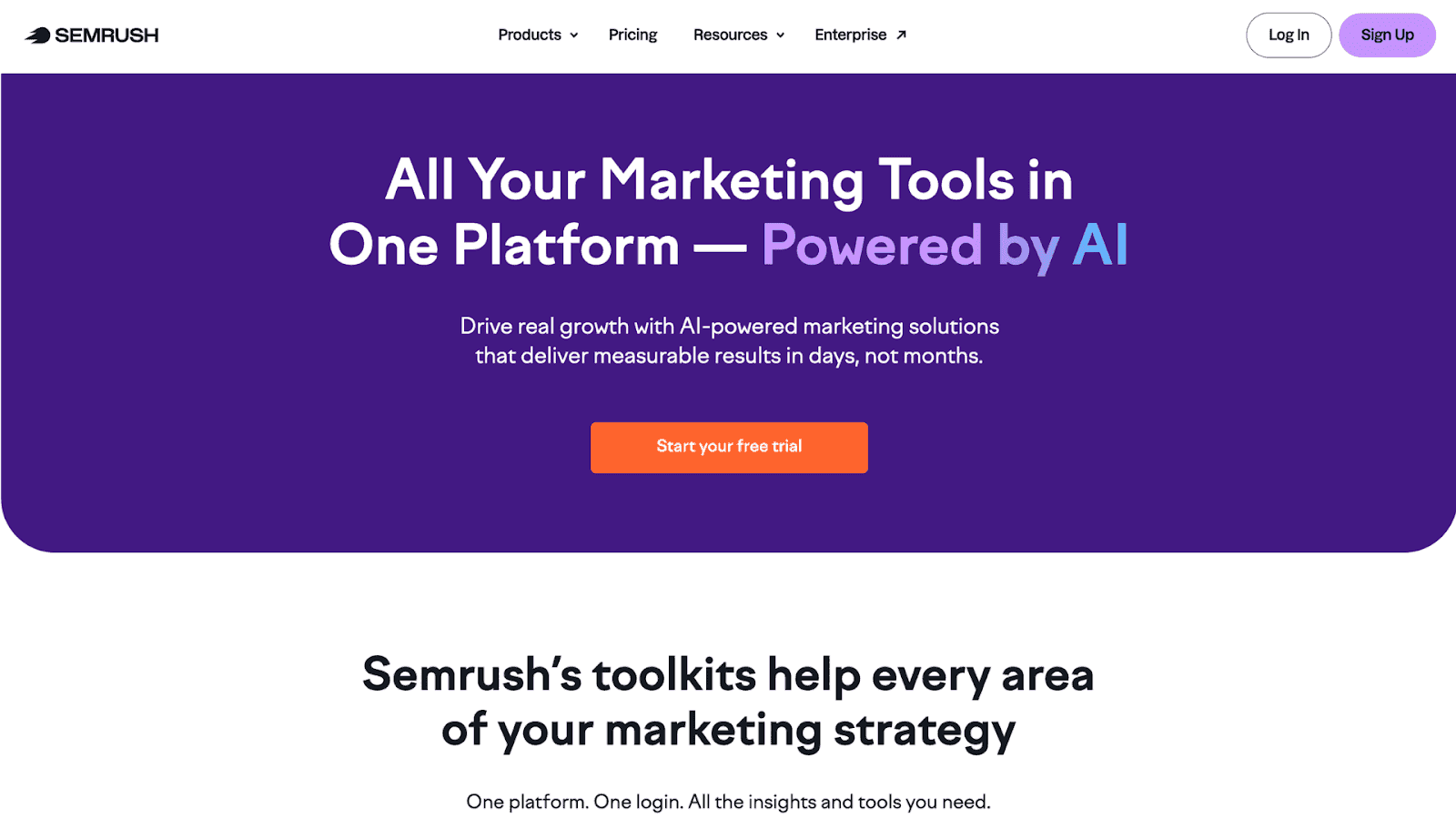
Semrush has expanded its established SEO suite to include AI visibility and AI Overview tracking features. This can be a practical option for teams that already use Semrush for traditional SEO and want AI visibility data inside the same workflow rather than adding a separate platform.
The tradeoff is that a general SEO suite's AI visibility module may not go as deep as a tool built specifically around generative engine tracking, so it is worth comparing feature depth directly if AI visibility is a primary use case rather than a secondary one.
Semrush (AI Toolkit) Pros
Keeps AI visibility data inside a workflow teams may already use for traditional SEO
Convenient for teams that want one platform instead of several
Semrush (AI Toolkit) Cons
An AI visibility module inside a broader SEO suite may not go as deep as a tool built specifically for generative engine tracking
7. Ahrefs (Brand Radar)
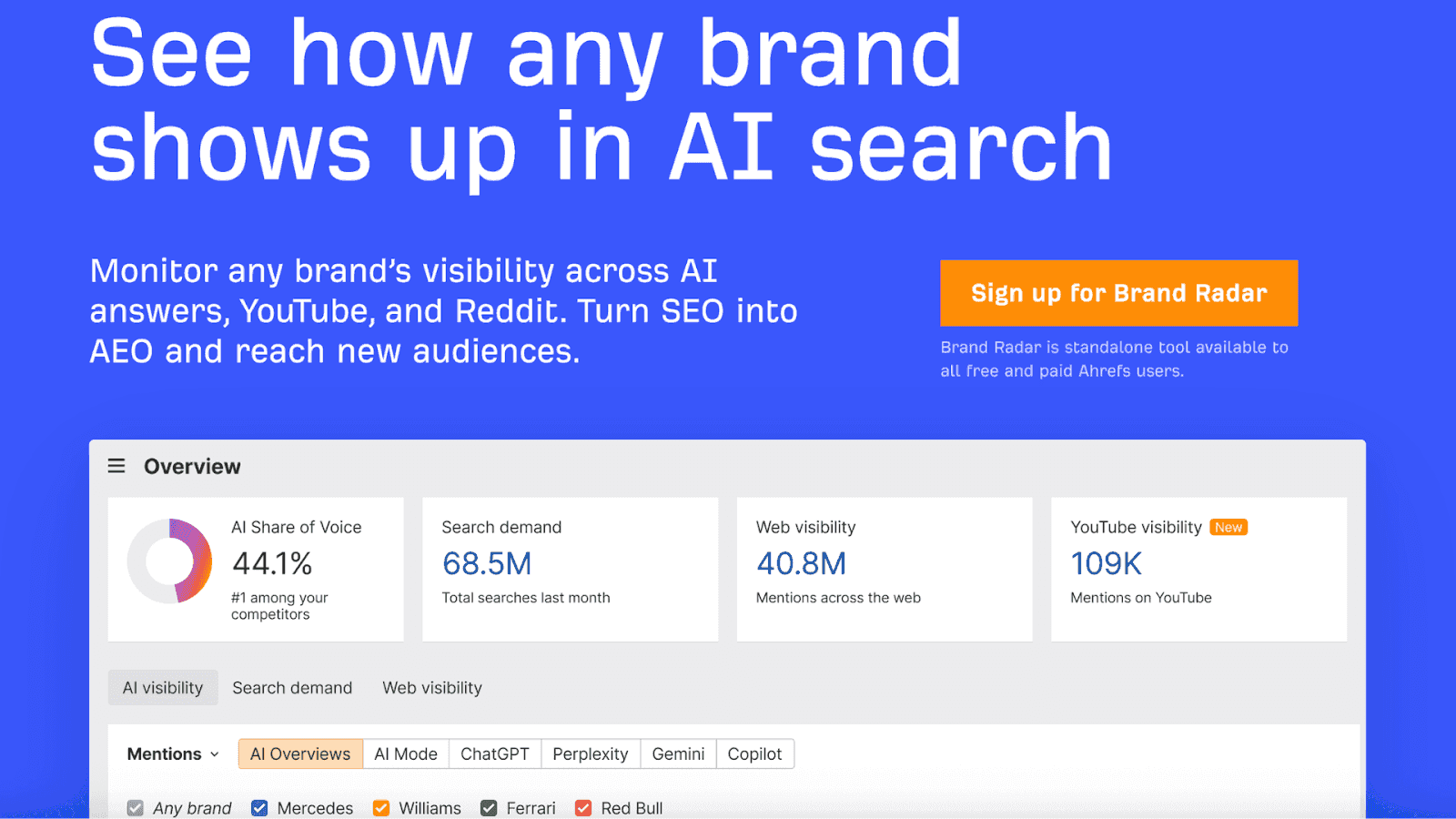
Ahrefs has introduced brand monitoring features aimed at tracking how often a brand appears in AI Overviews and similar AI-generated results, building on its existing backlink and keyword data. This fits teams that already rely on Ahrefs for SEO and want a lighter-weight way to keep an eye on AI mentions without switching tools entirely.
For teams comparing SEO-suite add-ons against dedicated GEO platforms, this guide to the best AI SEO tools breaks down how traditional SEO tooling is adapting to AI search.
Ahrefs (Brand Radar) Pros
Builds AI mention tracking on top of existing backlink and keyword data teams already use
Lower-effort way to add AI visibility monitoring without switching platforms
Ahrefs (Brand Radar) Cons
Feature depth is worth comparing directly against dedicated GEO platforms if AI visibility becomes a primary priority rather than a secondary one
8. Evertune
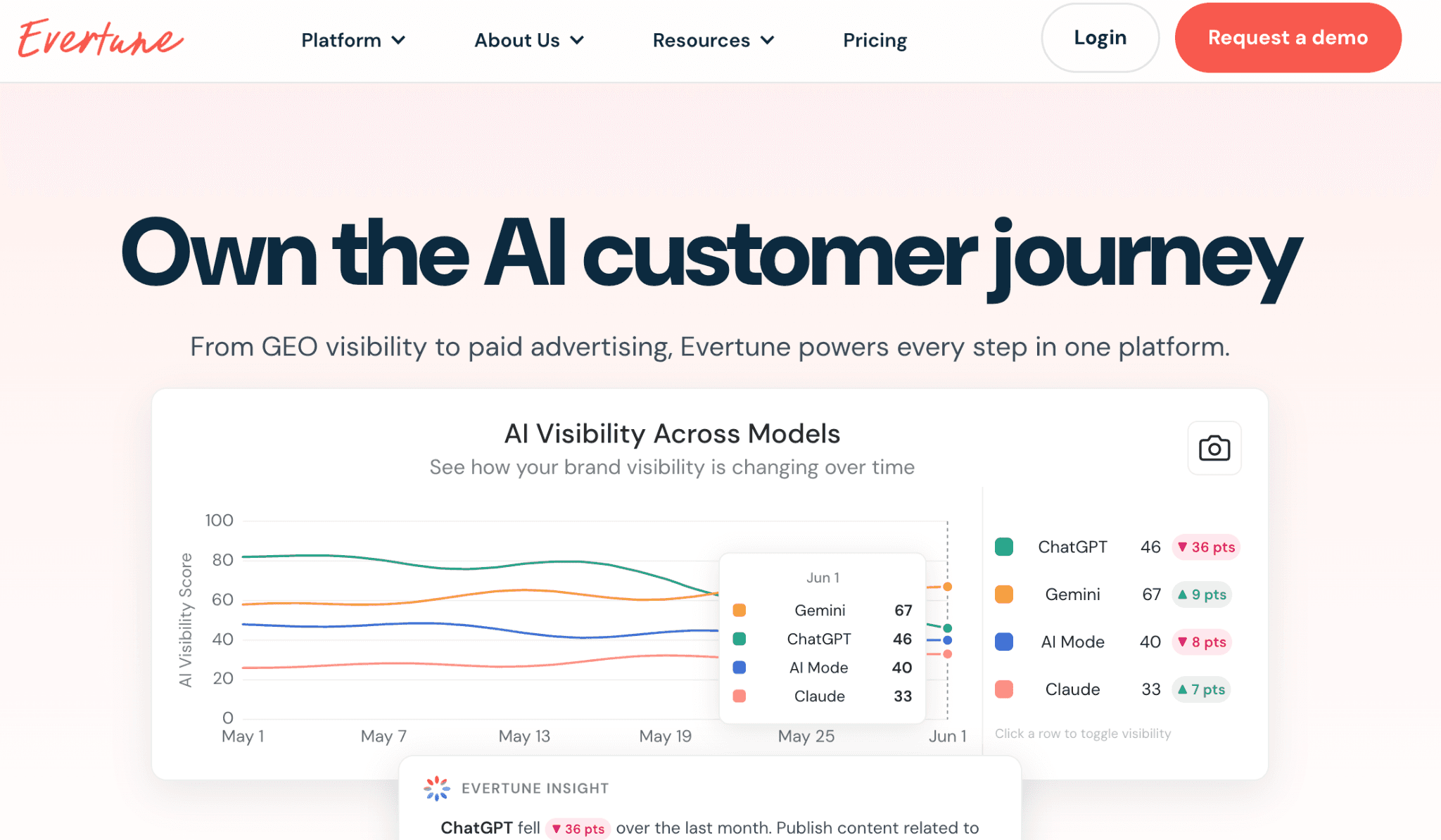
Evertune is built around measuring how AI models describe and represent brands across categories, which is a slightly different angle than pure mention counting. It looks at brand perception inside AI answers, not just whether the brand was named.
This can be useful for brand and communications teams that care about how they are described, not only how often they appear.
Evertune Pros
Focuses on how AI models describe a brand, not just whether it is mentioned
Useful for brand and communications teams focused on perception, not only frequency
Evertune Cons
This descriptive focus means it may offer less pure mention-counting data than tools built around raw visibility metrics
9. Goodie AI
Goodie AI focuses on tracking brand and product visibility within AI assistant responses, aimed at teams that want ongoing monitoring without building custom prompt tracking themselves. As with most tools in this space, confirming current model and language coverage directly with the provider is worthwhile before committing.
Goodie AI Pros
Ongoing monitoring without needing to build custom prompt tracking in-house
Straightforward option for teams that want visibility tracking handled for them
Goodie AI Cons
Current model and language coverage should be confirmed directly with the provider before committing
10. Writesonic
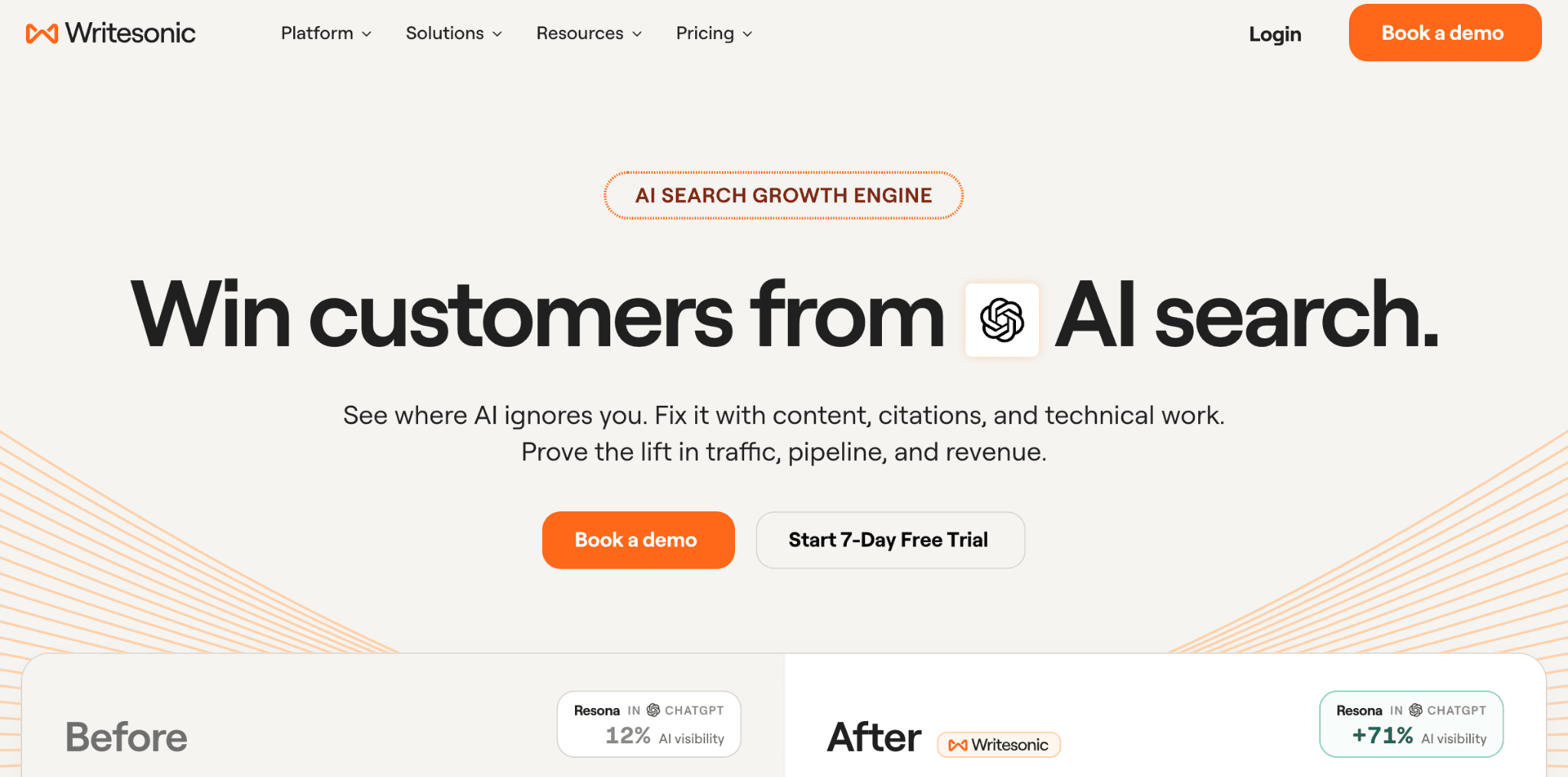
Writesonic, originally known for AI content generation, has added GEO-oriented features aimed at helping brands understand and improve their presence in AI search answers. This can suit content teams that want visibility tracking connected to their existing content production workflow.
If you are researching platforms across this wider category, this roundup of the best GEO tools covers how tools like this compare on prompt tracking and content recommendations.
Writesonic Pros
Connects visibility tracking to an existing content production workflow
Useful for content teams already using the platform for AI writing
Writesonic Cons
Since GEO features were added to a content generation tool, they may be less mature than tools built around AI visibility from the start
AI Visibility Monitoring vs Traditional Rank Tracking
Traditional rank tracking measures where a URL lands on a search results page for a given keyword. AI visibility monitoring measures whether and how a brand is mentioned inside a generated answer, which does not map directly to a single ranking position.
This distinction connects closely to answer engine optimization. If you want a deeper look at how that discipline overlaps with AI visibility tracking, this comparison of the best AEO tools walks through platforms built specifically around answer engine performance.
For a wider view across all four categories covered in this article, GEO, AEO, AI SEO, and AI visibility, this roundup of the best AI visibility tools groups the tools by use case rather than by vendor category alone.
What Else You Can Do to Improve GEO Beyond Monitoring Tools?
A monitoring tool tells you where you stand, but it does not change how AI models see your content. Closing that gap takes separate, deliberate work on the content and technical side. The tactics below are what typically move visibility once you already know where the gaps are.
Write Definitions AI Models Can Extract Cleanly?
AI systems tend to pull sentences that answer a question directly, in a self-contained way, without requiring the rest of the paragraph for context. Structuring key concepts as "[Term] is..." followed by an expanded explanation makes that sentence easier to lift into a generated answer.
Strengthen Topical and Entity Clarity
Use clear entity names (brand names, product names, competitor names) instead of relying on pronouns in sections where a model needs to resolve who or what is being discussed. This reduces the chance of a model misattributing a claim to the wrong entity when it generates a summary.
Build Original Data or Perspective Worth Citing
AI models favor content that adds something not already available elsewhere, such as original research, first-party data, or a clearly reasoned point of view. Content that only restates what competitors already say has less reason to be selected as a citation.
Keep Facts Consistent Across Your Own Site
Contradicting numbers, outdated pricing, or inconsistent product descriptions across different pages on your own site can reduce a model's confidence in citing you as a reliable source. Auditing your own pages for consistency is a low-effort, high-impact GEO task.
Structure Comparisons and Lists Explicitly
When writing comparison or listicle content, stating the evaluation criteria and using clear headings per option (as this article does) gives a model an easier structure to summarize accurately, rather than forcing it to infer criteria from unstructured prose.
Earn Mentions on Other Credible Sites
AI models often synthesize answers from multiple sources, so being mentioned accurately on third-party sites (review platforms, comparison articles, industry publications) increases the surface area where a model can pick up your brand, separate from your own domain's content.
Monitor, Then Iterate on Specific Prompts
Once a monitoring tool shows which prompts you are missing from, the next step is revisiting the content that should be answering those exact prompts and rewriting it to address the question more directly, rather than making broad site-wide changes.
For teams building this into a repeatable process, this overview of the best AI SEO tools covers platforms that combine traditional optimization with the content-level changes described above.
Frequently Asked Questions About AI Visibility Monitoring Tool
What is an AI visibility monitoring tool?
It is a platform that tracks whether and how often a brand appears in answers generated by AI systems such as ChatGPT, Perplexity, or Google AI Overviews, usually by running a set of relevant prompts and recording the results over time.
Is AI visibility the same as GEO?
Not exactly. GEO (Generative Engine Optimization) is the practice of improving that visibility, while AI visibility monitoring is the measurement layer that tells you whether those efforts are working.
Can I track AI visibility manually without a tool?
You can run prompts manually and record results, but it does not scale well since AI answers can vary between sessions and models, and manual tracking makes it hard to spot trends or benchmark against competitors consistently.
How often should visibility be checked?
This depends on how frequently your industry's prompts and AI models change, but most teams using dedicated tools check on a recurring schedule, such as weekly, rather than one-off snapshots, since AI answers can shift as models update.

Latest posts
Discover other pieces of writing in our blog