Back
9 Best Claude Rank Tracking Tools for 2026
Compare the 9 best Claude rank tracking tools for citation and mention tracking.

Claude now reaches an estimated 245 million monthly active users, and Anthropic's revenue run rate climbed past $47 billion by mid-2026, a scale that puts Claude in a genuinely different position than the research preview it was a few years ago. Inside enterprise buying teams and developer workflows, Claude has quietly become the assistant of choice for a high value audience, which makes how Claude talks about a brand a question worth tracking. This guide breaks down how to do that and where each tool lands on AI visibility rank tracker pricing. For the wider picture across every major AI engine, our guide to the best GEO tools covers ChatGPT, Perplexity, Gemini, and Claude side by side.
Ranking inside Claude works nothing like ranking on Google, and it does not work like Perplexity either. Claude's baseline answers come straight from training data. Its web tool only fires when the model decides it needs fresh information, and when it does fire it pulls from Brave Search rather than Google. That means a brand can be named with confidence and zero citation, or missed entirely from a search step that never triggers.
Tracking that gap is harder than it sounds. Claude writes long, conversational answers and tends to name brands in the middle of a sentence rather than dropping a link, so the gap between mention tracking and citation tracking is wider for Claude than for almost any other engine. Two separate crawlers also matter here: ClaudeBot feeds training data, anthropic-ai feeds the retrieval layer, and Brave indexing sits behind both, mostly ignored by tools built for other engines.
We tested and compared the 9 best Claude rank tracking tools in 2026 based on how they handle that gap, how deep their prompt coverage goes, and how much of the data actually turns into something you can act on rather than just a dashboard to check.
Best Claude Rank Tracking Tools Comparison Table in 2026
Here is a side by side comparison of the tools covered in this guide, based on their core strengths, ideal use case, and starting price.
Tool | Best For | Key Insight | Starting Price |
|---|---|---|---|
Visby | Turning Claude citation gaps into prioritized, site specific tasks | Prompt level Claude tracking plus automated task generation across ChatGPT, Gemini, and Google AI Overviews too | From $79/mo |
AthenaHQ | Brands wanting Claude on a credit pool model with the broadest self serve engine list | Up to 8 major LLMs including Claude, plus on page and off page GEO workflows | From $295/mo |
Peec AI | Brand teams focused on how Claude describes them, not just whether it links them | Best in class sentiment scoring, but Claude sits behind the Enterprise tier | From $95/mo (Claude on Enterprise) |
LLMrefs | SEO teams that want AI visibility measured by keyword rather than by prompt | 11 engines including Claude on a single tier with a keyword led methodology | €79/mo (~$85) |
Promptwatch | Teams that want daily Claude refresh with MCP access | Claude is one of four models chosen from nine, with content generation built in | From $99/mo |
Profound | Enterprise teams needing governance grade Claude visibility across many engines | Deep Answer Engine Insights plus named ClaudeBot crawler analytics, but Claude sits behind Enterprise | From $99/mo (Claude on Enterprise) |
Mangools AI Search Watcher | Solo SEOs who want Claude tracking bundled with a full SEO suite | Claude tracking ships on the entry tier alongside keyword research and rank tracking | From $30.50/mo |
Scrunch | SEO and content teams that also need to monitor how AI crawlers access their site | Named ClaudeBot analytics, though Claude visibility itself sits behind Enterprise | From $300/mo (Claude on Enterprise) |
Rankscale | Founders running their own optimization at the lowest paid floor | 17+ engines tracked, but Claude costs eight times the base credit rate | From $20/mo |
What Is a Claude Rank Tracker Tool?
A Claude rank tracker is a tool that monitors how your brand shows up inside Claude's answers, whether that is a direct citation with a link, a mention in the text with no link at all, or the absence of your brand where a competitor appears instead.
Unlike a traditional rank tracker, which watches a position on a results page, a Claude tracker runs a defined set of prompts against the model on a schedule and records what comes back. Good tools separate cited answers, where Claude's web tool has fired and linked to a source pulled from Brave Search, from mention only answers, where the model is drawing on its training data and naming a brand with no link attached.
That distinction matters more for Claude than for most other engines, because a large share of Claude's answers are generated straight from memory, with no search step and nothing to click.
Why Claude Tracking Needs Its Own Approach?
Most teams assume a tool built for ChatGPT or Perplexity will work fine for Claude. It usually does not, and the gap comes down to three structural differences.
Citations are conditional, and the source is different. Claude only shows a link when its web tool actually fires, and when it does, it reads from Brave Search rather than Google. A brand with strong Google rankings can be invisible to Claude's web tool if it is not well indexed on Brave, and most trackers never test that layer at all.
Baseline answers lean harder on training data than almost any other engine. Claude prefers prose to bullet lists with sources, so it names brands in the middle of a paragraph without a link far more often than it cites them. A tool that only counts links is reporting a fraction of real Claude visibility, and the miss rate here is worse than for Perplexity or Google AI Overviews.
Two crawlers, two jobs. ClaudeBot feeds Anthropic's training data, while anthropic-ai handles retrieval for the web tool. Blocking either one in robots.txt closes a different door, and a site can be open to one and closed to the other without anyone noticing until visibility drops.
One implication follows from all three: mention tracking is not optional for Claude, it is the majority of the picture. A tool that only reports citations is measuring the smaller half of your real visibility.
The 9 Best Claude Rank Tracking Tools in 2026
1. Visby
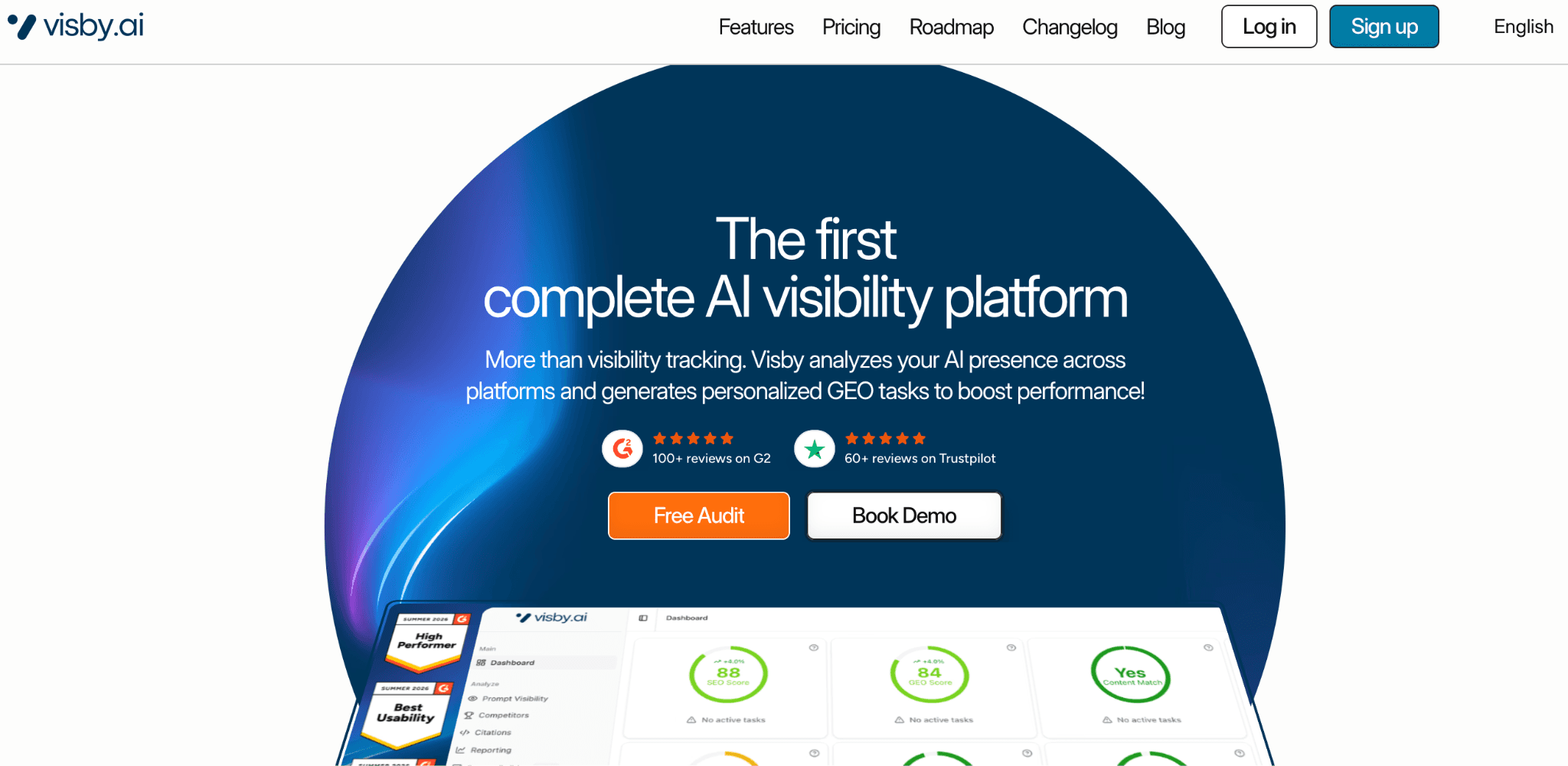
Visby is our top pick for Claude tracking in 2026, built for teams that want to do more than watch a dashboard fill up with numbers.
Most Claude rank trackers stop at reporting. They show how often you are cited, how often you are mentioned without a link, and how you compare to competitors across a prompt set. That is useful, but it does not tell you what to do about a gap, and that is where Visby is different.
The platform tracks Claude performance at the prompt level, alongside ChatGPT, Gemini, and Google AI Overviews, and separates cited answers from mention only answers so you can see exactly which of your gaps are a missing source on Brave Search and which are a missing brand mention entirely. It then converts what it finds into site specific tasks tied to the actual prompts where a competitor is showing up instead of you.
Visibility is also mapped across the funnel. Awareness, consideration, and conversion prompts are tracked separately, which makes it possible to prioritize fixes by where you are actually losing buyers rather than chasing every visibility metric with equal weight. Visby connects that data to Google Analytics, so referral sessions from claude.ai show up next to the citation and mention gains that produced them.
Best for
SEO teams, growth marketers, and product led companies that want prompt level Claude tracking, competitor gap analysis, and actionable tasks rather than a monitoring only dashboard.
Pros
Tracks Claude visibility at prompt level, and separates citations from mention only appearances
Shows exactly which prompts a competitor is winning instead of you
Automatically generates prioritized, site specific SEO and GEO tasks from the gaps it finds
Funnel based tracking for awareness, consideration, and conversion prompts
Ties Claude visibility gains to real referral traffic and conversions through Google Analytics
Covers ChatGPT, Gemini, and Google AI Overviews in the same workspace, useful once Claude tracking is dialed in
Cons
Advanced features are still expanding as the product evolves
Teams brand new to AI visibility may need a short ramp up to use the task system fully
Pricing
Starter plan starts at $79 per month
Growth plan starts at $199 per month
Enterprise plan uses custom pricing
Full plan details, including what unlocks at each tier, are on the AI visibility rank tracker pricing page.
Visby is the strongest pick on this list for teams that do not want Claude visibility data to sit unused in a dashboard. The citation versus mention split and the automated task engine are what set it apart from monitoring only tools, and it is the only platform here built end to end to close the gap rather than just measure it.
2. AthenaHQ

AthenaHQ ships Claude on a $295 self serve tier alongside seven other engines, one of the few self serve tools in this category to include Claude at all without an enterprise sales call.
Pricing is credit based rather than flat. Self Serve includes 3,600 monthly credits plus a $300 per month free credit allowance, with add on credits available for higher volumes, and each response consumes credits depending on the engine being queried. On top of tracking, the platform bundles on page and off page GEO analysis, competitor monitoring, impersonation detection, and a dynamic crawler that finds lost or hidden parts of a site.
Best for
Brands that want Claude on a credit pool model with the broadest self serve engine list.
Pros
Claude on a self serve, published price tier, the broadest self serve engine count (8) in this category
$300 per month free credit allowance softens the headline $295 floor
Unlimited seats with role based access control on the entry tier is unusual at this price
Cons
$295 is the highest published self serve entry price in this category
Credit based pricing makes usage forecasting harder than with flat plans
No free trial, the first month promo functions as the trial substitute
Pricing
Self Serve plan starts at $295 per month, 3,600 credits plus a $300 per month free credit allowance, up to 8 LLMs including Claude
Enterprise plan uses custom pricing and adds LLM traffic analytics, self improving content workflows, and dedicated support
AthenaHQ fits brands that want the widest self serve engine list and are comfortable managing a credit pool instead of a flat prompt limit. Teams on a tighter budget will likely find a cheaper entry point elsewhere on this list.
3. Peec AI
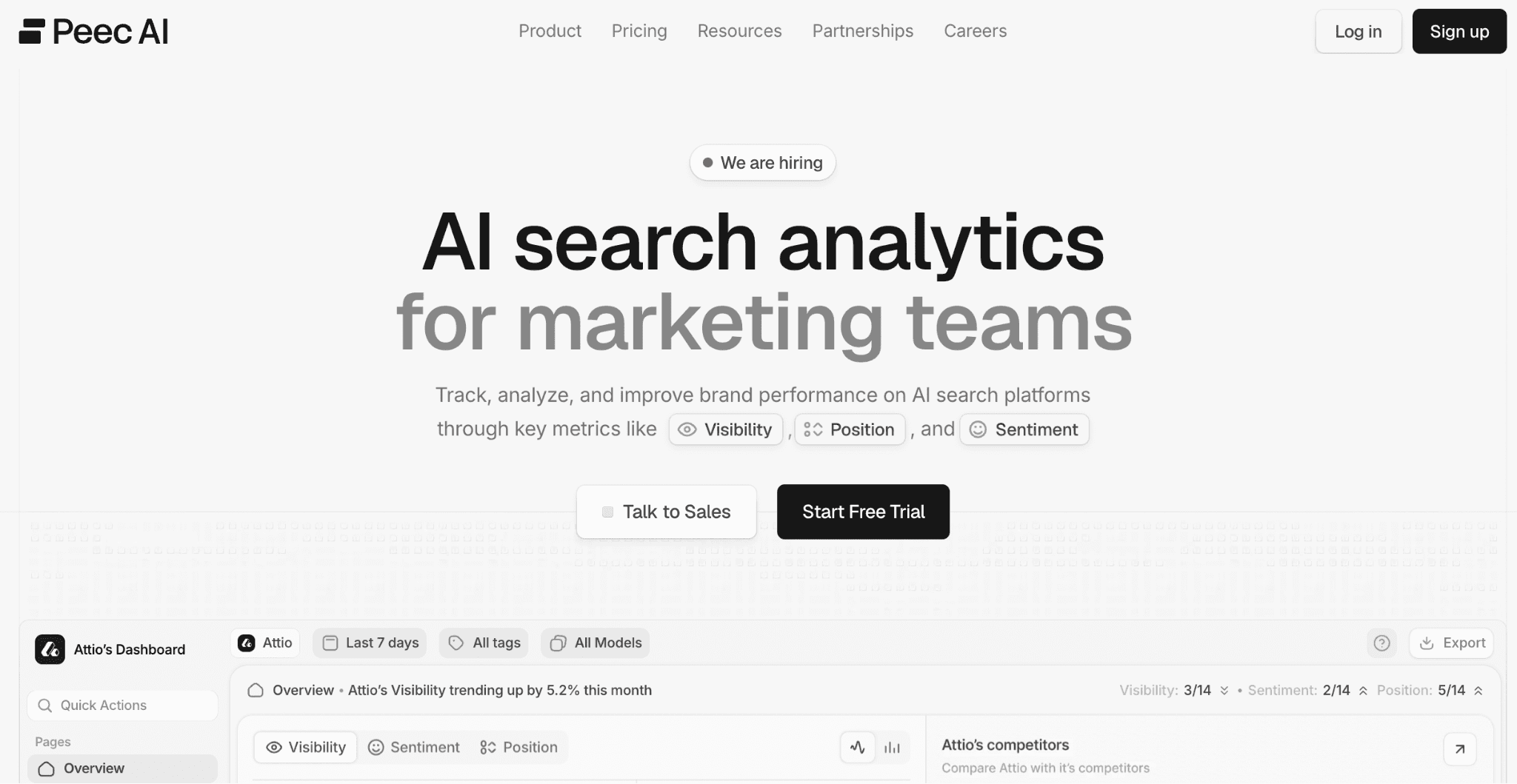
Peec AI has the strongest sentiment scoring in this category. It tracks how an AI engine describes a brand, industry leader, budget alternative, or something less flattering, rather than just whether it names you.
The catch for Claude buyers is the gating model. Peec's published self serve tiers cap engine selection at 3 of 7 engines, and Claude is only available on the Enterprise tier through API access. If sentiment depth is the priority and budget allows for an enterprise conversation, Peec is a strong pick, otherwise Claude sits out of reach on the published plans.
Best for
Brand teams focused on how Claude describes them, not just whether it links them, and who have budget for an Enterprise tier.
Pros
Best in class sentiment depth, answers how does Claude actually frame a brand
Unlimited user seats on every plan
Strong multilingual and regional analytics
Cons
Claude requires Enterprise, it never appears on the self serve tiers
The 3 of 7 engine cap means trade offs even at higher self serve tiers
Starting price does not include Claude at all
Pricing
Starter plan starts at $95 per month, 50 prompts, choose 3 of 7 non Claude models
Pro plan starts at $245 per month, 150 prompts
Advanced plan starts at roughly $495 per month, 350 prompts
Enterprise plan uses custom pricing and adds Claude via API
Peec AI is worth the enterprise conversation if sentiment framing is the main question and budget supports it. Teams that need Claude on a published, self serve price will get more from other tools on this list.
4. LLMrefs
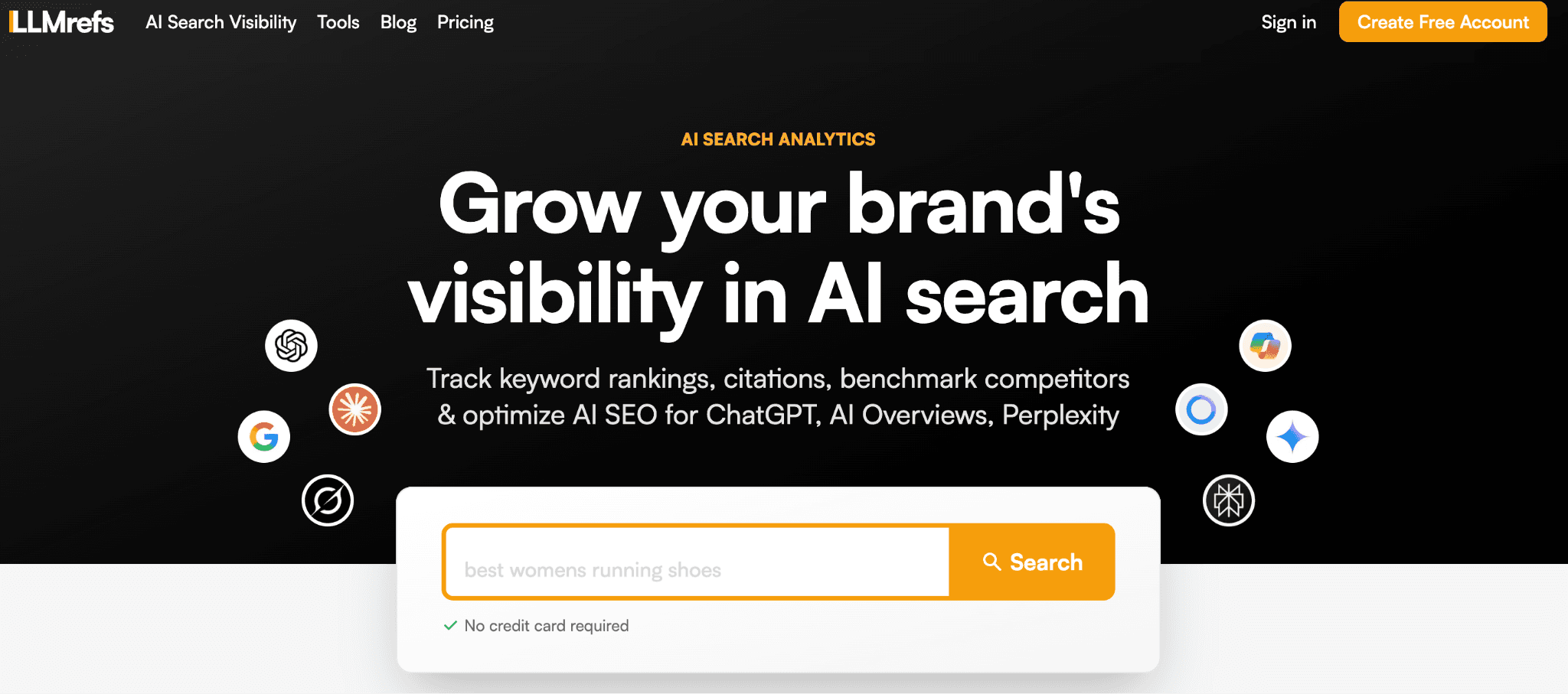
LLMrefs takes a keyword first approach to AI visibility. Instead of asking teams to write prompts by hand, it imports SEO keyword lists and auto generates fan out prompts that reflect how real users talk to chatbots, then aggregates share of voice and citation sources across those prompts for a more statistically stable score than a single noisy prompt readout.
All 11 supported engines, including Claude, sit on one tier with no per engine gating, which makes it one of the more straightforward pricing models in this category.
Best for
SEO teams that want to track AI visibility by keyword rather than by prompt, across a wide set of engines including Claude.
Pros
Cheapest tool on this list that ships Claude without engine gating
Keyword led methodology removes prompt writing overhead
Unlimited projects and unlimited team seats
Cons
Single tier pricing hits a 500 prompt ceiling sooner than multi tier platforms
Aggregated scoring is less granular than the per prompt drill downs some competitors offer
Euro pricing means a small FX premium for USD only teams
Pricing
All in One plan starts at €79 per month (roughly $85), 500 prompts, all 11 engines, 7 day free trial
LLMrefs is a strong value pick for teams that want Claude covered alongside ten other engines without navigating tiers, especially if a keyword led workflow fits how the team already thinks about SEO.
5. Promptwatch
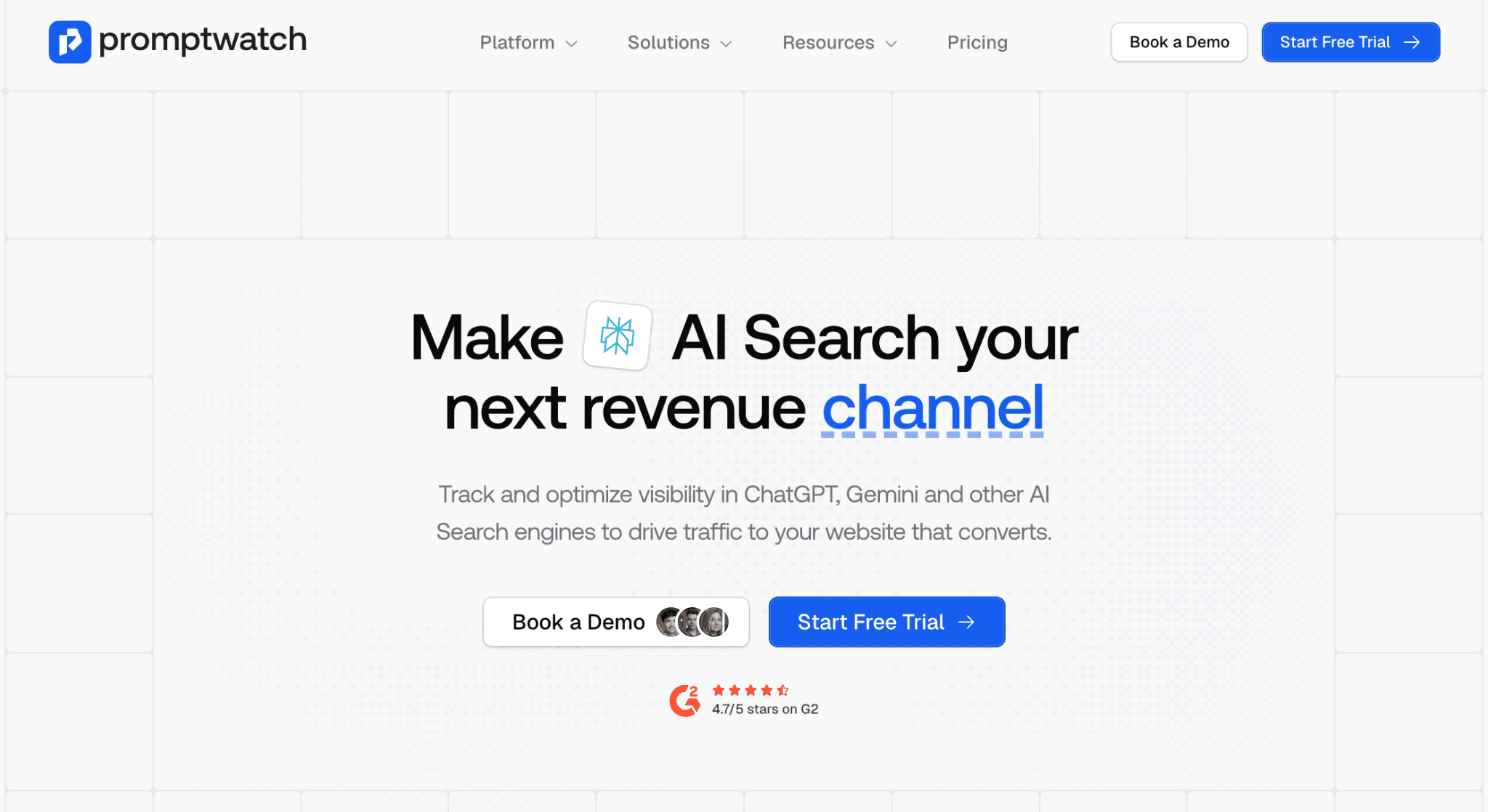
Promptwatch covers Claude alongside eight other AI engines, with daily refresh tracking on every paid tier and MCP access from the $99 Essential plan upward.
The structural constraint is real: paid plans track 4 of 9 supported models at a time, so Claude has to be chosen alongside ChatGPT, Perplexity, Gemini, and several others rather than tracked by default. The plan also bundles AEO content generation, so teams get article drafts alongside the tracking data.
Best for
Teams that want daily Claude refresh with MCP access at the $99 price point.
Pros
Claude on the $99 Essential tier with daily refresh, rare at this price
Content generation is included in the base subscription
Country level tracking on Essential, with state and city level available higher up
Cons
The 4 of 9 engine cap means tracking Claude trades against another model on the same plan
50 prompts on Essential is tight for a fully built prompt library
Less sentiment depth than dedicated sentiment specialists
Pricing
Essential plan starts at $99 per month, 1 project, 50 prompts, 4 chosen models, 5 AEO articles per month
Professional plan starts at $249 per month, 2 projects, 150 prompts, 15 AEO articles per month
Business plan starts at $579 per month, 5 projects, 350 prompts, 30 AEO articles per month
Promptwatch is a solid fit for teams that want daily refreshed Claude data and are comfortable trading engine slots to get it, especially if the bundled content generation is a workflow win.
6. Profound
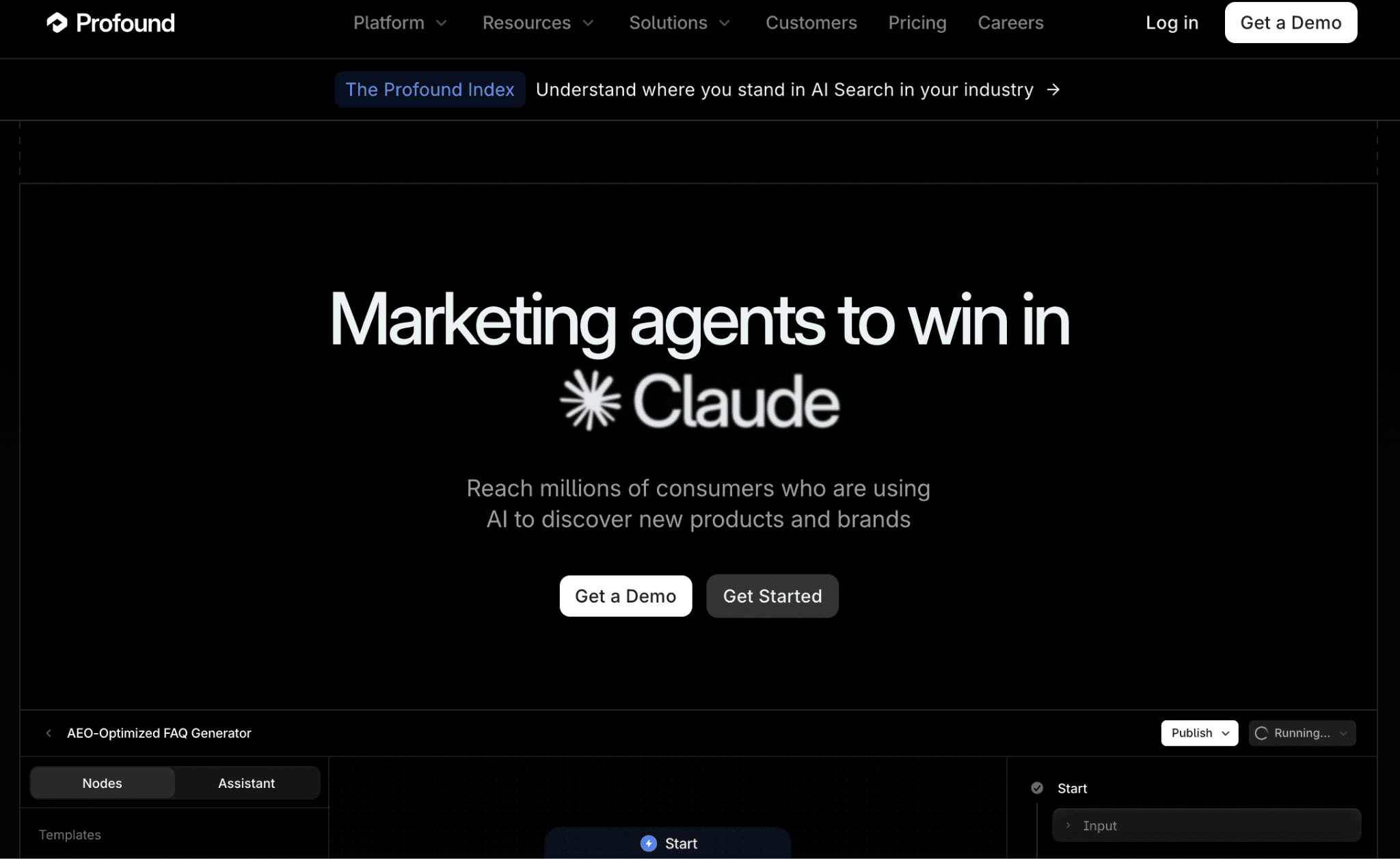
Profound is the enterprise standard for AI visibility monitoring, and it is one of the deepest platforms on this list once Claude is actually unlocked.
The catch is where that unlock sits. Starter tracks ChatGPT only, and Growth adds two more engines but stops at three total. Claude sits behind the Enterprise tier alongside Gemini, Copilot, Meta AI, Grok, and DeepSeek, so getting to Claude data means a sales conversation. Once there, the platform's Answer Engine Insights module tracks how Claude describes a brand next to competitors, and named crawler analytics for ClaudeBot sit alongside it, useful for diagnosing why certain pages are not getting pulled into Claude's answers.
Best for
Enterprise teams that need governance grade AI visibility data across many engines including Claude, and are prepared to buy into Enterprise pricing to get there.
Pros
Deep Answer Engine Insights and named ClaudeBot crawler analytics once unlocked
Broadest engine list on this list at full tier, up to ten engines including Claude
Strong compliance and audit trail features suited to regulated industries
Agent based automation for AEO tasks like FAQ generation
Cons
Claude sits behind the custom priced Enterprise tier, not on any published plan
Starter and Growth track ChatGPT plus at most two other engines, no Claude
Third party estimates put real enterprise deployments well above the Growth sticker price
Pricing
Starter plan starts at $99 per month, ChatGPT only
Growth plan starts at $399 per month, three engines
Enterprise plan uses custom pricing and adds Claude, Gemini, Copilot, Meta AI, Grok, and DeepSeek
Profound is worth the Enterprise conversation for large teams that need governance grade Claude data alongside nine other engines. Teams that want Claude on a published, self serve price will move faster with another tool on this list.
7. Mangools AI Search Watcher
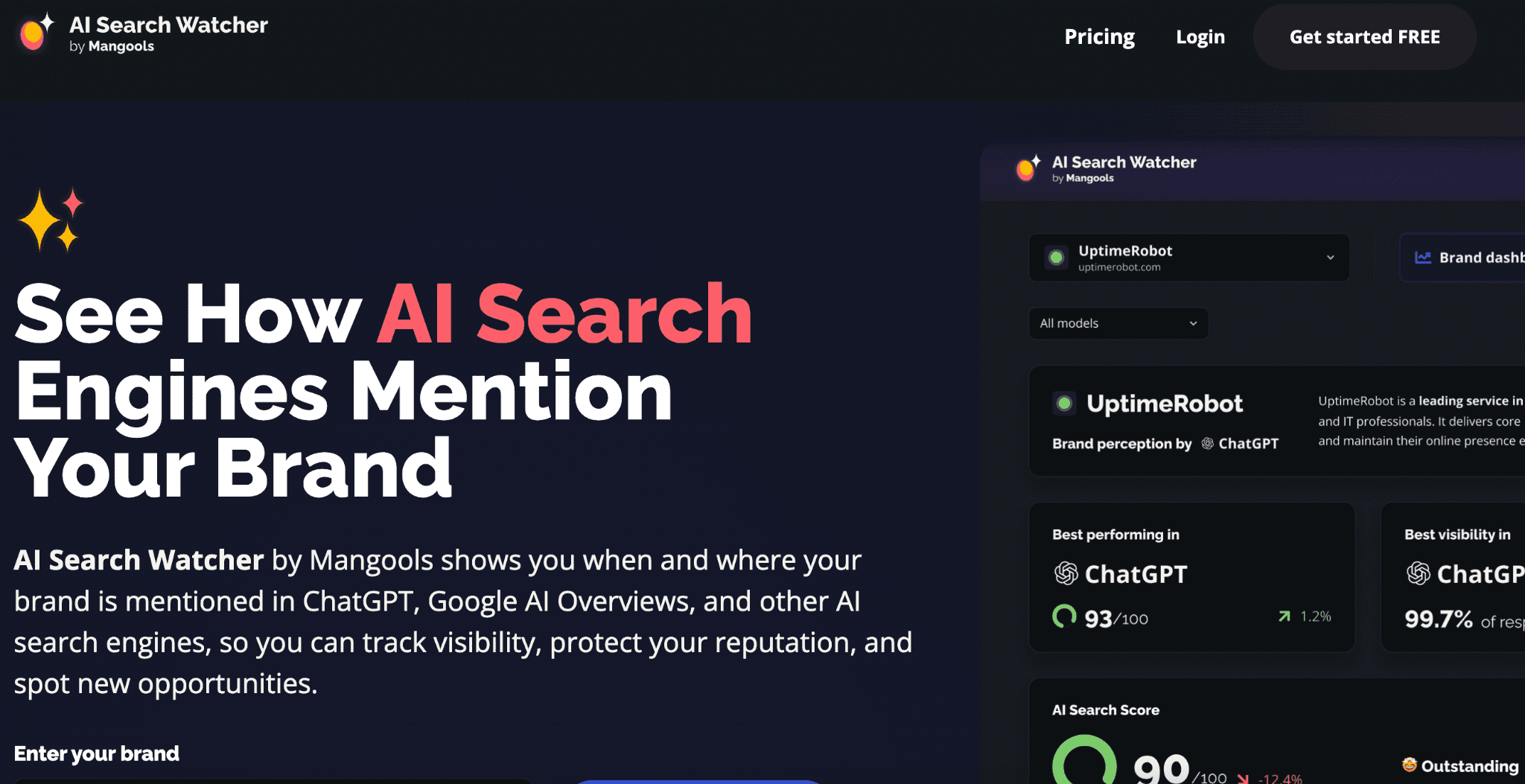
Mangools added AI Search Watcher PRO to its existing SEO bundle, and Claude tracking ships on the entry tier alongside the full Mangools toolkit, keyword research, SERP tracking, and backlink data included.
The trade off against dedicated specialists is depth, sentiment analysis is lighter and the AEO feature set is smaller, but the price is a fraction of most dedicated Claude trackers once the SEO suite is counted in.
Best for
Solo SEOs who want Claude tracking bundled with a traditional SEO suite for under $40.
Pros
Cheapest paid bundle on this list once the SEO tools are factored in
A free one shot AI Search Grader gives a no account snapshot across several engines
Strong fit for SEOs who already want a classic keyword and SERP toolkit
Cons
AI Search Watcher PRO is bundle only, there is no standalone purchase
Lighter sentiment and citation depth than dedicated AEO tools
Less suited as a long term enterprise tracker
Pricing
Basic plan starts at $30.50 per month billed monthly, 500 prompts
Premium plan starts at $40.50 per month, same Claude tracking plus extra seats
Agency plan starts at $70.50 per month, more seats, agency oriented
Mangools makes sense for solo SEOs and small teams who want Claude visibility folded into a toolkit they are already paying for, rather than a dedicated Claude specialist.
8. Scrunch
Scrunch is the AI crawler analytics specialist on this list. It exposes named coverage of ClaudeBot, GPTBot, and PerplexityBot, which pages each one crawls, how often, and what it extracts, on top of citation and mention tracking.
The catch for Claude buyers is significant. Claude visibility tracking sits behind the Enterprise tier, the published Core plan covers four other engines and does not include Claude at all.
Best for
SEO and content teams that need to monitor how AI crawlers access their site, and have budget for Enterprise once Claude visibility is the goal.
Pros
Best AI crawler analytics in this category at a published price
Strong technical SEO orientation, llms.txt support and crawler segmentation
Citation, mention, and sentiment tracking bundled together
Cons
Claude requires Enterprise, the published Core tier does not include Claude visibility
Higher entry price than the dedicated Claude self serve tools above
No free trial, Enterprise is a sales led process
Pricing
Core plan starts at $300 per month, 4 engines, no Claude, 350 prompts, 3 seats
Growth plan starts at $500 per month, 5 seats, 700 prompts
Enterprise plan uses custom pricing and adds Claude, Gemini, Meta AI, AI Mode, and Grok
Scrunch is the right call for teams that care about crawler level diagnostics first and are prepared to move to Enterprise to unlock Claude. Teams that want Claude on a published price will find it faster elsewhere on this list.
9. Rankscale

Rankscale has the lowest paid entry point in this category. Claude is included on the $20 Essentials plan alongside competitor benchmarking and citation tracking across more than 17 AI engines.
The catch is the credit pool model. Most engines cost a fraction of a credit per run, but Claude costs eight times the base rate, so a Claude heavy tracking cadence burns through the pool much faster than the headline price suggests.
Best for
Founders running their own optimization work at the lowest possible paid floor.
Pros
Lowest paid floor in the category at $20 per month
Claude included on the cheapest paid plan in this list
Quick to set up for a founder or solo consultant
Cons
Credit math means Claude usage scales spend faster than other engines
Smaller team and ecosystem than the more established platforms here
Reporting depth scales quickly past the entry tier
Pricing
Essentials plan starts at $20 per month, Claude included
Pro plan starts at $99 per month, 1,200 credits per month
Growth and Enterprise plans use custom pricing
Rankscale is worth it for founders who want the cheapest possible entry into Claude tracking and are comfortable watching the credit meter. Teams that expect to query Claude heavily should budget for that 8x credit cost before committing.
How to Choose the Right Claude Rank Tracker?
Claude trackers sit on a spectrum from monitoring to optimization, and where you need to be on that spectrum depends on how you plan to use the data.
Want to actually close the visibility gap instead of just measuring it: Visby is built for this. It is the only platform here that separates citations from mention only appearances, turns prompt level Claude data into prioritized, site specific tasks, and ties them back to real traffic and conversions, across ChatGPT, Gemini, and Google AI Overviews as well.
Need the broadest self serve engine list including Claude: AthenaHQ covers up to 8 LLMs on a credit pool model.
Want sentiment aware benchmarking and have Enterprise budget: Peec AI is the sharpest tool for how Claude frames a brand.
Want all engines including Claude on one tier with a keyword led workflow: LLMrefs covers 11 engines at €79 per month.
Need daily refresh with MCP access at a known price: Promptwatch Essential covers Claude as one of four chosen models.
Need governance grade Claude data across many engines and have Enterprise budget: Profound unlocks Claude, Gemini, and six more engines once you move past Growth.
Already run Mangools for classic SEO and want Claude bundled in: AI Search Watcher PRO adds it from $30.50 per month.
Care about crawler level diagnostics first and Claude visibility second: Scrunch is the strongest fit, once you are on Enterprise.
Want the lowest possible paid floor and can manage a credit budget: Rankscale starts at $20 per month.
That first distinction, monitoring versus improving, is the one that matters most. Monitoring tells you where you stand, it does not change the outcome. If the goal is to close the gap between where a brand is and where it should be in Claude's answers, you need a platform built to act on the data, not just display it.
FAQ About Claude Rank Tracker Tools
What is a Claude rank tracker?
A Claude rank tracker is a tool that monitors how a brand appears inside Claude's answers, tracking citations, mentions without a link, and competitor visibility across a defined set of prompts run on a schedule.
How is Claude tracking different from ChatGPT or Perplexity tracking?
The biggest difference is where the citation comes from and how often it shows up at all. Perplexity shows an ordered source panel on almost every answer, and ChatGPT cites when it triggers a search step. Claude's web tool fires even less predictably, and when it does fire it reads from Brave Search rather than Google, so tools built around Google indexed citations undercount Claude visibility unless they also track mentions and check Brave coverage separately.
What is the best Claude rank tracking tool under $100 per month?
Rankscale Essentials at $20 per month is the cheapest entry point, though Claude carries a higher credit cost there. Mangools AI Search Watcher at $30.50 per month bundles Claude with a full SEO suite. LLMrefs at €79 per month (roughly $85) covers Claude among 11 engines on one tier. Visby Starter and Promptwatch Essential both begin at $79 to $99 per month depending on the plan chosen. Profound's $99 Starter is priced under $100 too, but it tracks ChatGPT only, Claude on Profound requires the custom priced Enterprise tier.
How does Claude decide which sources to cite?
When Claude's web tool fires, it pulls from Brave Search and synthesizes an answer from the sources it judges as clear, well structured, and current. When it answers from training data instead, and that happens for a large share of prompts, it draws on whatever brands and products it associates most strongly with a topic, shaped by how consistently a brand shows up across the sources it was trained on.
How do I get cited or mentioned by Claude?
Do not block ClaudeBot or anthropic-ai in robots.txt, the first feeds Claude's training data and the second feeds its retrieval layer. Get indexed in Brave Search separately from Google, since that is the index Claude's web tool actually reads from. Publish clear, scannable content that answers a specific question in the first sentence of each section, and build genuine authority and mentions across the web, since training driven answers lean on how consistently a brand appears across high quality sources rather than a single optimized page.
Can I track Claude rankings in Google Search Console?
No. Google Search Console only reports on Google Search and has no visibility into Claude's answers. A dedicated Claude tracker is required to see whether a brand is being cited or mentioned inside Claude's responses.
How much do Claude rank tracking tools cost?
Pricing varies by platform and depth of coverage. Entry level tools like Rankscale and Mangools start under $35 per month, mid market platforms like Visby, LLMrefs, and Promptwatch start around $50 to $100 per month, and platforms that gate Claude behind Enterprise, like Peec AI, Scrunch, and Profound, move to custom pricing once Claude is added.
Start Tracking Your Claude Visibility
The fastest way to see where a brand stands inside Claude is to run a check with a dedicated tracker and see which prompts surface the brand, which competitors share the answer, and whether the appearance is a real citation or just a mention. For related reading, our guides to the best ChatGPT rank tracker tools, the best AEO tools, the best AI SEO tools, and the best AI search visibility tools cover the wider set of platforms this list connects to, along with how citation and mention tracking differs across ChatGPT, Claude, and Gemini.

Latest posts
Discover other pieces of writing in our blog